

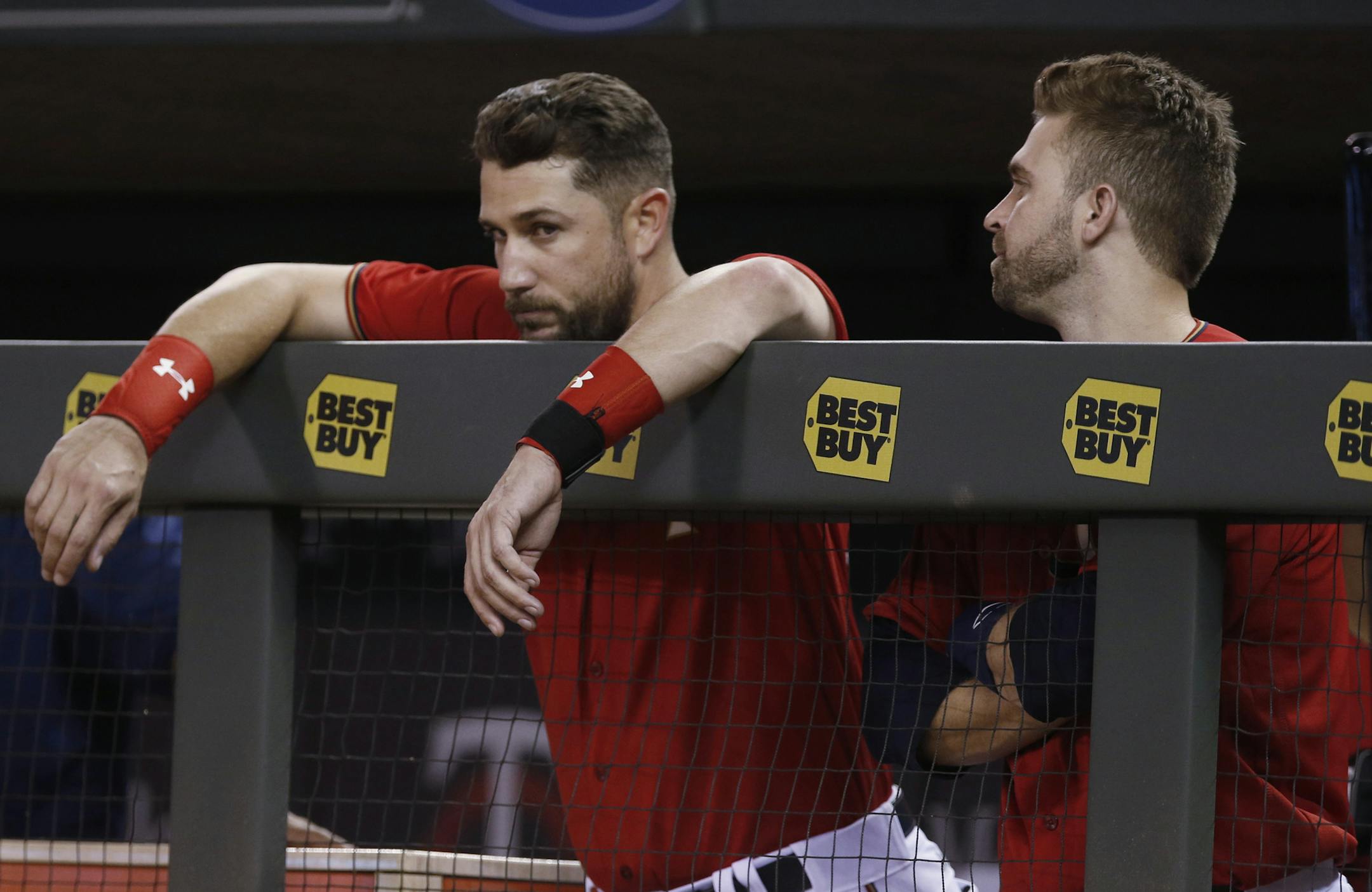
Brian Dozier had established himself as the Twins second baseman with productive seasons in 2013 and 2014. The media covering spring training in March 2015 was summoned to the makeshift interview room in the lower level of Hammond Stadium in Fort Myers, Fla. to discover that Dozier, then 27, had been signed to a multiyear contract.
The deal was four years, $20 million, with the Twins purchasing Dozier's three seasons of arbitration eligibility in the process. There was some early wonderment as to what was the hurry to give this contract to Dozier, but it wound up saving the Twins significant dollars when you consider this:
He could have been taking 28 home runs to arbitration after the 2015 season, a second-base record of 42 home runs to arbitration after 2016, and 34 home runs after 2017. Throw in four straight seasons of 100 runs scored, and RBI totals of 99 and 93 in 2016-17, and the question had become:
How are the Twins going to get Dozier signed to an extension before he becomes a free agent as a 31-year-old in the fall of 2018?
Terry Ryan's baseball organization had signed Dozier to the contract in 2015 and now Derek Falvey and his large group of analysts and prognosticators were making the decisions.
And by early in the 2018 season, it was apparent the Twins' "how" on signing Dozier had become "they aren't." He was traded to the L.A. Dodgers at the July 31 deadline, for the modest return of pitcher Devin Smeltzer, outfielder Luke Raley and second baseman Logan Forsythe.
Dozier was making $9 million that season. He didn't hit for the Dodgers, but Washington equaled that $9 million salary for Dozier as a free agent for 2019.
I was in Nationals Park as a spectator in early July. Dozier received a fine reception from the customers on a steamy day, and then he hit his 15th home run of the season.


