

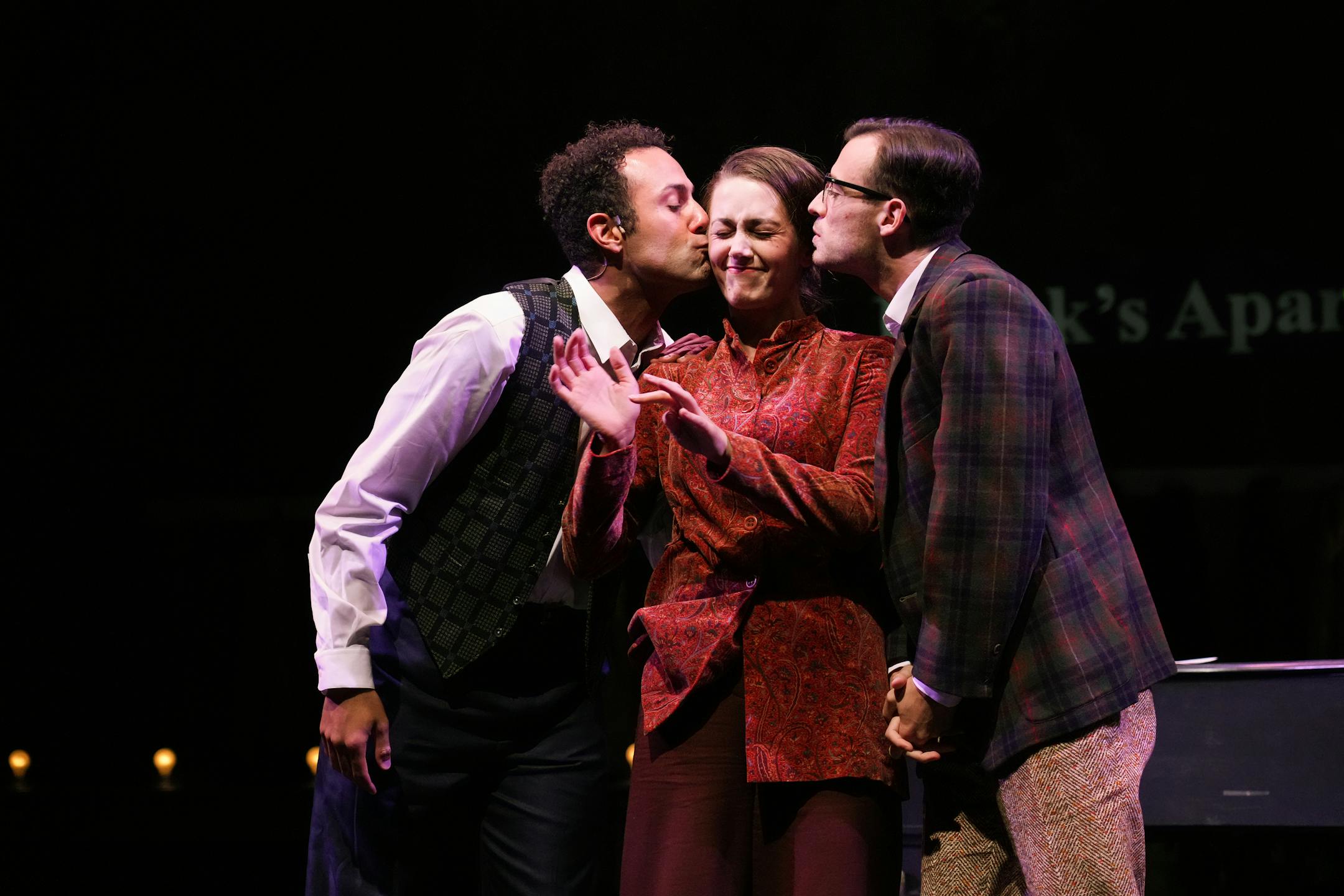
"The Sound of Music" famously insists "the very beginning" is "a very good place to start," but "Merrily We Roll Along," opening Saturday at Theater Latté Da, prefers to start at the very end.
The musical, which bombed on Broadway in 1981 but has earned acclaim in subsequent productions, is told backward. Three pals — a movie producer (played at Latté Da by Reese Britts), a songwriter (Dylan Frederick) and a novelist (Becca Hart) — are 40ish, bitter and at each other's throat when the musical begins. But it proceeds in reverse chronology to their buoyant youth.
"Merrily" is based on George S. Kaufman and Moss Hart's also-backward play of the same name, which means both get to end on a bright note instead of a bitter one.
The same could be said for many backward artworks. If it's true that all endings are sad ones, since they inevitably lead to death, it's also true it's usually possible to find a happy spot to begin with. Intricately structured films "Memento" and "Irreversible," Martin Amis' Booker Prize-shortlisted novel "Time's Arrow," brand-new crime novel "Wrong Place Wrong Time," a couple of songs on the Beatles' "Revolver" and Harold Pinter's acclaimed stage drama "Betrayal" all run backward, for a variety of reasons.
Why did the creators choose to tell their stories from back to front? What's to be gained when Stephen Sondheim's "Merrily We Roll Along" and others turn back time? Read on (left to right, please).
The story: Leonard (Guy Pearce) suffers from a disorder that makes it impossible to create short-term memories. But he knows his wife was raped and murdered and he's determined to avenge her death. (The movie has two timelines — the backward one, in color, and a forward one that supplies missing details.)
Where it begins: A murder.


