

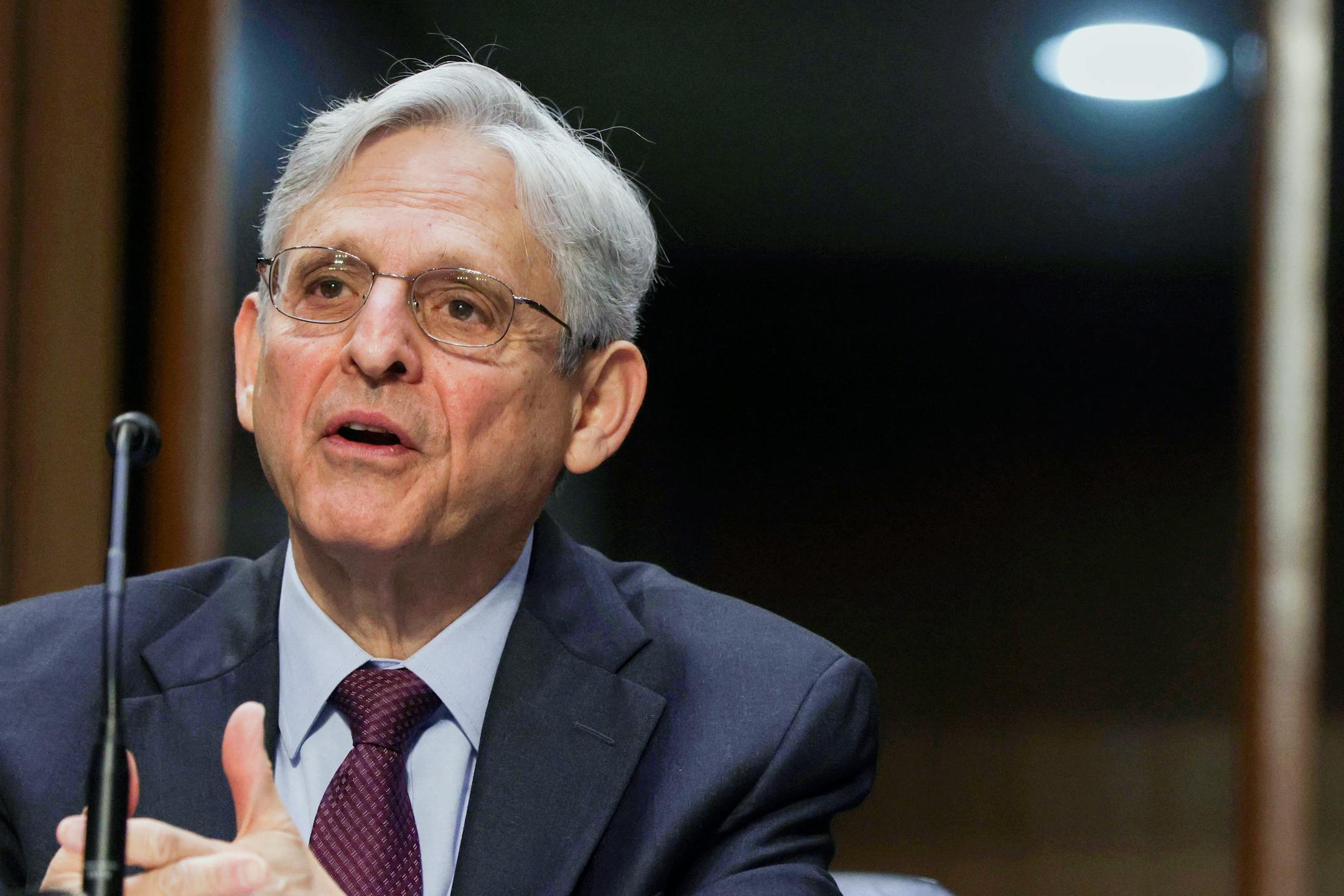
Attorney General Merrick Garland is contesting a court order that would require disclosure of an internal Department of Justice memo sent to former AG Bill Barr. The subject: why not to prosecute Donald Trump.
Garland's decision is a Rorschach test for anyone interested in restoring normalcy and credibility to the Department of Justice after the institutional bloodbath of the Trump years.
From the standpoint of transparency and openness, the public should see the memo to better understand what went wrong in Trump's DOJ. But from the standpoint of returning to the department's traditional norms — including the norm of depoliticizing criminal prosecution decisions — the refusal to disclose is weirdly reassuring. It's a sign that the Biden Department of Justice will reaffirm the department's commitment to confidentiality and not use the DOJ, as Trump tried to, to score political points.
I realize this second way of seeing the inkblot is counterintuitive and, to some, frustrating. So I'm not going to urge it on you. I'm just going to explain it, even while acknowledging the validity of the first, disclosure-oriented interpretation.
It's easy to understand the impulse that the department should publish the confidential memo. It was prepared for Barr by the Office of Legal Counsel, the section of the DOJ that is ordinarily in charge of telling the executive branch whether a proposed executive action is lawful and constitutional.
In this instance, Barr asked the OLC to do something a little different. He asked them to review special counsel Robert Mueller's report on Trump and obstruction of justice and tell him whether it provided enough evidence to charge Trump with a crime.
The OLC had already issued guidelines that it was not constitutionally permissible for the U.S. government to prosecute Trump (or any sitting president). What Barr wanted to know was whether, under ordinary Justice Department prosecuting guidelines, the report provided enough evidence to charge Trump with a crime — even though he could not be prosecuted for one.
Judging by the memo's first page and a half — which Garland released under pressure from a federal district judge in Washington, D.C. — the OLC said that the Mueller report did not contain enough evidence to justify charging Trump with obstruction of justice. What we don't know is what the reasoning was. That is contained in the rest of the memo, which Garland doesn't want to disclose.


