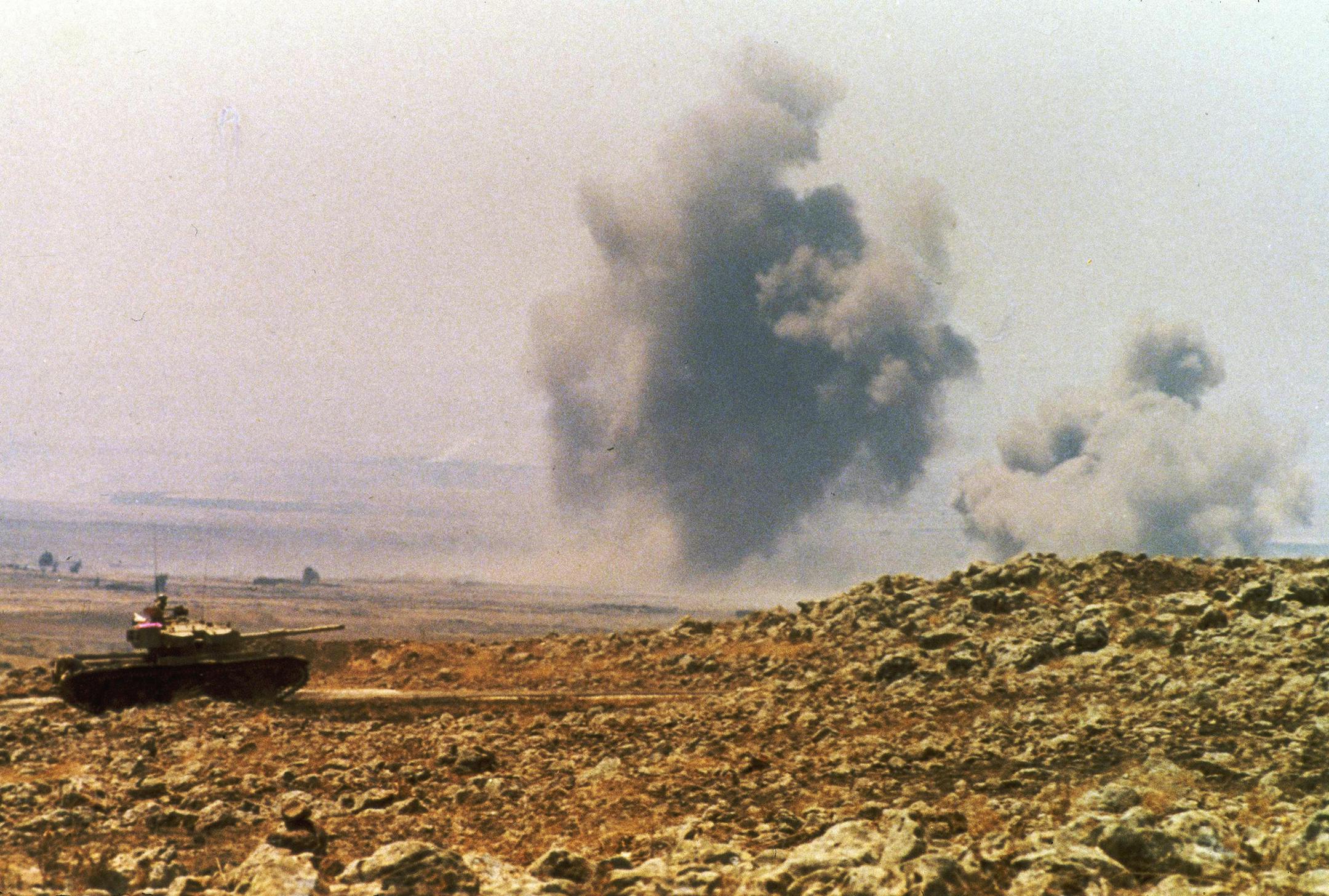
It all happened so unexpectedly 50 years ago: the crisis between Egypt and Israel, the war that began on June 5, 1967, and expanded from one front to three, the silence of the guns after just six days, and the cease-fire lines that marked Israel's conquests of the West Bank, the Golan Heights, the Sinai and the Gaza Strip.
Suddenly, Israel was occupying land beyond its sovereign territory and ruling over the people who lived there. An official euphemism was born that summer — the newly conquered land would be called administered territory. In the autumn, official maps stopped showing the prewar lines. The new maps were also a euphemism, in pictorial form. The reality of occupation remained.
Much has changed, including the amount of occupied territory. But 50 years later, we — by which I mean we Israelis — still have an occupation.
Or rather, the occupation has us. It is the addiction that Israel cannot shake. Much has been written on how the occupation affects the Palestinians living under Israeli rule, how it constrains their freedom of movement, their political rights and their dreams. I'd like to add what's less obvious: The occupation is what keeps Israel from being what it could be. It drags us down.
The occupation conceivably could have been less oppressive and might have lasted less time but for something else that happened in 1967: Israel began settling its citizens in occupied territory.
Back then Israeli strategists believed that settlements would add to Israeli security. It was an anachronistic concept based on how kibbutzim had stood against relatively weak invading Arab armies in 1948. The 1973 Yom Kippur War should have buried this idea. The Israeli army had to evacuate Golan settlers in the midst of fighting Syria's powerful armored divisions.
Today it's clear that the settlements have turned into an ever-larger military burden. Israeli army units deployed in the West Bank have to protect them. Soldiers, some highly trained for essential tasks, are rotated out of other units for guard duty at settlements, including outposts with a handful of families. Because of secrecy, no one knows quite how much this military boondoggle costs.
Actually, no one knows exactly how much the settlement project as a whole costs. The incentives and subsidies that encourage Israelis to move to settlements are scattered throughout the budget. The total outlay is well hidden. It's like the money that a heavy drinker spends on his liquor without ever adding it up, because that would mean facing his problem. All we know is that without this outlay, Israel would have more money to reduce a child poverty rate that's among the worst in the developed world, to add academic jobs that would prevent brain drain, to add hours to the school day and reduce class sizes. As a country, we're doing less with our potential than we could without our addiction.