

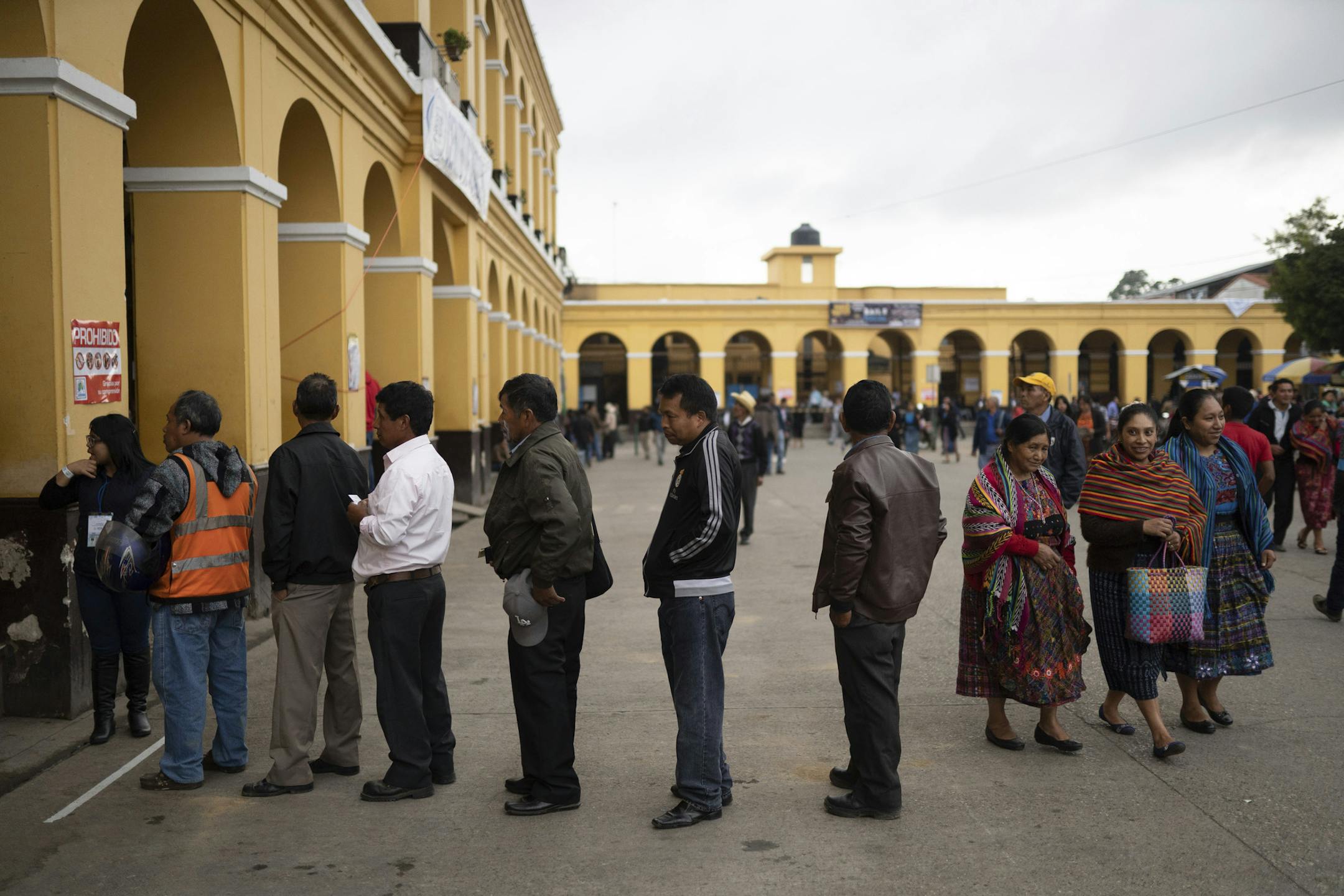
I recently went to a parents' meeting at my children's elementary school in the rural town of Aguacatan, Guatemala, a few hours from the Mexico border. As usual, I was one of the only men there.
This disparity has nothing to do with machismo or Latin gender roles; it's that there just aren't many men in Aguacatan. They're all in places like North Carolina, Florida and the state of Washington. It has been this way for years; what's new now is that there are getting to be fewer women and children, too. They are also heading north.
Most of those leaving don't want to do it, but they no longer see how they can survive here. Why? Government corruption, income disparity, narco violence and foreign exploitation all play a role. So does climate change, which is taking a toll on our ability to raise the crops that have traditionally sustained rural Guatemalans.
Although I have gone legally on tourist visas to visit family in the north — a brother, two aunts and three uncles, some of them in the U.S. legally, some not — I haven't even considered staying on without papers because I want to stay on the right side of the law.
Now, however, for the first time my wife and I are considering trying to get to the United States, too. We wake up early most mornings and watch our three young kids sleeping, wondering what future awaits them here. It increasingly feels like there isn't one.
The U.S. government is telling families like mine to stay, and make a better Guatemala. I've tried to do that. I started a business. I work to connect Guatemalans with the internet. I have a small farm. My wife has a small business sewing traditional Mayan clothing. Her customer base consists almost entirely of families living in the U.S. They're the only ones with enough disposable income to pay for this sort of thing. We are doing everything we can, and it's not enough.
A few years ago I started a small mobile phone kiosk in my village. It was briefly profitable. But then tons of other similar shops began popping up, sharply undercutting my prices. They could do this because many of them weren't legitimate businesses at all; merely fronts for money laundering by human and drug traffickers.
There's corruption like this in any country, but in Guatemala, there's little risk for lawbreakers. Officials have embraced corruption as simply part of life here and do almost nothing to stop it. The tolerance extends to the highest levels of government. Our outgoing President Jimmy Morales moved to shut down a United Nations-backed anti-corruption commission after it investigated his son and brother, as well as the financing of his campaign.


