

By Bass Zanjani
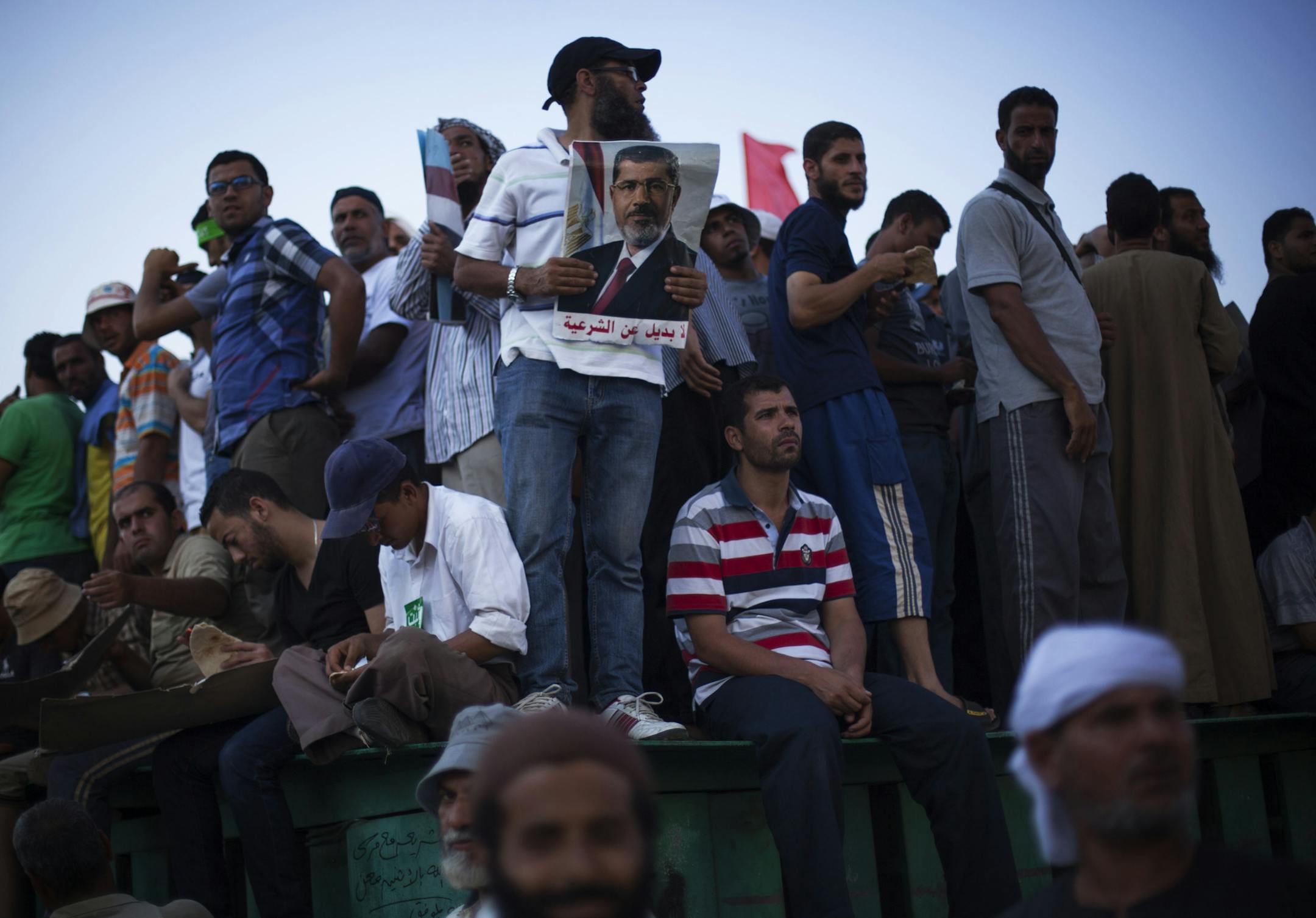
Like many Americans of Egyptian descent, I watched events surrounding the removal of now-former President Mohammed Morsi with a great deal of perplexity. This stemmed not from uncertainty over the path forward for Egypt, the United States and the region, but from the inability of the American media, especially cable news outlets, to adequately explain the events as a process akin to impeachment.
In the midst of celebrating our wonderful country's independence, I can understand the challenges of trying to explain a complex narrative in which another country's first democratically elected president is removed forcibly by the military. I imagine people trying to draw an analogy of Defense Secretary Chuck Hagel giving President Obama his walking papers. Not even Hollywood could pull off a believable scenario in which this country's military could ever usurp civilian control.
But this simple narrative is misguided. The coverage was not based on a full understanding of the facts, of Egypt's history or of the recent policies that led to last week's dramatic action. Here are a few points of clarification that were not mentioned in the coverage:
1) Was Morsi democratically elected? Yes. According to official results, Morsi took 51.7 percent of the vote, garnering 13,230,131 votes.
2) What does the Egyptian Constitution say about impeachment? Article 152 of the Egyptian Constitution states that "A charge of felony or treason against the President of the Republic is to be based on a motion signed by at least one-third of the members of the House of Representatives. An impeachment is to be issued only by a two-thirds majority of the members of the House of Representatives."
3) Why didn't the House of Representatives impeach the president? In June 2012, Egypt's Supreme Constitutional Court dissolved parliament, citing a misapplication of rules for independent candidates.
4) What prompted so many people to turn out to protest? Given the lack of a constitutionally acceptable mechanism to impeach the sitting president, a nationwide grass-roots movement called "Tamarod," which means rebellion, collected more than 22 million petitions demanding that the sitting president resign and for new elections to take place.


