

When a gunman killed four people and wounded a fifth at a Southern California office building last week, news outlets, over and over, called it the third in a string of mass shootings.
"The violence in the city of Orange was the third major mass shooting in just over two weeks," an Associated Press story read. "Last week a gunman opened fire at a supermarket in Boulder, Colorado, and killed 10. A week before that, six Asian women were among eight people killed at three Atlanta-area spas."
No mention of Chicago.
In Sunday's New York Times, Nicholas Kristof wrote a column headlined, "How do we stop the parade of gun deaths?" Chicago gun deaths were not mentioned.
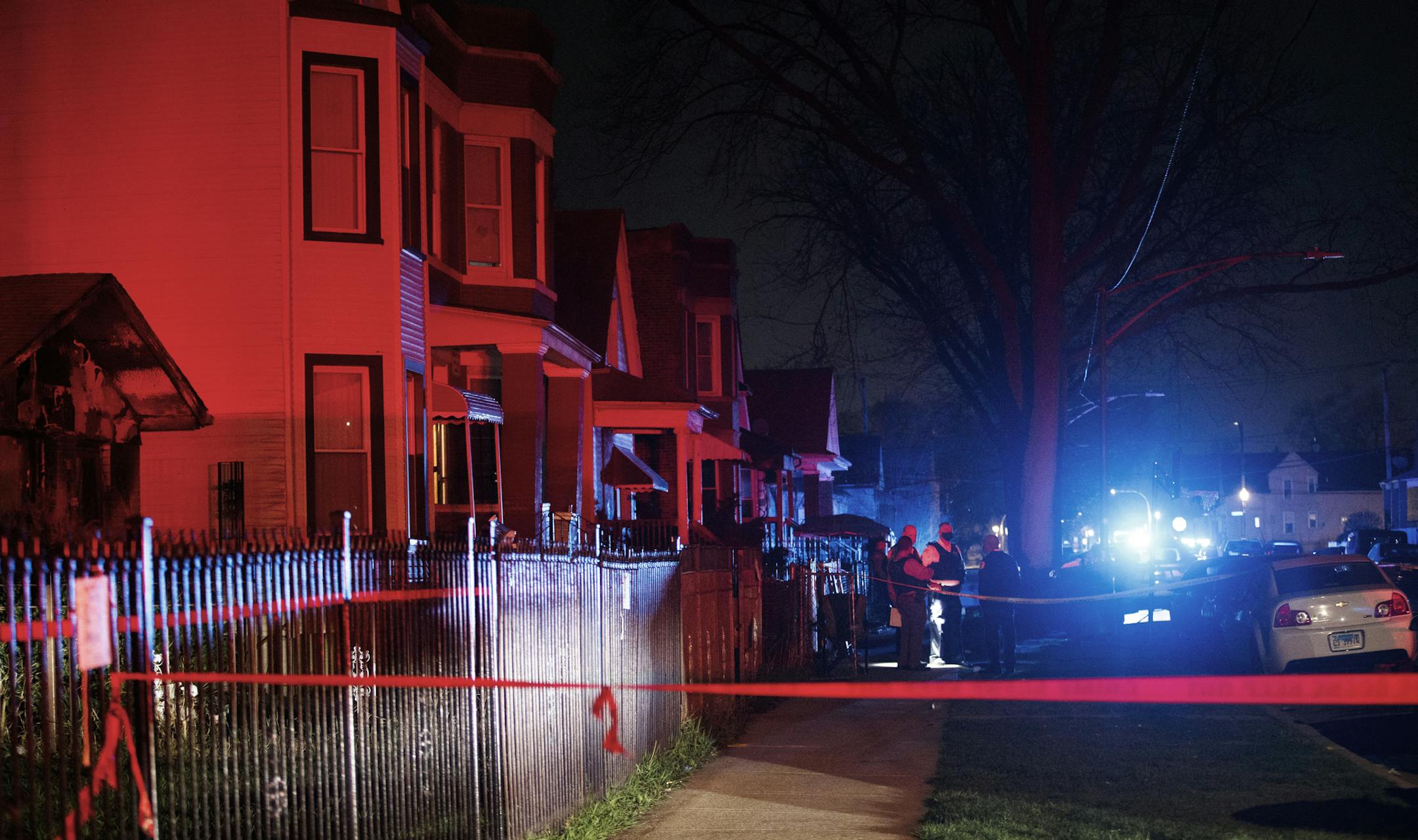
Yet 15 people were shot at a party in Chicago's Park Manor neighborhood on March 14 (two days before the Atlanta-area shootings) and eight were shot outside a Wrightwood neighborhood storefront on March 26 (four days after the Boulder shooting and five days before the Orange shooting). Three died between the two events.
What does it say that the violence here is so rarely included in larger discussions — in the media, among politicians — about mass shootings and the trauma they inflict on our nation?
"Mass shootings are mass shootings when they involve white people," Shaka Rawls, principal of Leo Catholic High School in Chicago's Auburn Gresham neighborhood, told me. "When they're Black people, it's just something that happened over there. When it's violence perpetrated by and on Black people, the mainstream media can easily turn its back and say, 'This is what happens in those communities.' But the impact is huge on those communities."
I called Rawls because the school he leads is located down the street from the funeral home where 15 people were shot on a Tuesday evening in July. Rawls raced to the scene as soon as he heard the news.


