

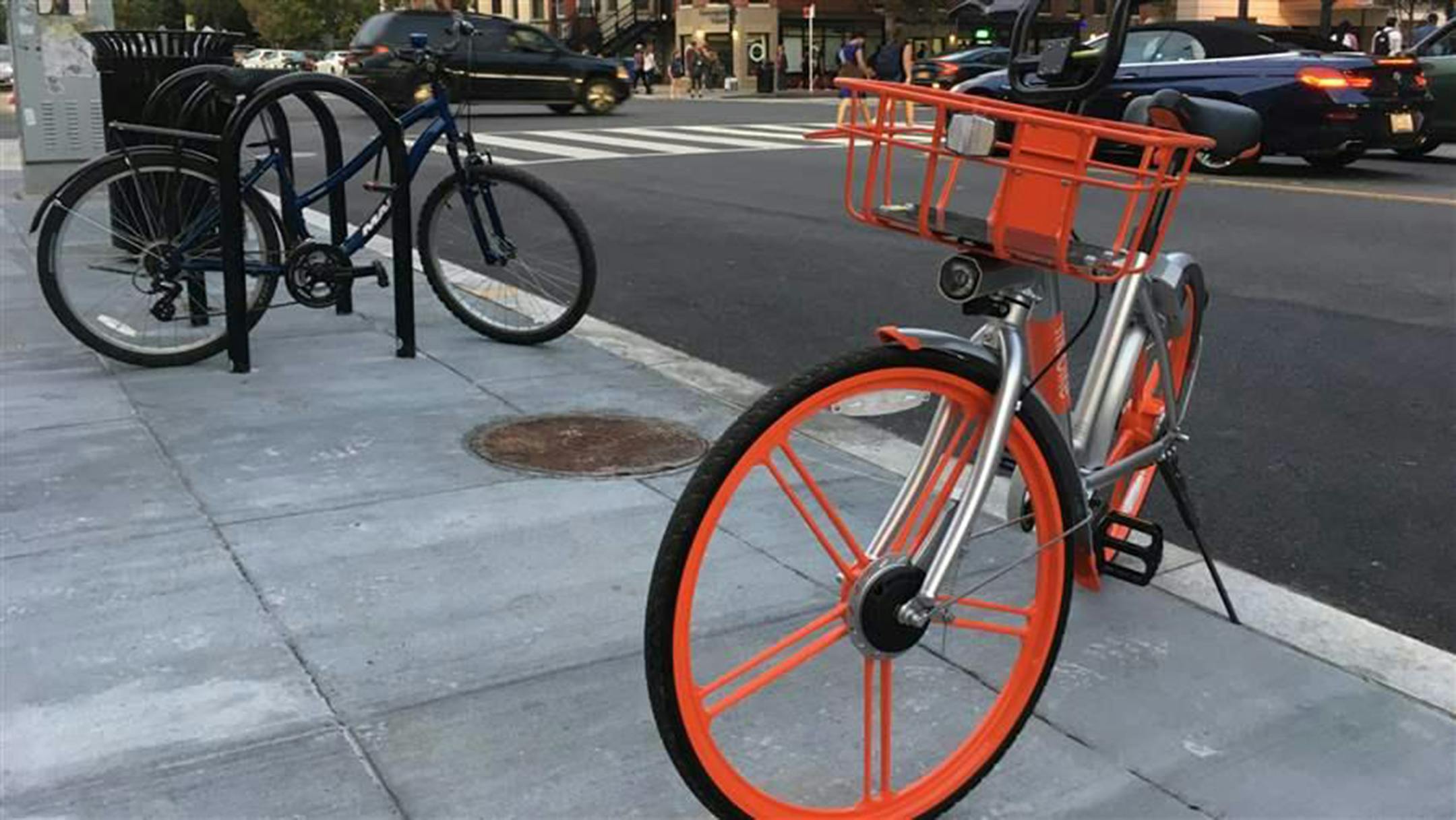
WASHINGTON – As bike-share's growing popularity in the United States spurs private investment, cities that have considered starting their own municipal programs are beginning to ask: Why bother trying to round up millions of dollars when a private company will come in and do it for free?
Following success in China, private firms in the last few months have deployed masses of brightly colored bikes ready to zip around American cities, pushing their way into a market that until now has been dominated by city-subsidized programs.
Unlike existing publicly financed bike-share programs, with bikes that are docked at stations, the neon green, orange and yellow bikes from competing companies are dockless — picked up and dropped off wherever a user likes. Riders use an app on their phone to find available bikes and unlock them for about $1 a half-hour, a cheaper walk-up price than most existing programs offer.
The entrance of dockless biking into the U.S. market has rocked a bike-share sector that has long relied on city workers' help to assemble federal grants, city funds and advertising and sponsorships in order to lure bike-share operators. But those endeavors may be nearing an end.
In Dallas, city officials had long talked of establishing a bike-share program, estimating last year that $6 million would need to be raised to cover the costs of a starter system with 400 bikes and keep it running for five years.
"With such high upfront costs, the decision was made that money needed to be spent elsewhere," said Jared White, who manages the city's alternative transportation program.
Now the city has three private bike-share companies within its limits, making it one of the first U.S. cities to offer only dockless bike sharing.
"It's kind of ironic," White said. "Dallas didn't always have the best reputation for cycling, and we were one of last big cities to try and get bike-share, and now it seems we've leapfrogged ahead of everyone else."


