

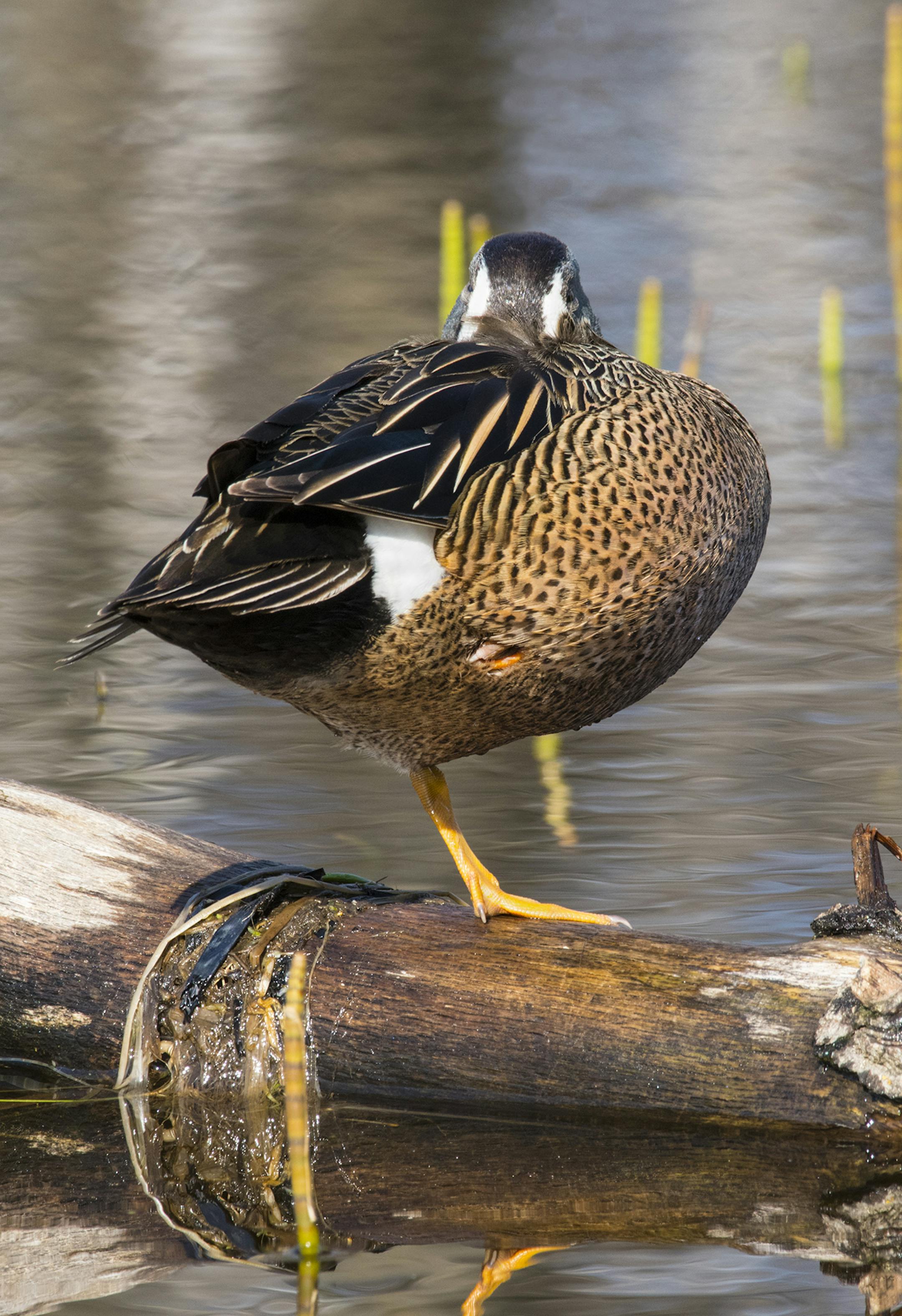
Brainerd – Last week a friend and I were looking at some of my images of waterfowl. I had taken the images earlier this spring on a sunny, warm morning from a blind I had placed on shoreline of wetland.
"That duck [a male blue-winged teal] has only one leg," my friend said. "What do suppose happened to its right leg?"
"If you look closely," I replied, "you'll see its right leg is actually tucked up into its feathers. You can just barely see its foot and toe nails."
"Why is the duck doing that?"
It was a good question.
The behavior is commonplace, often times on frigid winter days when it's obvious the bird is attempting to keep its foot warm. Observe the bird for a few minutes and you'll likely notice it often alternates from one leg to another. Usually the bird also has its feathers fluffed to increase insulation, just as we would add an additional layer of clothing for warmth.
In addition, on those icy days, birds often hunker down on a limb, which places the legs and feet into the relative warmth of the feathers.
It was a warm morning when I took image of blue-winged teal. I watched the teal from the confines of my blind a mere 20 feet away. It crawled up onto a log, preened its feathers for a bit, then pulled its right foot up into its belly feathers, adjusted its center of gravity directly above its exposed foot. Then the teal tucked its bill under its wing, and proceeded to close its eyes.

