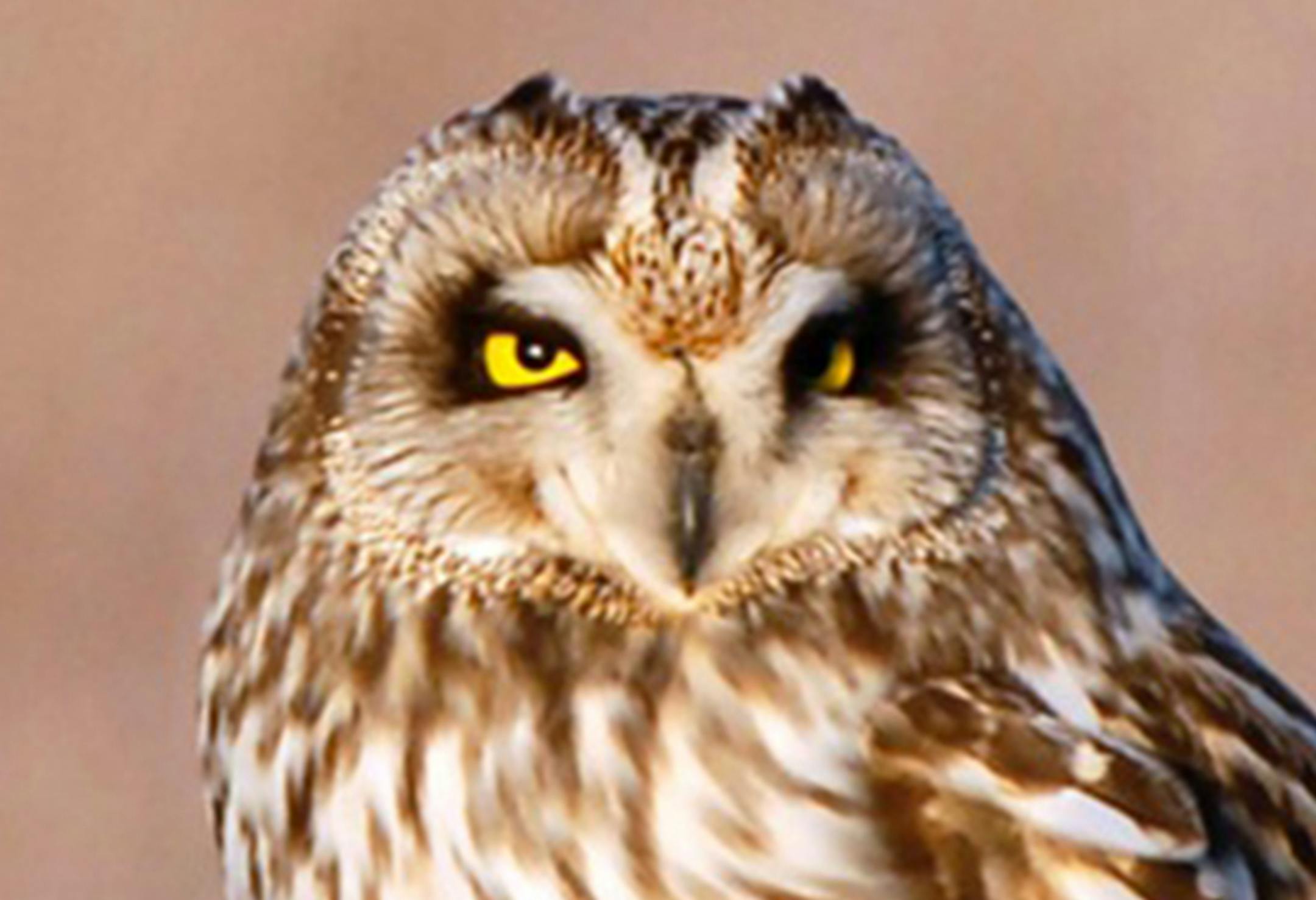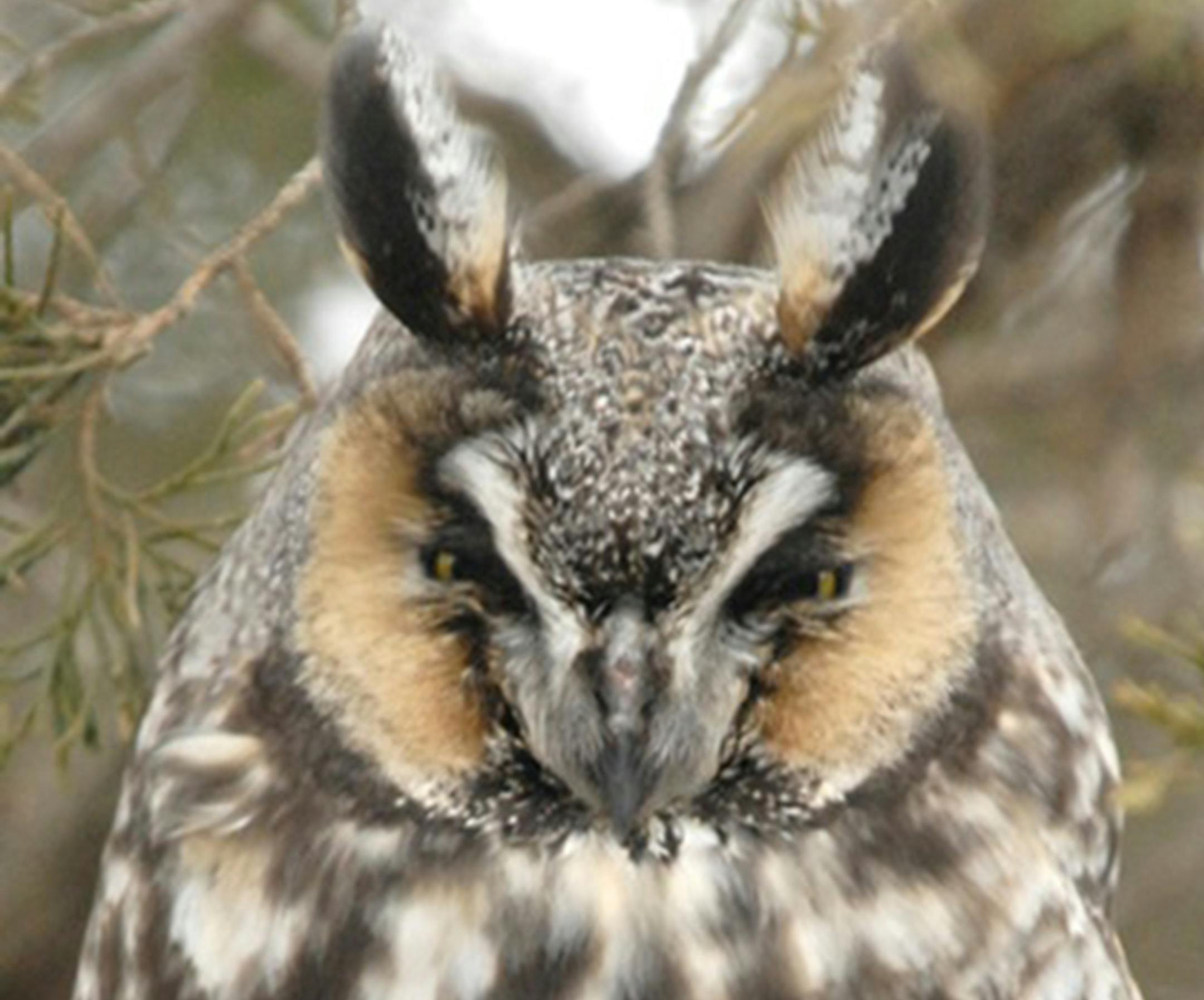
Birds known as eared-this or horned-that have neither ears nor horns.
(Actually, birds do have ears, but you can't see them.)
These birds get their names from erect headdress feathers — specialized feathers that rise from the head plumage.
There are great horned owls, long-eared owls, short-eared owls, horned larks, eared and horned grebes, and horned puffins. Minnesota has those species, save puffins.
If you look at these birds, naming seems to be arbitrary. We could have long-horned owls and short-horned owls. Or eared larks. Bird names often are arbitrary.
Of what use is a tuft of feathers on an owl's head? There is more than one answer, all of them suggested, one slightly firmer than the others.
First of all, how many owl species are there worldwide? And how many have those feather tufts, long or short? Just how often does this occur?
Number of species seems difficult to determine; I'm not certain why. I found one internet source declaring 248 species, another "about 200," a third "more than 225," a fourth specific at 132, and a fifth at 216, that number said by its author to be widely accepted. I doubt that.