
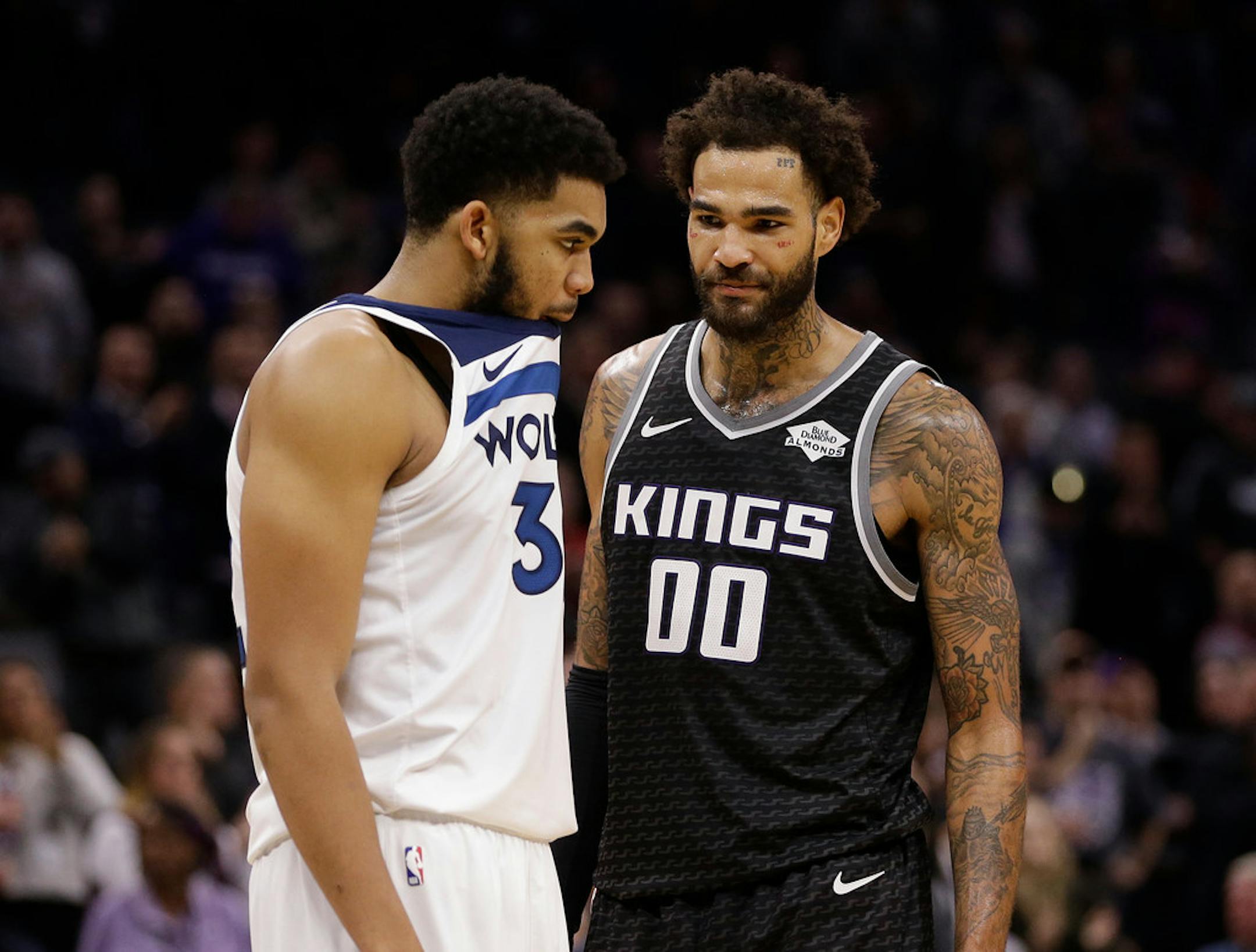
Why can't the Timberwolves win a conference game on the road?

The Wolves' defense and rebounding have been abysmal in Western Conference road games, which is one reason they've lost all 10 of them.

December 13, 2018 at 6:36PM
(The Minnesota Star Tribune)

The latest Timberwolves road trip out West hasn't quite taken on the horror show feel of the last one, which ended 0-5 and resulted in Jimmy Butler finally being traded.

But the trip now sits at 0-3 after a 141-130 loss to Sacramento on Wednesday and perhaps feels even more disappointing than that last awful stretch if only because the Wolves had generated great optimism by going 9-3 since the trade and seemingly had discovered a winning combination centered around defense that might lead to better road results.

Spanning both iterations of the Wolves — pre- and post-Butler — this team is now 0-10 in conference games on the road. There are a lot of ways to define a 13-15 season-to-date, but that's as good as any. Winning on the road is tough, but even marginally better results would have a major impact.

Let's take a look at what has gone wrong on the court, identify some extenuating circumstances and see if there is any hope that things might bet better:

WHAT HAS GONE WRONG

This one is pretty easy. The Wolves' defense and rebounding have been abysmal in Western Conference road games.

They rank No. 28 in defensive rating in road games against the West at 117.6. While certainly skewed by the 141 points surrendered Wednesday, their mark is even worse if we isolate on this current trip: 119.7.

Part of the reason the defense has been so bad is that the Wolves have the worst defensive rebounding rate (66.1) of any team playing road games against Western Conference teams. That had been a problem before the Butler trade, but the Wolves had moved toward the middle of the pack since adding defensive stalwart Robert Covington and versatile forward Dario Saric. On this trip, the rate is back down to 67.4.

ADVERTISEMENT

EXTENUATING CIRCUMSTANCES

Well, part of the problem is that the West is really good — or at least there is only one team in the West, Phoenix, that is really bad. Everyone else is two games below .500 or better.

The West was tough last year, but there were four teams that finished 27-55 or worse. The Wolves, if you'll recall, went 34-18 against the West last season but just 13-17 against the weaker East. This year, it's reversed. In all games, the Wolves are 6-12 against the West and 7-3 against the East.

The Wolves have also had some unfortunate momentum interruptions and health issues on both of their big West trips. The Butler saga was draining them last time, but they also missed Jeff Teague, Derrick Rose and Andrew Wiggins for stretches. On this trip, Covington missed the Portland game — a winnable one Minnesota arguably should have locked down regardless.

HOPE FOR THE FUTURE

Well, the Wolves are already done playing Golden State and Portland on the road after losing a combined four games to those teams. Those are hard places to win for any team. And they get two road games at Phoenix (4-24), including one Saturday to end the trip.

Minnesota also doesn't have any road trips out West (or anywhere, for that matter) that are longer than three games for the rest of the season. Long trips aren't necessarily bad, but they can tend to compound problems, wear teams down and expose weaknesses.

If the Wolves can at least beat Phoenix on Saturday, they won't embark on their Western Conference road game feeling the weight of the world — and perhaps they can start ascending to the mean after all this regression.

about the writer

about the writer

Michael Rand

Columnist / Reporter

Michael Rand is the Minnesota Star Tribune's Digital Sports Senior Writer and host/creator of the Daily Delivery podcast. In 25 years covering Minnesota sports at the Minnesota Star Tribune, he has seen just about everything (except, of course, a Vikings Super Bowl).

See Moreicon

More from Wolves

See More
card image
Matt Krohn/The Associated Press

The Wolves didn’t have Anthony Edwards or Mike Conley available for the second game in a row, and Rudy Gobert departed in the second half for personal reasons.

card image
card image