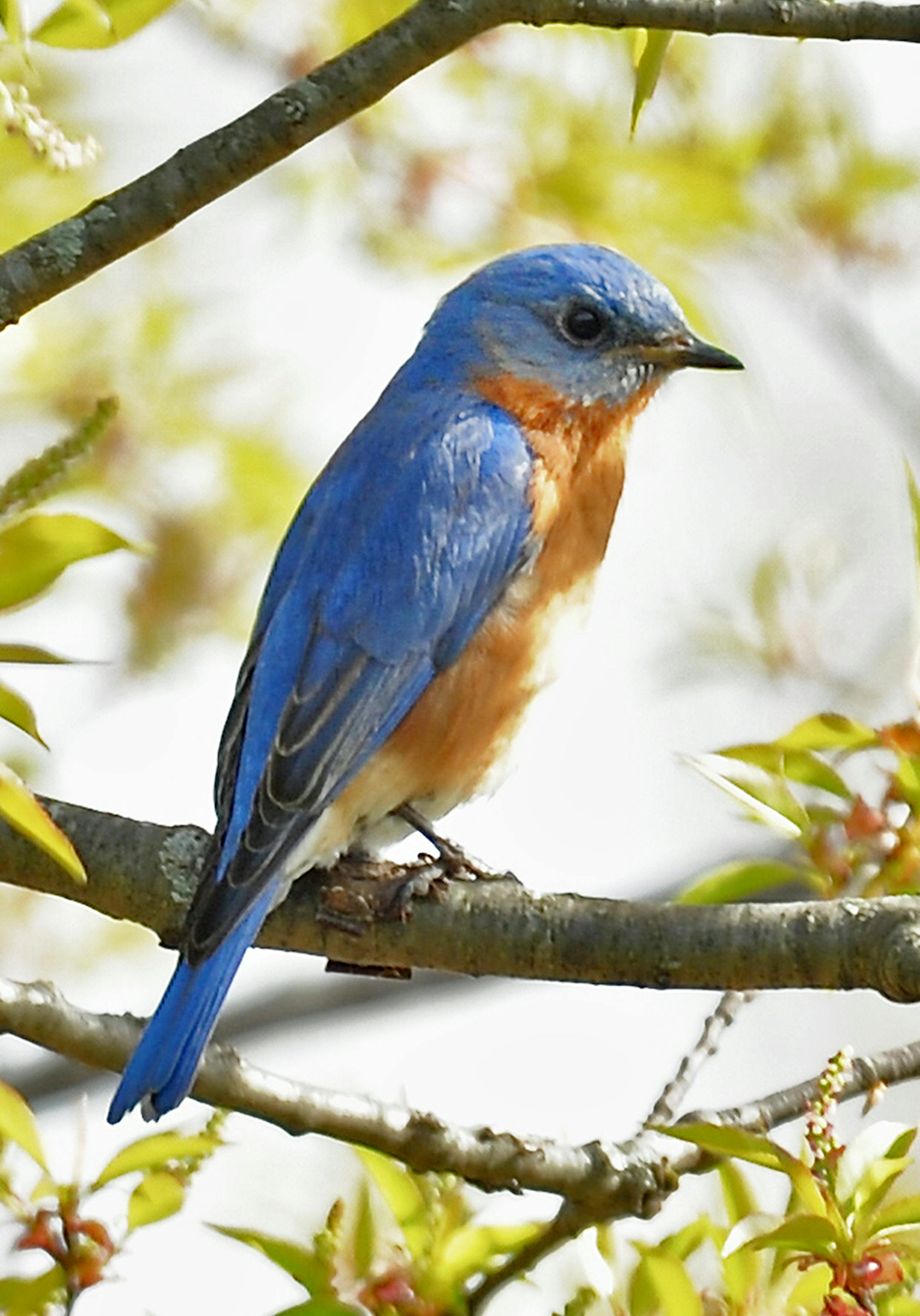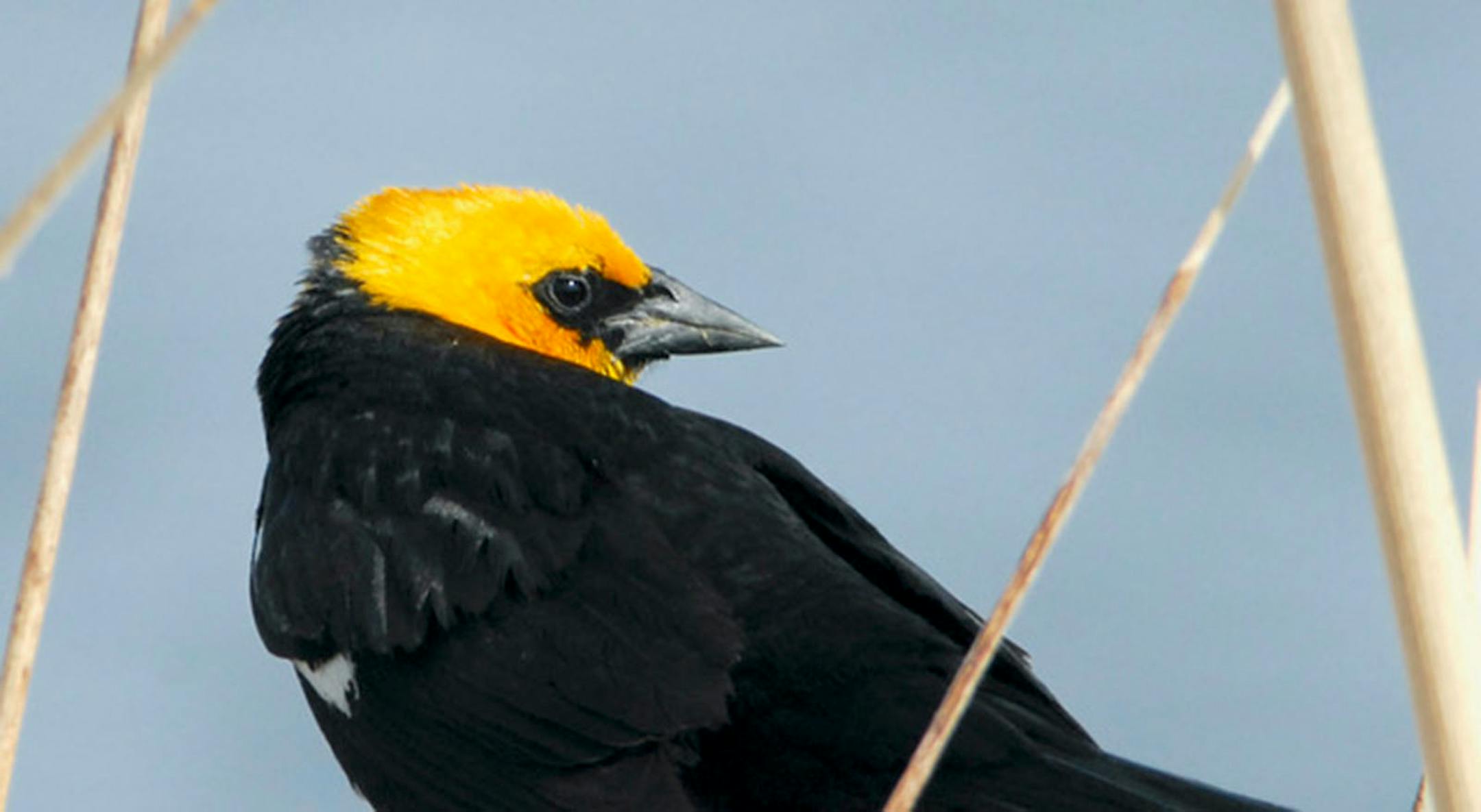
Birds are some of the brightest and most colorful animals on Earth. The blues, reds, greens, purples and yellows of the avian world are rivaled, among vertebrates, only by the brilliant colors and patterns of tropical fishes.
Have you ever stopped to wonder why this is true? Why aren't bird feathers restricted to the shades of black, brown or gray seen in most mammal coats? Since so much in nature has a purpose, what's the story behind a male cardinal's bright red feathers, a bluebird's brilliant blue and a goldfinch's sunny yellow? Their feathers make them highly noticeable, and if we notice them, so do predators on the lookout for a meal.
Beginning millions of years ago, birds began evolving into a huge variety of species showing a great deal of variation in size, shape, color, habitat, food choices and flight style. The agent at work in creating all this diversity was what Charles Darwin called natural selection: Living creatures are in a continual battle for food and mates, and those best adapted to their environment will survive to pass on their genes slightly more often than those less well adapted.
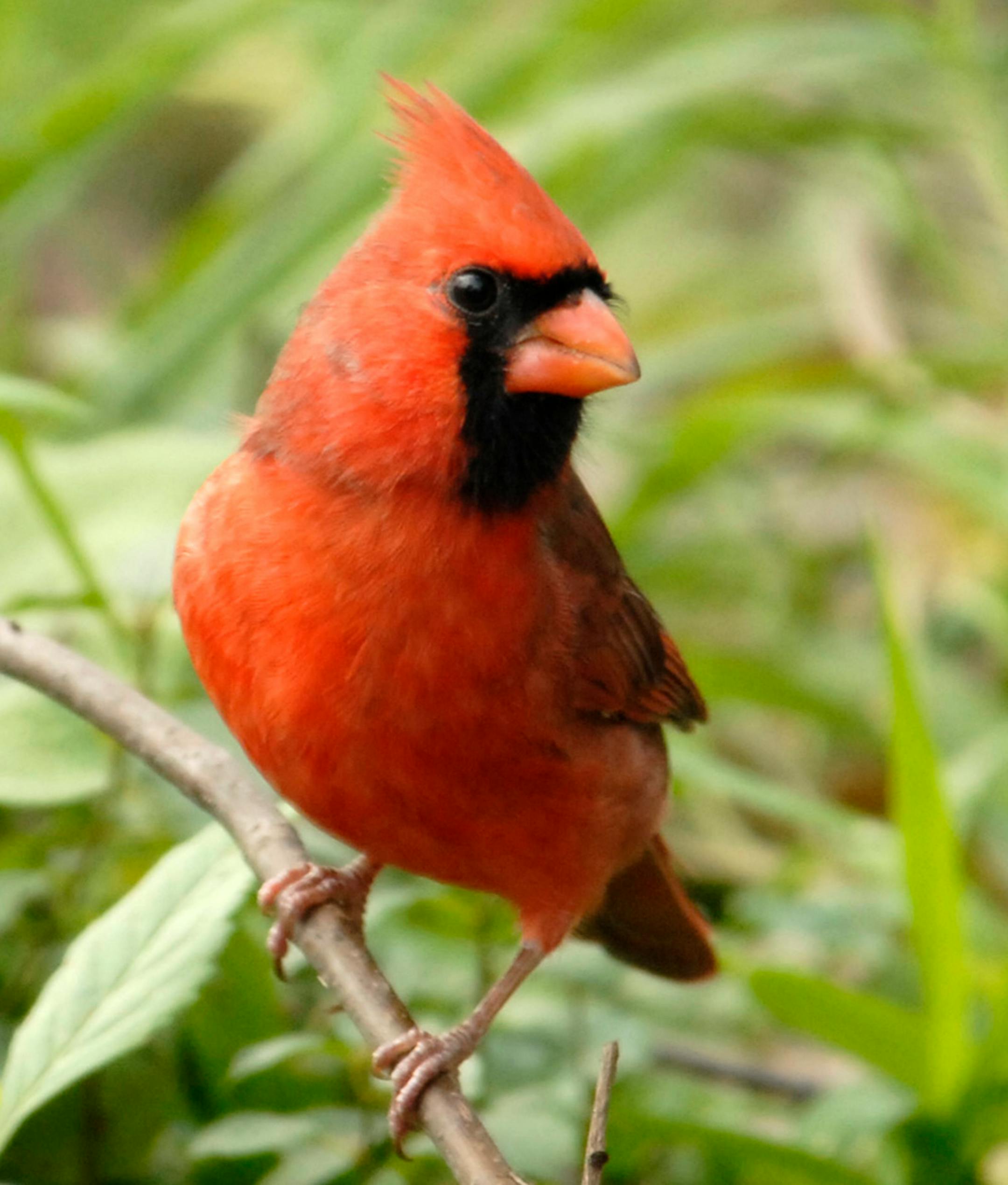
Over time, that cardinal beak may have become larger and stronger, allowing them to crack very tough seed shells to reach the food inside. Bluebirds raised two or more broods each season, increasing chances for a survivor with their particular genes. This is survival of the fittest, but what about the male cardinal's intense red color, as opposed to a female cardinal's subtler taupe and light red?
This is where a different evolutionary system comes into play, that of sexual selection. Many bird experts now say that female birds are the major drivers of color in male birds. Brightness is a good indicator of a strong and healthy male, one who is in good condition, has good food sources and is capable of dominating his territory. Over many generations, as females selected brighter male cardinals, the population became brighter.
So, even though a red cardinal singing at the top of a tree is very visible to friends and foes alike, over time the advantage he enjoys in gaining the best mate offsets the species' inability to hide from hawks and other predators that want to eat them. Color also communicates with other males of the same species, sending the message that a bright male is in good shape and ready to fight to hold onto his territory.
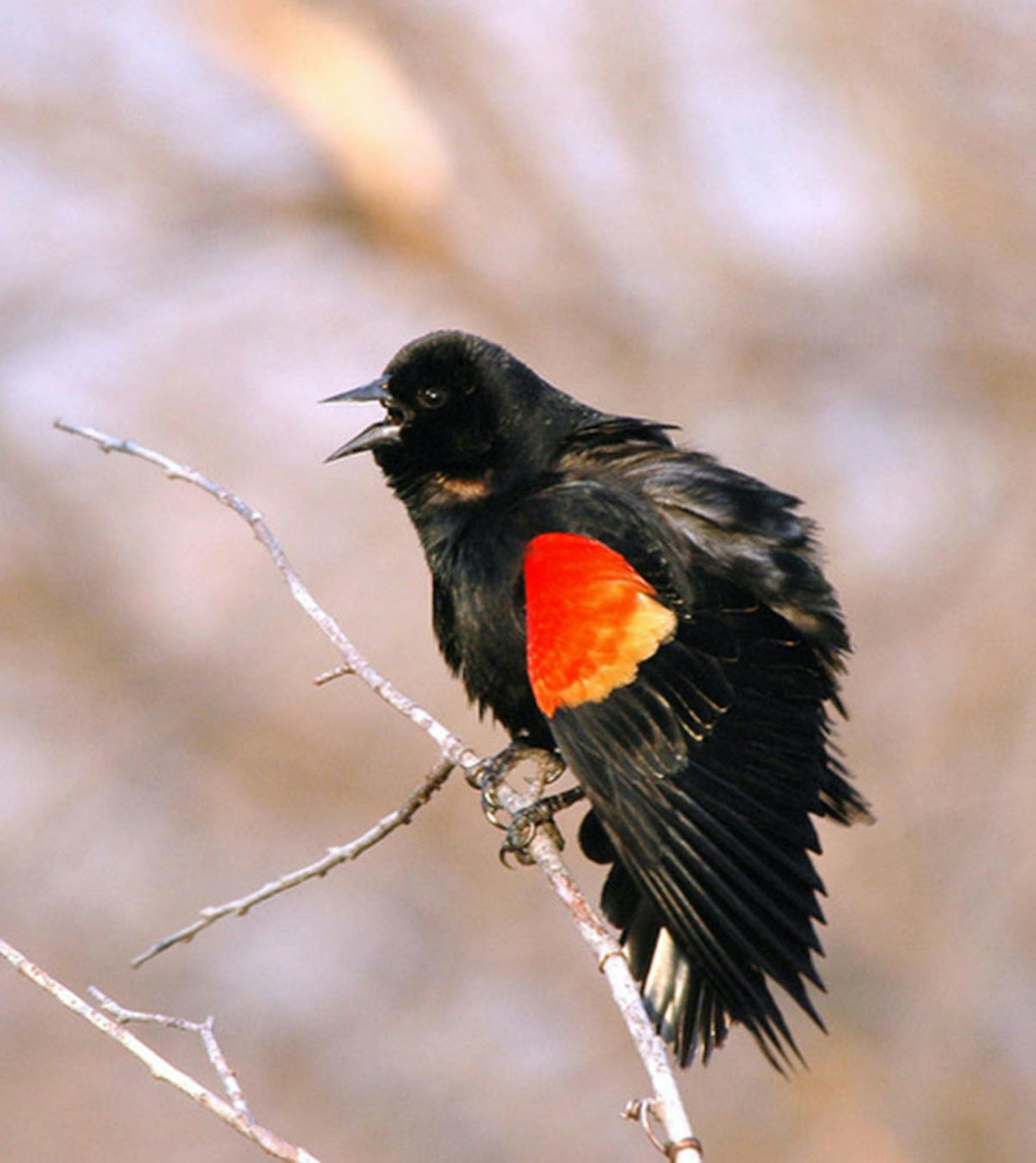
Red-winged blackbirds can be very aggressive, and they use the brilliant red patch on their shoulders to communicate to other blackbirds, helping to attract a mate and repelling competitors. They can cover the patch with dark wing feathers when they don't need to send such burly messages. In one fascinating field study, researchers covered up some red-winged blackbirds' shoulder patches, resulting in those birds losing their territories more often than birds who had visible patches.
So, a bright red cardinal, a brilliant orange oriole and a standout yellow goldfinch each has a better chance of attracting a healthy mate, holding a good territory and thus raising a family to carry on his genes.