

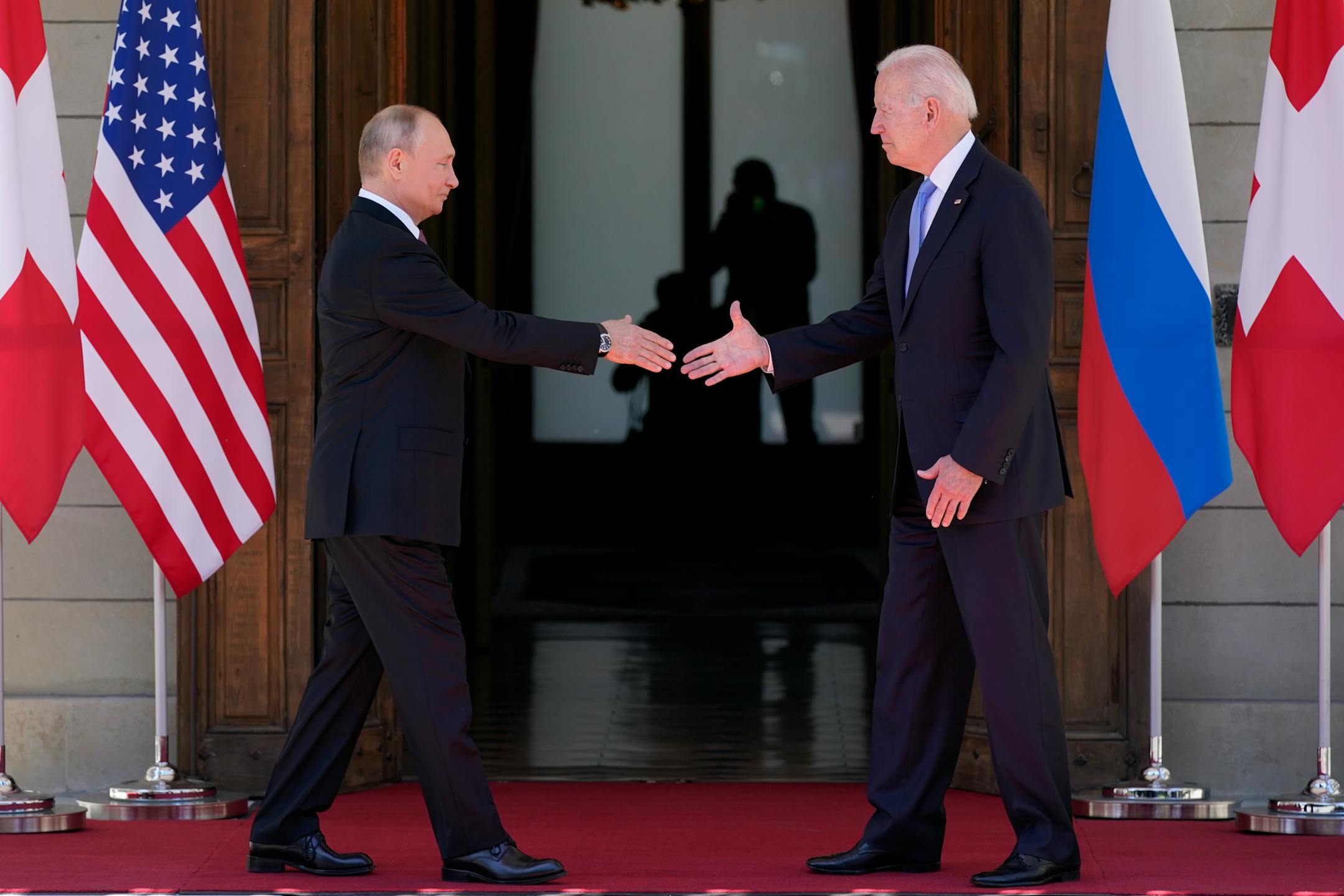
On the campaign trail in 2020, then-candidate Joe Biden posed as a hawk on Russia. In response to reports (later discredited) that then-President Donald Trump had ignored intelligence suggesting Russia had paid for bounties on U.S. forces in Afghanistan, Biden declared that Trump's "entire presidency has been a gift to Putin."
Biden's attitude was partly explained by his party's obsession with the (also discredited) theory that Trump conspired with Russia to win the 2016 election. And Trump's own inexplicable sycophancy toward Russian President Vladimir Putin bolstered this Democratic narrative.
So it's understandable that some voters believed Biden would take a harder line on Putin than Trump.
Eleven months into Biden's presidency, that harder line has yet to emerge. In the current crisis in Ukraine, for example, Biden and his administration have told Putin that there will be devastating sanctions if he orders the troops amassed on Ukraine's border to invade. At the same time, Biden has invited Putin to a NATO summit to air his grievances about the alliance he seeks to break apart.
The Biden administration has also sent mixed messages on whether Ukraine should give separatists in the Donbas region special political status before Russia withdraws its forces and dismantles the illegal armed groups it created during its first invasion of Ukraine in 2014.
Another aspect of Biden's policy is that coercive measures against Russia are proposed as a consequence only if it invades. This makes Putin's destabilizing troop buildup on Ukraine's border essentially cost-free. Biden still hasn't used his congressionally mandated authority to send up to $200 million in military aid to Ukraine, an authority that exists for just this type of an emergency. Last week a group of Democratic House lawmakers urged the White House to tap this fund.
The Biden administration has also declined to enforce significant sanctions against the Nord Stream 2 pipeline, which would bypass Ukraine and provide natural gas directly to Germany, depriving the struggling Ukrainian country of a critical source of revenue and a hedge against Russian belligerence. The U.S. has hinted that such sanctions would be enforced if there were an invasion, but for now Russia has a path to securing one of Putin's strategic priorities.
The lack of action has caught the attention of Ukraine President Volodymyr Zelensky. "It is important to have sanctions applied before, rather than after, the conflict would happen," he told reporters this week. "If they were applied after the conflict would happen, this would basically make them meaningless."


