

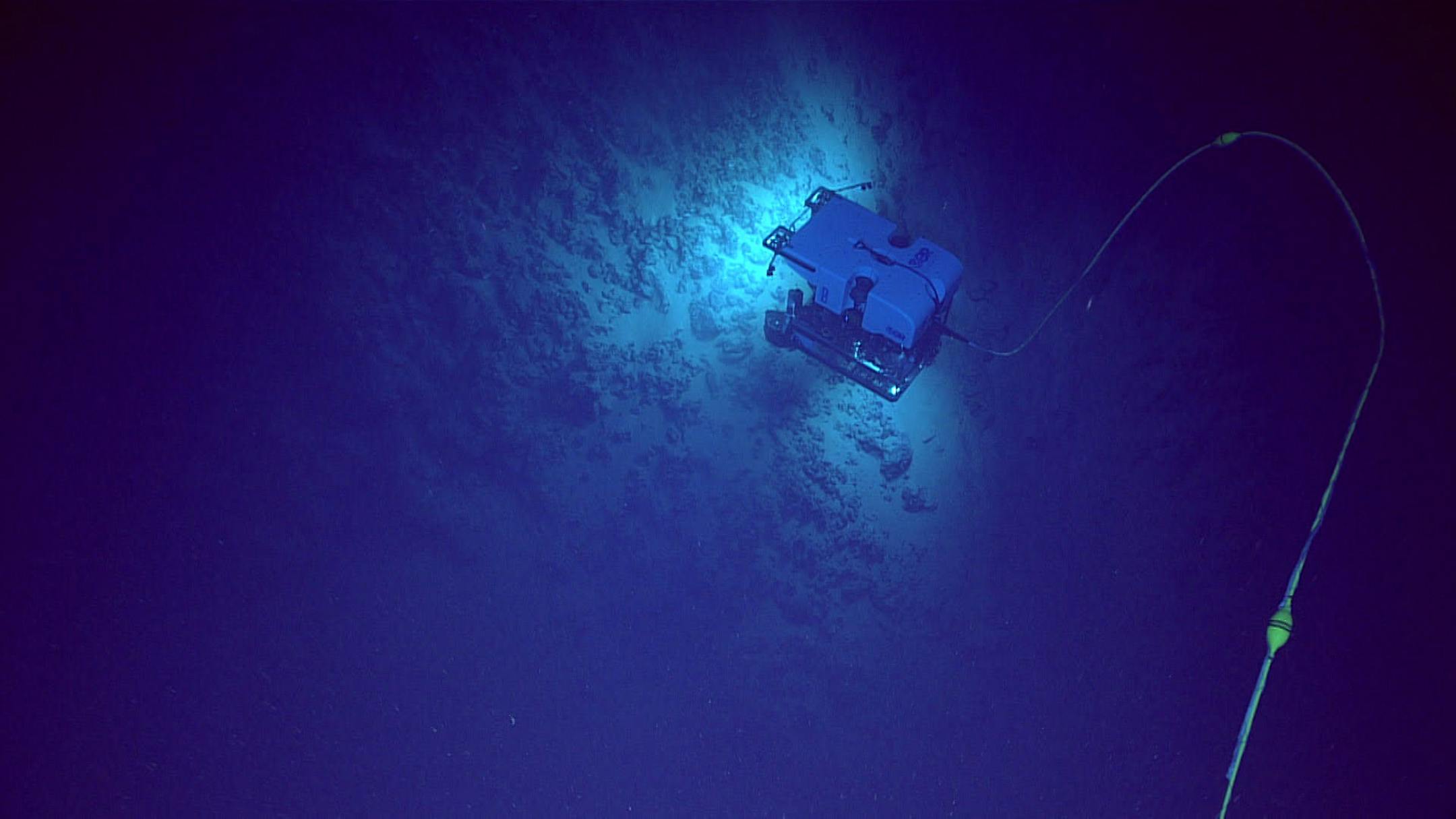
Deep in the waters along a volcanic ridge in the bottom of the Atlantic Ocean, sea explorers using a remotely operated vehicle to examine largely unexplored areas found a pattern of holes in the sand.
During the dive, north of the Azores, near Portugal's mainland, on July 23, they saw about a dozen sets of holes resembling a track of lines on the ocean floor, at a depth of 1.6 miles.
Then about a week later, on Thursday, there were four more sightings on the Azores Plateau, which is underwater terrain where three tectonic plates meet. Those holes were about 1 mile deep and about 300 miles away from the site of the expedition's initial discovery.
The scientists do not know what the holes are, but they have encountered similar markings before and consider them to be "lebensspuren," German for "life traces," referring to impressions in sediments that could be the work of living organisms.
The question the scientists are posing, to themselves and to the public in posts on Twitter and Facebook, is: What is creating those marks on the ocean floor?
"The origin of the holes has scientists stumped," said the post on Twitter from the National Oceanic and Atmospheric Administration's Ocean Exploration project. "The holes look human made, but the little piles of sediment around them suggest they were excavated by … something."
Nearly two decades ago, just about 27 miles away from the location of the current expedition's initial sighting, scientists spotted similar holes during an exploration, said Emily Crum, a NOAA spokesperson.
But the passage of time has not provided any clear answers, said Michael Vecchione, a NOAA deep-sea biologist who participated in that project and is also involved in part of this latest expedition.


