

Opinion editor's note: Star Tribune Opinion publishes a mix of national and local commentaries online and in print each day. To contribute, click here.
•••
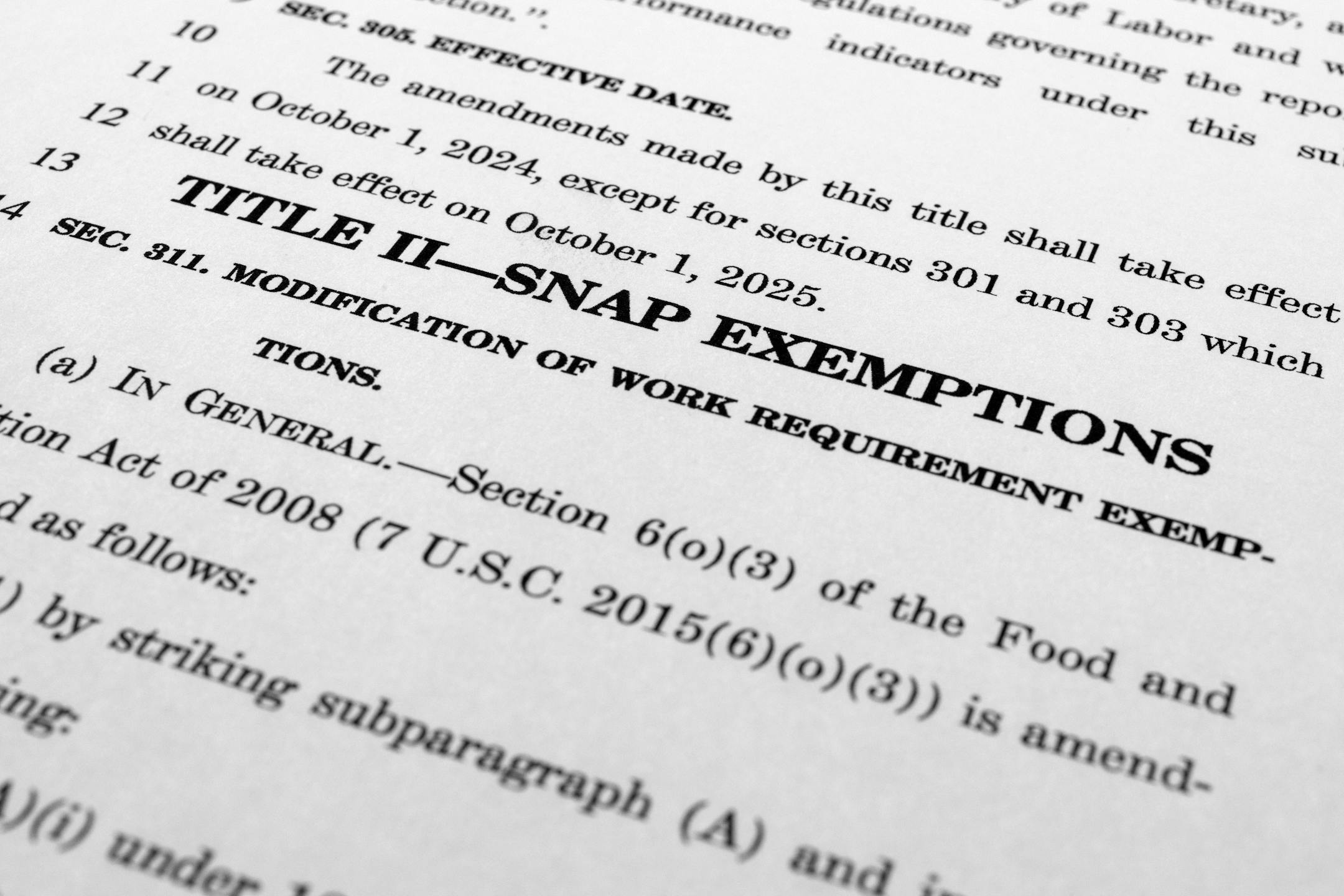
The latest deal to avert a U.S. government default, with its new work requirements for welfare programs, illustrates a fundamental flaw in America's social safety net: It's far too focused on identifying the worthy, to the detriment of the needy.
By official measures, nearly 40 million Americans are living in poverty. Yet not a single public program serves them on that criterion alone. To qualify for benefits, they must also be something else, such as old, disabled or pregnant. Even then, access isn't categorical: People must get through a labyrinth of multi-contingent eligibility tests, which might include anything from the size of their savings account balance to some minimum time spent on work-related activities. And if there's a natural disaster, everything can change.
Worse, different programs don't often work together. Consider children who age out of foster care, typically at 18. The new debt-ceiling deal exempts them from the work requirements it imposes on recipients of food stamps (officially the Supplemental Nutrition Assistance Program, or SNAP), but only until they turn 24. They're eligible for Medicaid until age 26, but only if they were in the program on their 18th birthday. They can apply for housing assistance until age 21, but it's not guaranteed and depends on school enrollment and special education vouchers, which they must use before age 26. Navigating all this would confound anyone, let alone an 18-year-old with no parents.
Why the complexity? To borrow a concept from statistics, the U.S. social welfare system is far too concerned about avoiding Type 1 errors — that is, identifying people as needy when they actually aren't. This requires a whole phalanx of rules aimed at figuring out who is worthy, a definition that can vary wildly depending on one's ideological leanings, among other things. Veterans and their families are almost always considered worthy, while undocumented immigrants rarely are. In many states, drug felons are subject to a lifetime prohibition from SNAP and Temporary Assistance for Needy Families, or TANF, while no other type of felon is so distinguished.
As a result, the system is much more likely to make Type 2 errors — that is, failing to identify and provide for the truly needy. This can happen because the rules are exclusionary or simply too burdensome. Across the country, millions of eligible families and children fail to participate in programs such as SNAP and Medicaid. As of 2020, just 21% of families in poverty received TANF benefits, down from 68% when the program was enacted in 1996.
Nowhere is the fear of Type 1 error more apparent than in the end of the expanded Child Tax Credit. It provided income stability to tens of millions of children, halving child poverty in the process. But it was cut over concerns that potentially 500,000 parents might work less or use the money to buy drugs. The overwhelming benefit of protecting children and investing in them was deemed not worth the risk of subsidizing some possibly unworthy parents.


