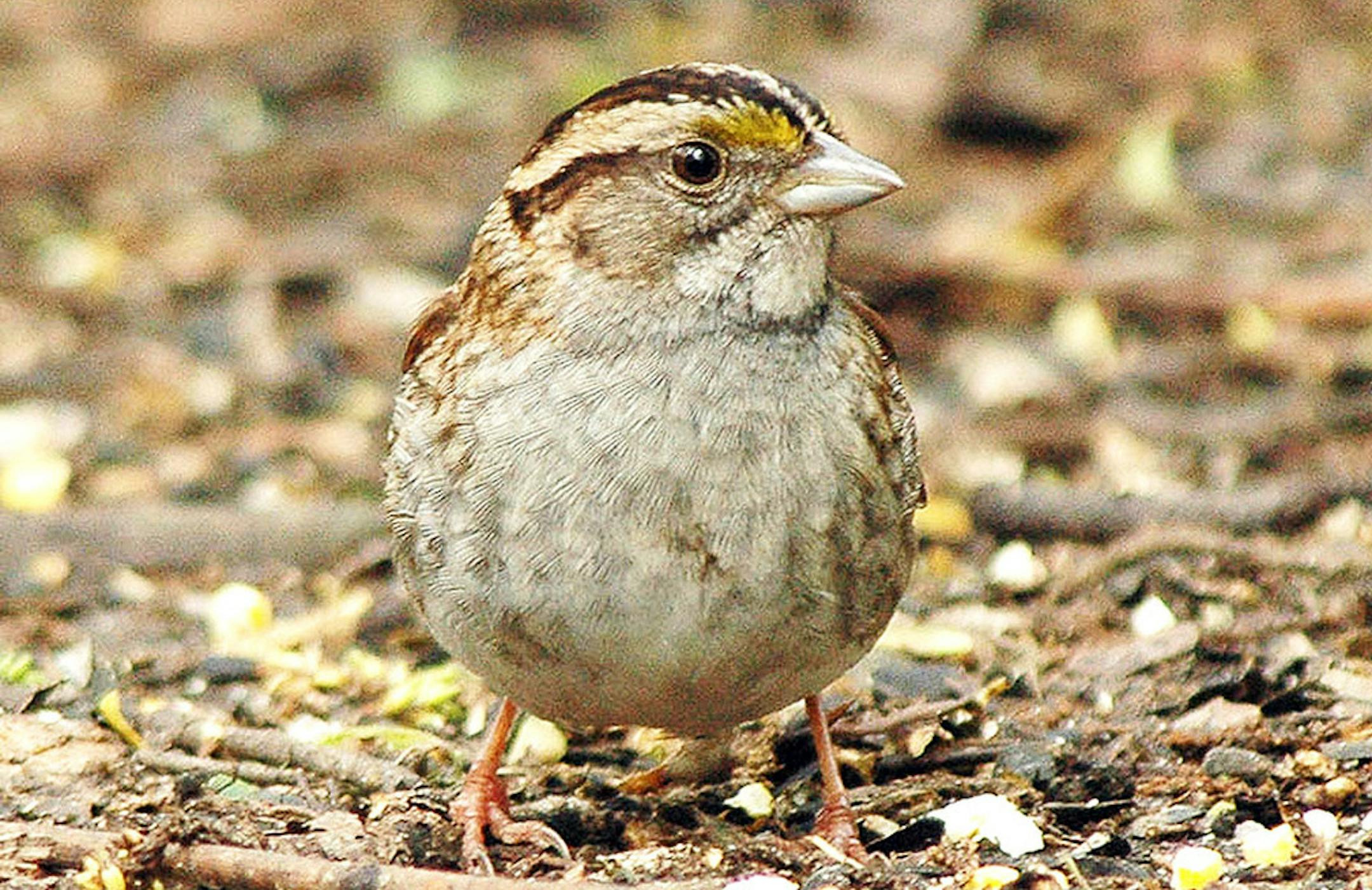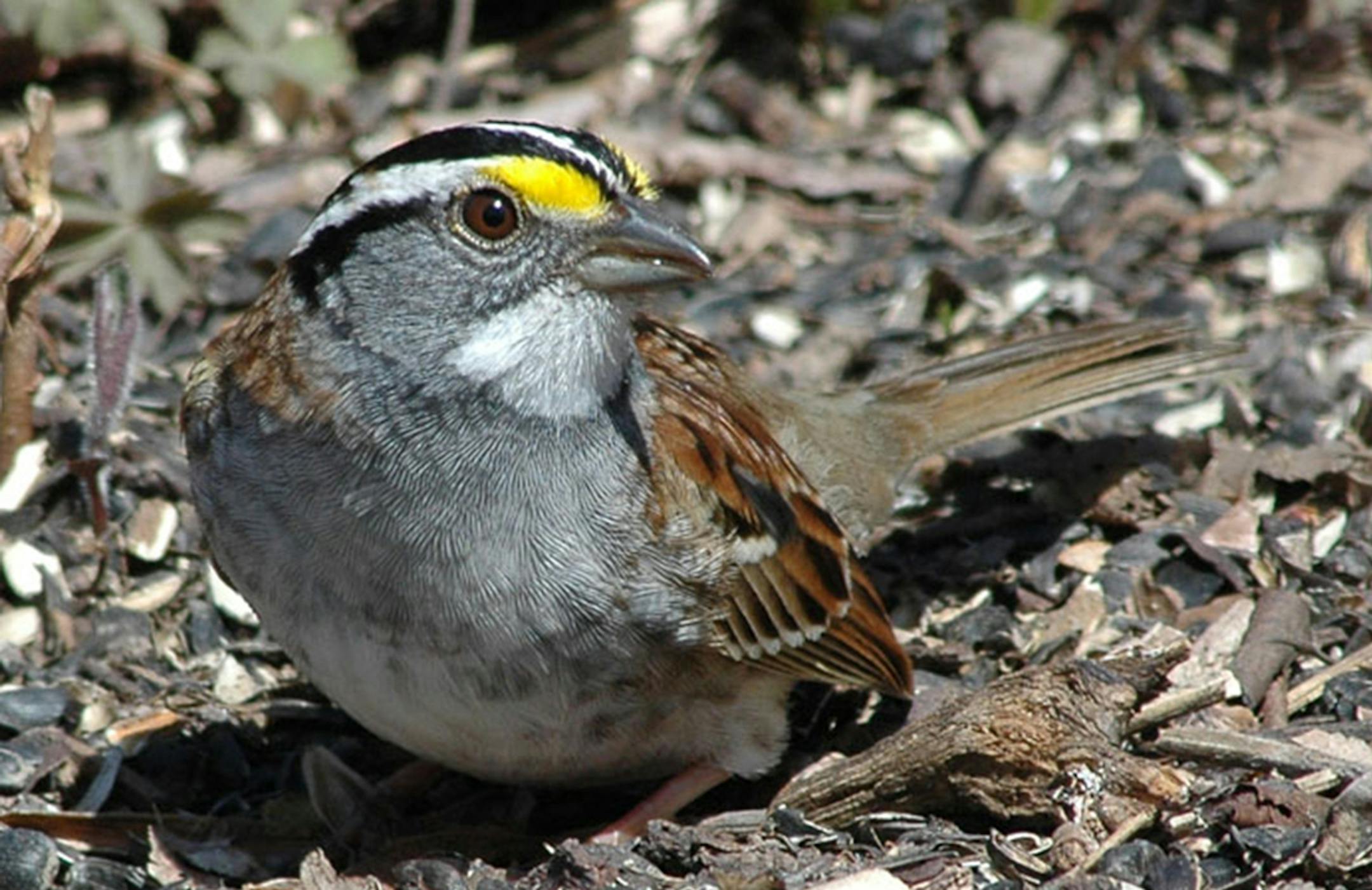
Q: I noticed quite a few white-throated sparrows (love that descriptive name!) under my feeders this fall, but some of them weren't so white. Those browner ones were the females, or young birds, right?
A: Many of us used to think that the browner white-throated sparrows were females or juveniles, but it's now clear that there are two varieties of the same species. One has a brilliant white throat and dramatic head striping, while the other shows subdued tones and more brown on its head and chest. The fascinating thing is that the brighter birds are more aggressive and don't tolerate others with similar markings. Since the duller variety isn't as feisty, the end result is that each pair of white-throated sparrows is an "odd couple," made up of one bright bird and one duller bird. Many readers reported seeing large numbers of white-throated sparrows during fall migration this year.
'Snow birds' are winter-hardy
Q: Juncos are one of my favorite birds and I love to watch them scrabbling around for seeds in the backyard. Why don't we see them in the summer?
A: These small, charcoal and white colored sparrows are fun to observe foraging for food on cold winter days. They're very hardy and are active in even the most inclement weather. They breed in the evergreen forests of Canada, so from May until September they're busy raising their young in the Northland. Juncos start showing up in late September and remain with us until the next breeding season, beginning in May. If you'd like to treat your juncos, try scattering some millet under feeders or at the base of trees.
Two-nest birdhouse
Q: I was cleaning out the bluebird house in my backyard and was surprised to find two nests inside, one on top of the other. I'm puzzled about what may have happened.
A: This isn't all that unusual, since there never are enough nest boxes to go around for all the birds that want to use them. Chickadees begin nesting earlier than bluebirds, but if a bluebird pair decides they want that nest box, they'll build their nest right over the chickadee nest. The same thing happens to bluebirds and tree swallows, if a house sparrow or house wren commandeers the nest box. Nest box dynamics are always interesting, and sometimes we don't see the clues until clean-out time.
Finches won't starve
Q: We feed goldfinches all summer, but now we've started spending the winters in Texas. I worry about the little birds finding enough food while we're away.
A: No need to fret about your goldfinches; they'll easily make it through the winter without feeder foods to augment their diet. Goldfinches, unlike most other songbirds, live almost entirely on seeds, and fall and winter provide plenty of this food. They enjoy the seeds of flowers and grasses and even take cone seeds, in winter. When you return, however, it would be a kindness to put out your finch feeder right away, because nature's larder is usually fairly bare by early spring.