Airboat to harvest wild rice stirs up criminal charges, controversy

The two White Earth band members charged argue that machine harvesting falls within their treaty rights.

The Minnesota Star Tribune
September 30, 2025 at 4:25PM
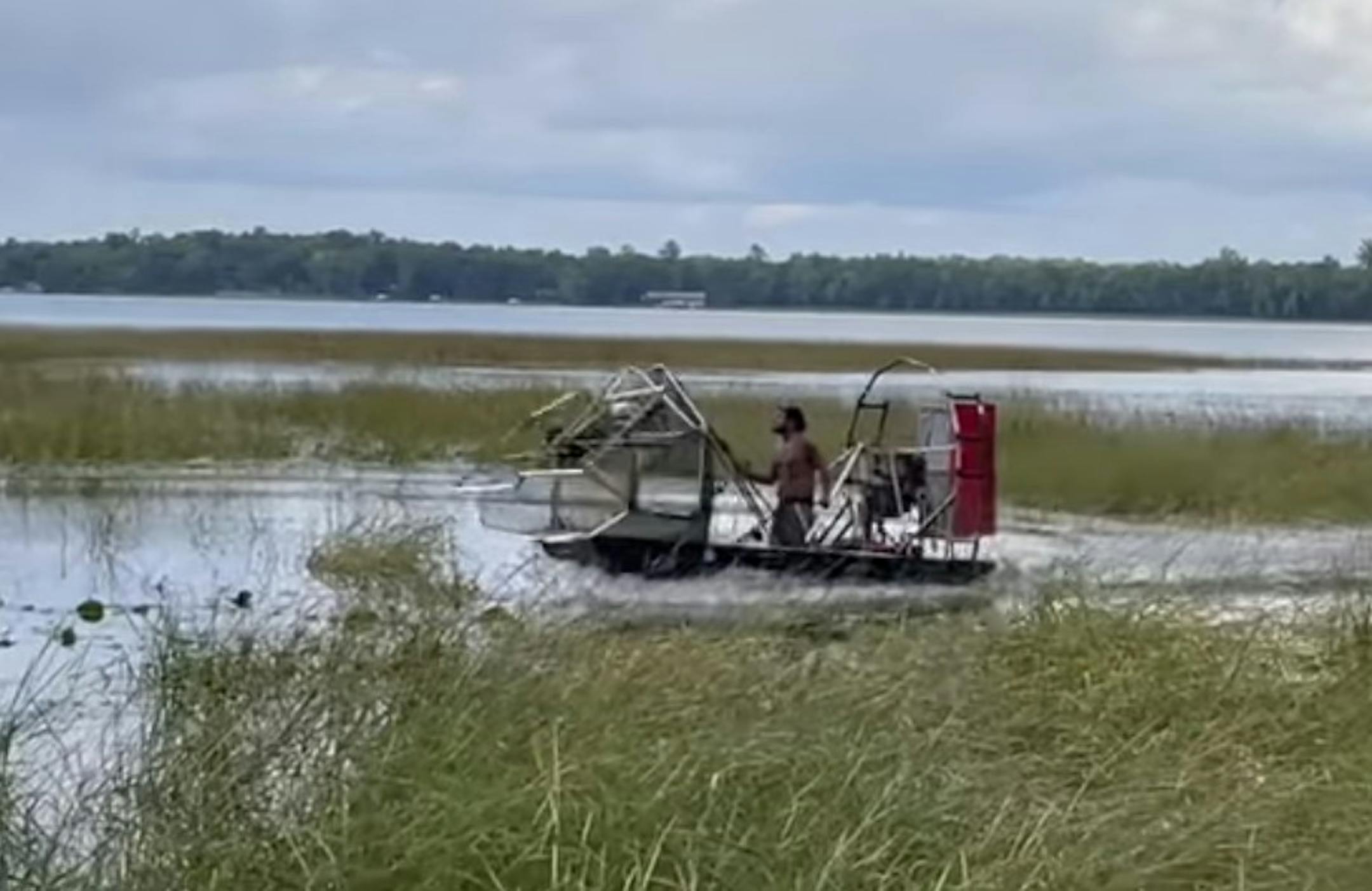
This image from a YouTube video shows Jesse Barrientez operating an airboat on a public lake Aug. 28, 2025, when the Minnesota Department of Natural Resources seized the boat. Barrientez and Reino Rousu were recently charged in Becker County with illegally harvesting wild rice. (Martin Seeger/YouTube)

It would be a rare sight to spot an airboat equipped with a machine harvesting wild rice on northern Minnesota water.

That’s because such a harvesting method is prohibited by tribal and state law.

But two men accused of illegally harvesting wild rice using the machinery claim it’s within their rights to do so under an 1855 treaty, a legal gray area that has been tested by tribal members in other cases involving the extent of hunting and gathering rights off the reservation.

Reino Rousu, 54, and Jesse Barrientez, 36, both enrolled members of White Earth Band of Chippewa, had their boat seized by the Minnesota Department of Natural Resources this summer and were each recently charged in Becker County with three misdemeanor counts of illegal harvest.

Charges accuse them of damaging an estimated 30 acres of wild rice beds on Height of Land Lake, just south of the White Earth reservation, where DNR officers stopped them. A video that they posted on social media is being cited as evidence in the case.

In interviews with the Minnesota Star Tribune, both men denied the accusations and said they will fight charges all the way to the Supreme Court. Rousu filed a federal lawsuit against the state and the DNR arguing that his treaty rights were violated, and the seizure of his rice and boat and the loss of additional harvest cost him around $450,000.

Rousu said more people should use airboats and that people using traditional methods are “primitive,” “ignorant and arrogant.”

Barrientez said “adaptation is a necessity in evolution.”

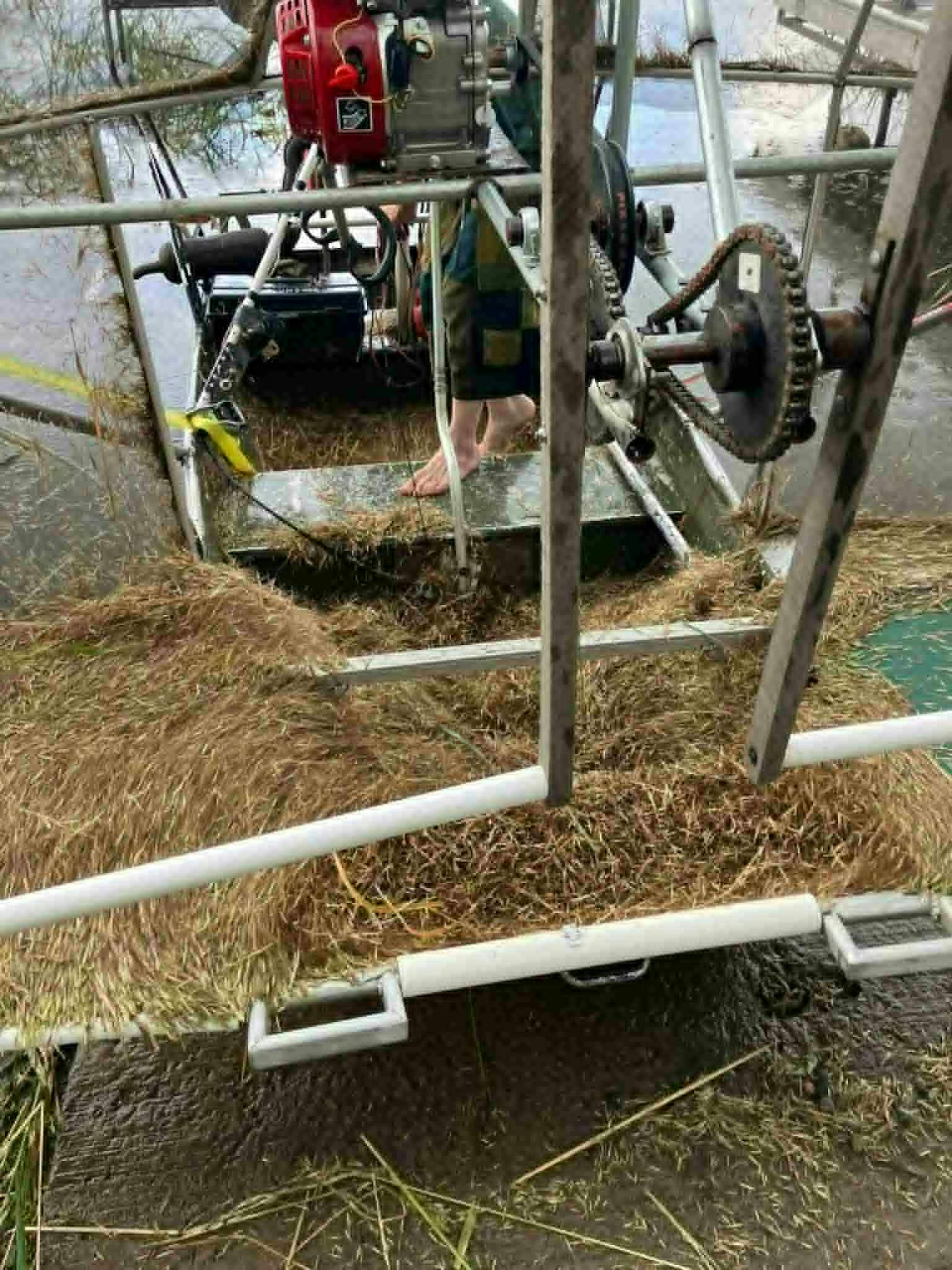
The airboat — with a motor-driven reel on the front functioning like a combine — can harvest 1,000 pounds per hour, Rousu said. It can take an entire day harvesting by hand to break a few hundred pounds.

In Minnesota, where the most natural wild rice grows in the world, there are strict harvesting laws that prohibit motorized equipment. Ricers push canoes with long wooden poles to glide across rice beds. Indigenous people have harvested it this way for millennia after an Ojibwe prophecy told them to migrate in search of food that grows on water, known as manoomin, or the good berry.

Harvesting wild rice is guaranteed in Ojibwe treaty rights, but as in state law, tribes don’t allow airboats for harvesting.

The only place airboats are allowed to harvest is on private lakes or rice paddies.

Rousu said his family harvested wild rice via airboat for some 40 years, mostly on their private lake. But in recent years, he started going to Height of Land Lake, a public lake, where the airboat was seized on Aug. 28.

The lake falls within White Earth’s ceded territory of 1855. The treaty involved came under debate and protests in 2016 when tribal members challenged Minnesota’s interpretation of it. The state argued that tribal bands gave up hunting, fishing and gathering rights when they sold a giant patch of North Woods land to the federal government.

Four were charged but only one was convicted in 2019 as a judge found the others had inherent rights in ceded territory.

But that treaty challenge involved gillnets and harvesting wild rice without a license after hours — not an airboat.

Wild rice harvested on Aug. 28, when two White Earth Band members were charged with unlawfully harvesting wild rice with the airboat. (Martin Seeger/YouTube)

Frank Bibeau, head of the 1855 Treaty Authority and White Earth tribal member, said it would be a stretch for the authority and tribes to advocate for airboat harvesting.

“That’s just not how we do it traditionally,” Bibeau said, adding that the Ceded Territory Conservation Code of the 1855 Treaty also prohibits mechanical harvesting.

But Bibeau said there used to be floating combines on lakes in Minnesota back in the 1920s and ’30s before they were banned “because they were so efficient,” he said, and they’re used in Canada.

He would defend the two charged in the criminal case even though he doesn’t necessarily support harvesting with airboats.

“There’s a difference between defending someone so that they’re not convicted ... and supporting what they’re doing,” he said.

In his lawsuit, Rousu argues that as a tribal member, he is allowed to harvest however he wants. It’s an argument he’s made before.

Rousu was charged with illegal harvesting with the airboat in 2023 on the same lake, but charges were later dismissed.

White Earth Tribal Chairman Michael Fairbanks said that had the airboat been used on a busy lake with other traditional ricers around, there would have been a confrontation with ricers, not DNR officers.

“These individuals claim their treaty rights. … It’s not true,” Fairbanks told the Star Tribune. “They really stirred up a lot of angry feelings towards them from all the ricers out there.”

The controversial harvest by Barrientez and Rousu stirred up more reaction after it was shared on Youtube.

Leanna Goose, a Leech Lake tribal member who researches and advocates for wild rice protections, said mechanical harvesting causes damage to future harvests.

“Traditional harvesting is both sustainable and regenerative: It allows unripe wild rice to ripen and be harvested in the following days, and some seeds fall back into the water, ensuring the rice returns the following year,” Goose said.

Minnesota’s wild rice harvest season officially closed on Tuesday.

Sign up for the Minnesota Star Tribune’s Lakes Country newsletter, covering Brainerd, Bemidji and beyond.

Correction: A previous version of this story said the DNR uses floating combines to harvest wild rice. The department does not.
about the writer

about the writer

Kim Hyatt

Reporter

Kim Hyatt reports on North Central Minnesota. She previously covered Hennepin County courts.

See Moreicon

More from Greater Minnesota

See More
card image
Leila Navidi/The Minnesota Star Tribune

Friday’s morning commute and weekend travel could be impacted by the snow.

card image
card image