

State officials have warned leaders of suburbs close to White Bear Lake that they may have to order homeowners to let their lawns wilt for lack of water.
"Imagine a sprinkling ban that lasts for years," said Julie Ekman, a water manager for the Minnesota Department of Natural Resources.
She and other DNR officials met Thursday with an advisory group of city officials and other stakeholders in the northeast metro area to update them on the run-up to what promises to be a landmark trial in district court.
The case will test whether suburban sprawl — with its heightened pumping of groundwater to slake the thirst of grass and gardens — is draining stricken White Bear Lake, harming swimmers, boaters and others.
A drought that set in after the turn of the century drained White Bear, one of the state's marquee lakes, to its lowest point in recorded history — 918.8 feet above sea level — by 2013.
The DNR is being sued by two groups, the White Bear Lake Restoration Association and the White Bear Lake Homeowners' Association. The plaintiffs point out that even plentiful rainfall in the past couple of years hasn't brought the lake up to average levels of the past or allowed for the reopening of a county-owned beach.
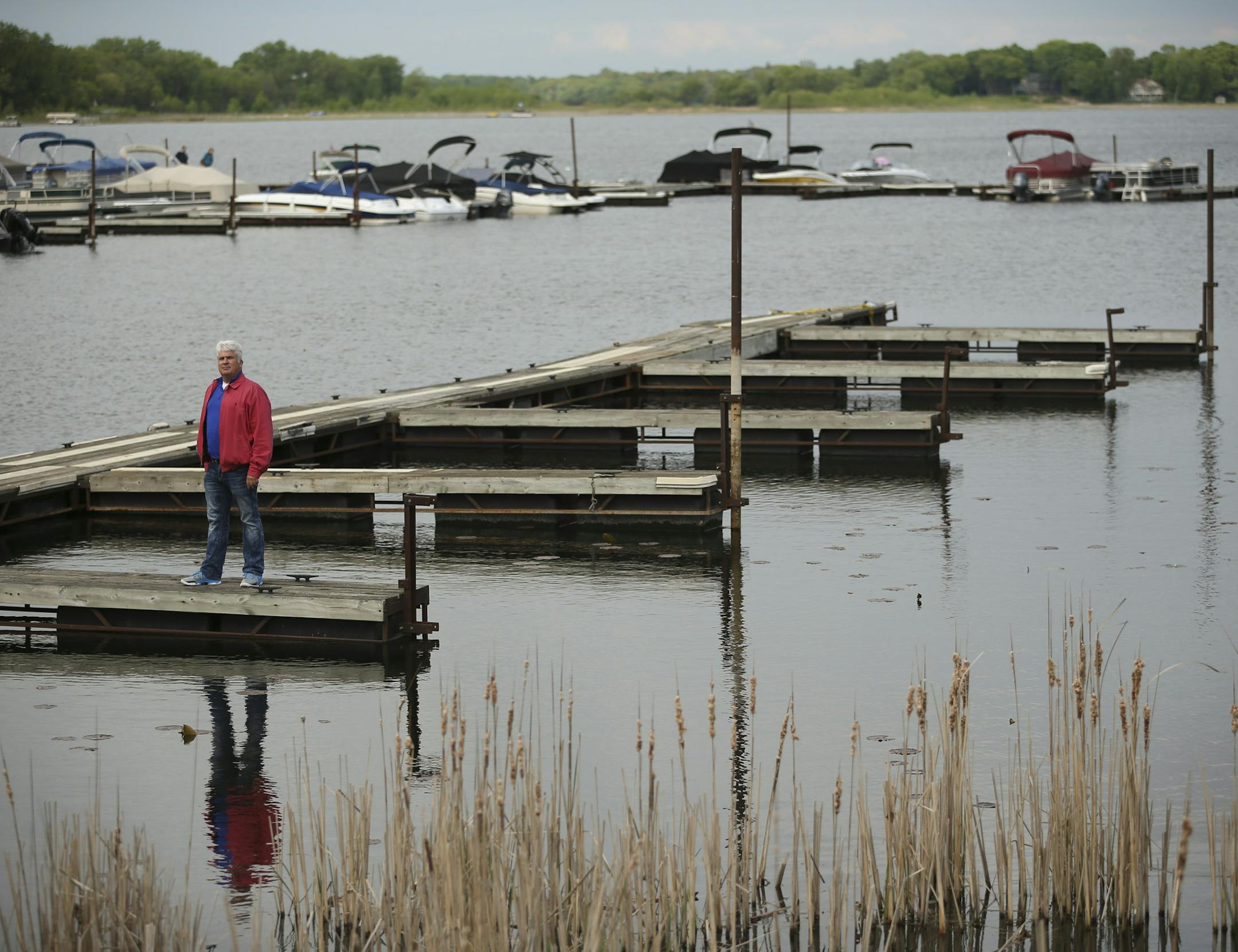
The DNR notes that, at 922.57 feet as of Thursday, the lake is just half a foot below its average level — a big jump in recent years that has water lapping again below marinas.
The litigation has prompted a wave of scientific work on what's actually going on underground. The results are beginning to come in, researchers said Thursday.


