

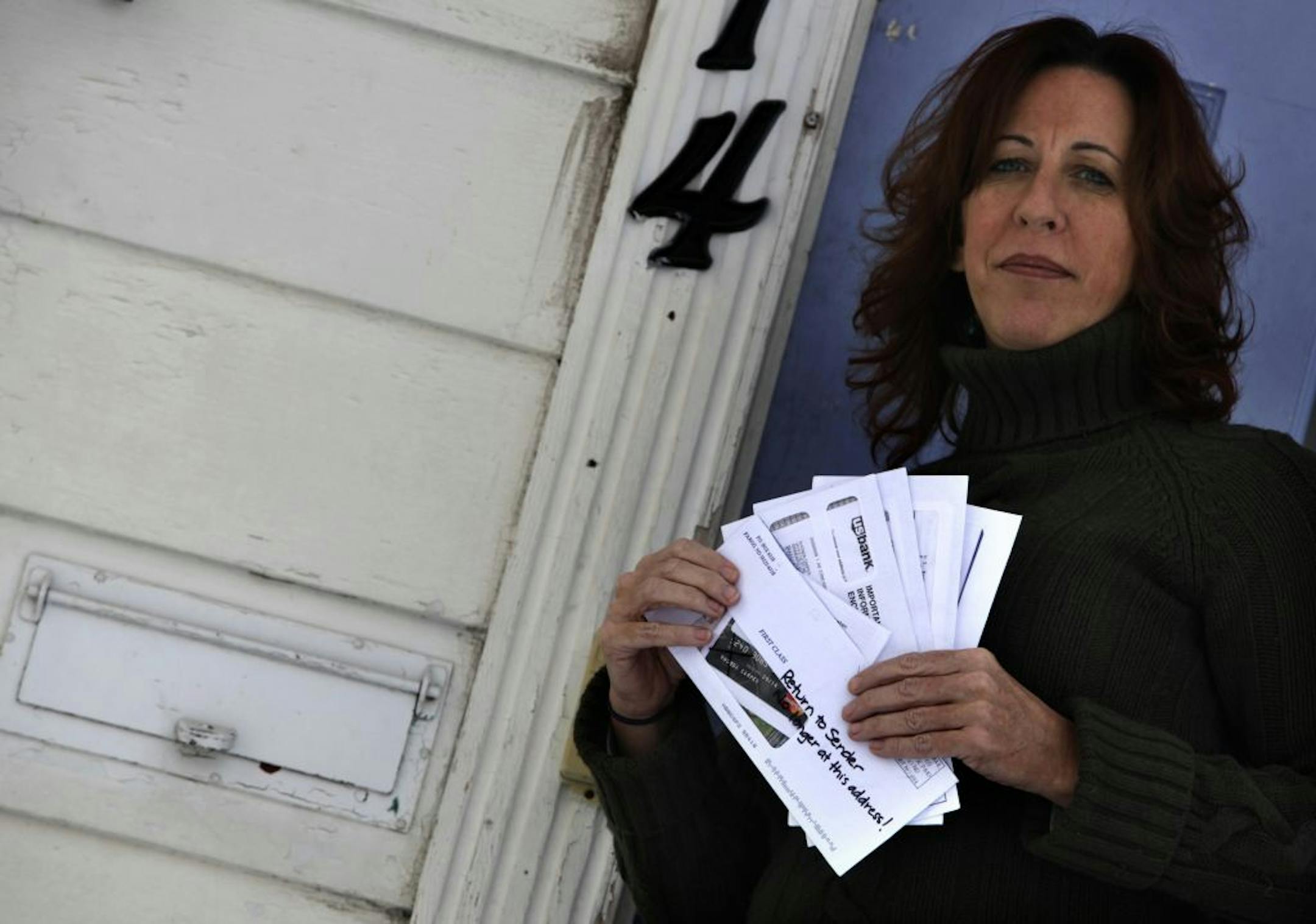
Last fall, Cindy Sullivan received an envelope at her northeast Minneapolis home that wasn't meant for her.
When she opened the letter from U.S. Bank, she found a credit card with the name of someone else on it -- the woman who lived in her home more than eight years ago.
Sullivan returned the card to the bank. On the envelope, she wrote: "No longer at this address!" Surprisingly, the bank once again mailed the card back to her.
"That's how you end up with fraud," Sullivan said. "If I was a dishonest person, I would take that credit card and go shopping."
A spokesman for U.S. Bank was unable to explain why the bank returned the card, but he said such mistakes rarely happen.
"The card Cindy received in the mail was originated as a result of false or inaccurate information provided on a credit application," U.S. Bank spokesman Tom Joyce said in an e-mail. "We have communicated this to Cindy and are in the process of investigating the matter further."
It's not that unusual for credit cards to wind up at the wrong address, which is one reason why there are so many crimes linked to identify theft, according to Sally Greenberg, executive director of the National Consumers League, based in Washington, D.C.
About 8.1 million Americans were victims of identity fraud in 2010, with total losses estimated at $37 billion, according to a report from Javelin Strategy & Research, a financial services firm that has been tracking identity fraud for eight years.

