![(left to right) Robert McManus and Lee Egbert of 11 Wells Distillery were photographed in the distillery room on 6/28/14. The old Hamm's brewery building is getting back in the booze game, with 11 Wells Distillery and Flat Earth Brewing now up and running -- "Hamm's building brews anew."] Bruce Bisping/Star Tribune bbisping@startribune.com Robert McManus, Lee Egbert/source.](https://arc.stimg.co/startribunemedia/U3JTP6RMEB6AACAUHVEXRTPW5I.jpg?&w=1080)
One size does not fit all. At least in the whiskey world.
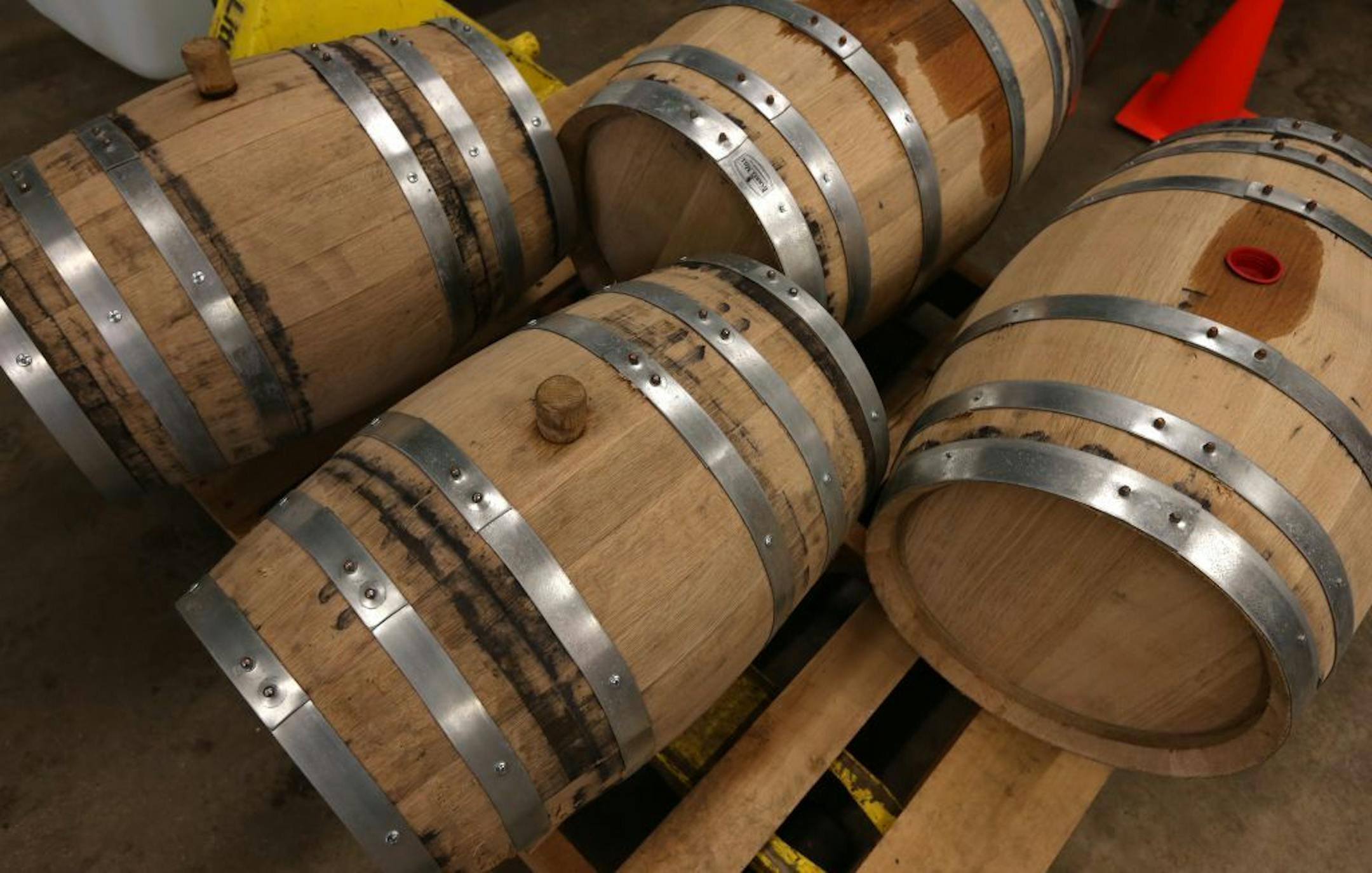
Determined to make their mark on the red hot whiskey market (and a buck while they're at it), the new wave of intrepid craft distillers is experimenting with all parts of the process, including barrel size. For years 53-gallon barrels have been the American whiskey standard. But many start-up distilleries across the country and in Minnesota are filling barrels that are a fraction of that size — a hotly debated practice in the whiskey world.
"We've been extremely surprised at the amount of flavor we've been able to get out of these small barrels," said Lee Egbert of 11 Wells Spirits.
The St. Paul distillery is one of the state's first micros with aged whiskey on the shelf less than a year after opening and its mini-sized barrels are to be thanked. Egbert and his partner Bob McManus have released three whiskeys in their experimental Prototype Series, most recently a lovely wheat whiskey rolled out this month.
"Straight" American whiskeys spend at least two years in new oak barrels and at that age are still considered toddlers. Most big-name bourbon producers don't release anything under four years old. However, 11 Wells' inaugural aged whiskeys have spent a mere four or five months in 5-, 10- and 15-gallon barrels. By exposing a higher percentage of the whiskey to the barrels' surface area, the whiskey extracts color and certain flavors faster, reducing the amount of time required to develop a reasonably tasty product.
Further increasing the wood-to-whiskey contact, 11 Wells aged some of its whiskey in barrels that have honeycomb patterns carved into their staves, creating more surface area. According to a chart from Black Swan, the Park Rapids, Minn., cooperage from which 11 Wells sources some of its barrels, its 5-gallon honeycomb barrels mature spirits at least twice as fast as their same sized "traditional" barrels without them.
"The amount of oak flavor that you can get out of a small barrel is closer to the six- or eight-[year] time period," said Egbert, drawing a comparison to the large-barrel time frame. "But there are things you can't cheat time on."
A reason for the change
It's true, Father Time is a finicky son of a barley farmer. Time is money and Egbert and most distillers are forthright about money motivating the small-barrel movement. It's hard for cash-strapped entrepreneurs to sit on products for years before seeing a return on their investment.