

Colorado's Mesa Verde National Park may be America's best-known place to visit ancient ruins, but sites of ancient villages can be found throughout the Midwest, often near the continent's great waterways and trade routes. Here are some worth exploring.
Cahokia Mounds, Collinsville, Ill.
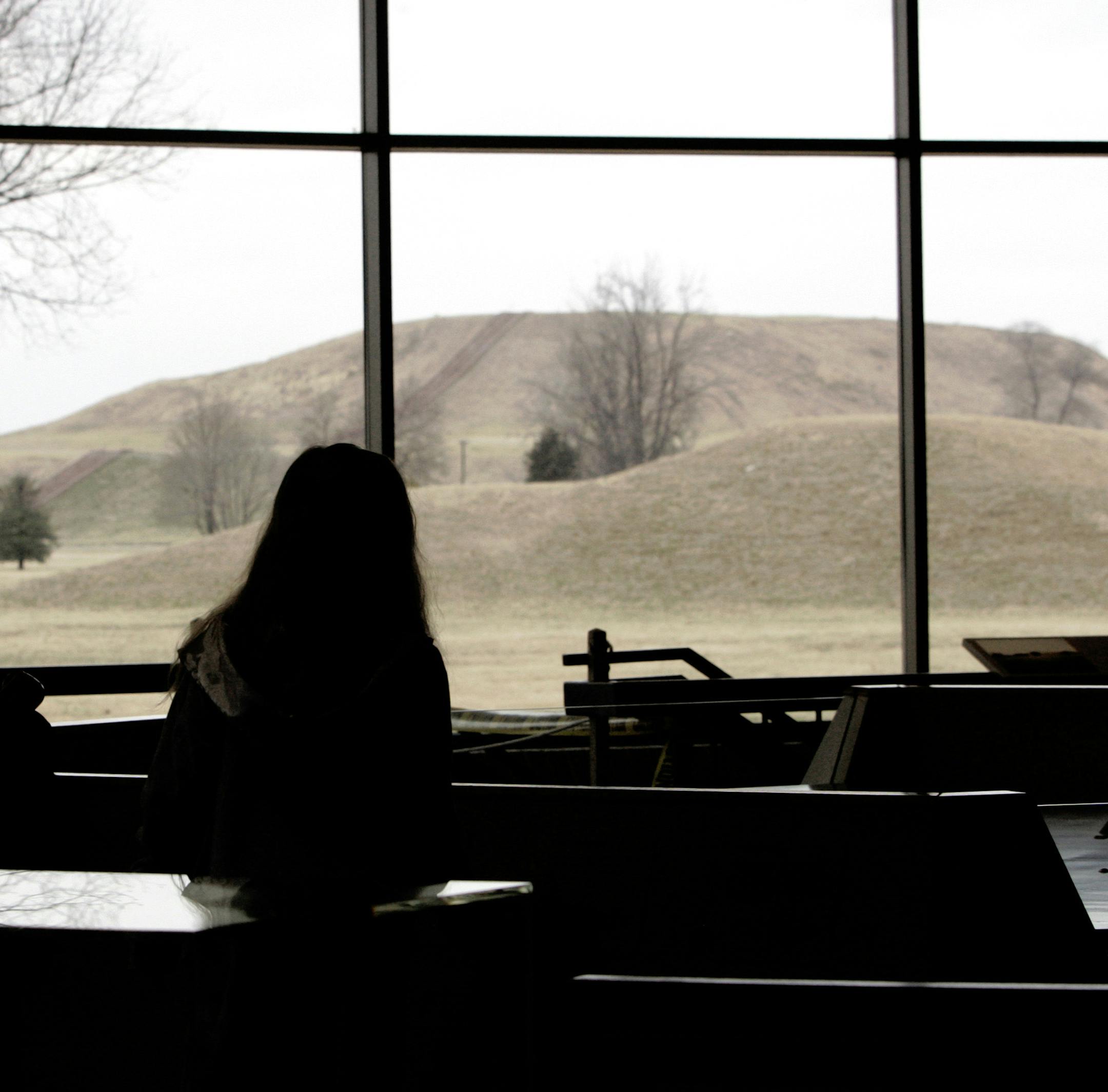
Visitors can stand atop Monk's Mound, an almost 100-foot-high earthwork, and imagine a city that flourished between 1000 and 1350. This UNESCO world heritage site once covered 4,000 acres with 120 mounds, farms and homes and a population of 20,000 inhabitants that outnumbered London at the time. If nearby St. Louis settlements were counted, the population of 50,000 people made this the largest indigenous urban center in the United States, as well as the largest pre-Columbian settlement north of Mexico (1-618-346-5160; cahokiamounds.org).
Knife River Indian Villages National Historic Site, Stanton, N.D.
Ancestors of North Plains Indians are thought to have lived near the convergence of Knife and Missouri Rivers for close to 8,000 years. Visitors can tour a replicated earth lodge and imagine daily life for the Hidatsa, Mandan and Arikara people, who farmed and had vast trade networks. In 1804, the Lewis and Clark Expedition spent the winter with tribes along the Missouri River and hired a French trapper and his wife, Sacagawea, to join them as an interpreter (1-701-745-3300; nps.gov/knri).
Effigy Mounds National Monument, Harpers Ferry, Iowa
Early inhabitants along this stretch of the Mississippi River built more than 200 huge earthworks in the shape of birds, bear, deer, bison, turtles and more despite living centuries before airplanes or drones made it possible to see their artistry from above. People from the late Woodland Period (about 550 to 1200) also built conical mounds for burials (1-563-873-3491; nps.gov/efmo).
Prehistoric Village, Mitchell, S.D.
Scientists estimate 200 people lived along Firesteel Creek and farmed corn, beans, squash, sunflowers and amaranth north of Mitchell about 1,100 years ago. The National Archaeological Landmark has been an active dig site since evidence of a village with about 80 earth lodges was discovered in 1910. A visitor center offers insight into tools, food and buffalo-hide bullboats while the Archeodome lets travelers watch the excavation work in progress between April and October (1-605-996-5473; mitchellindianvillage.org).
Lisa Meyers McClintick


