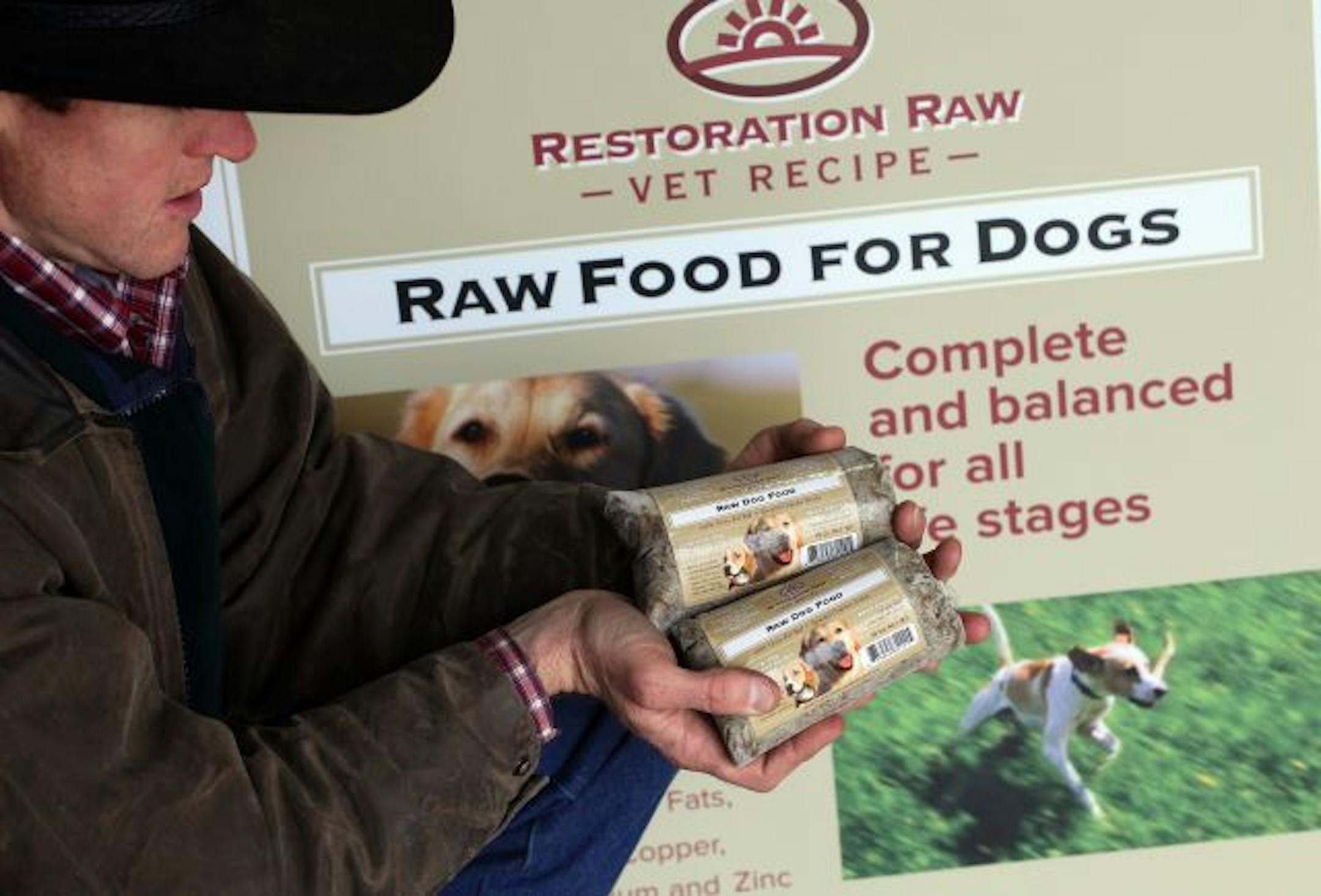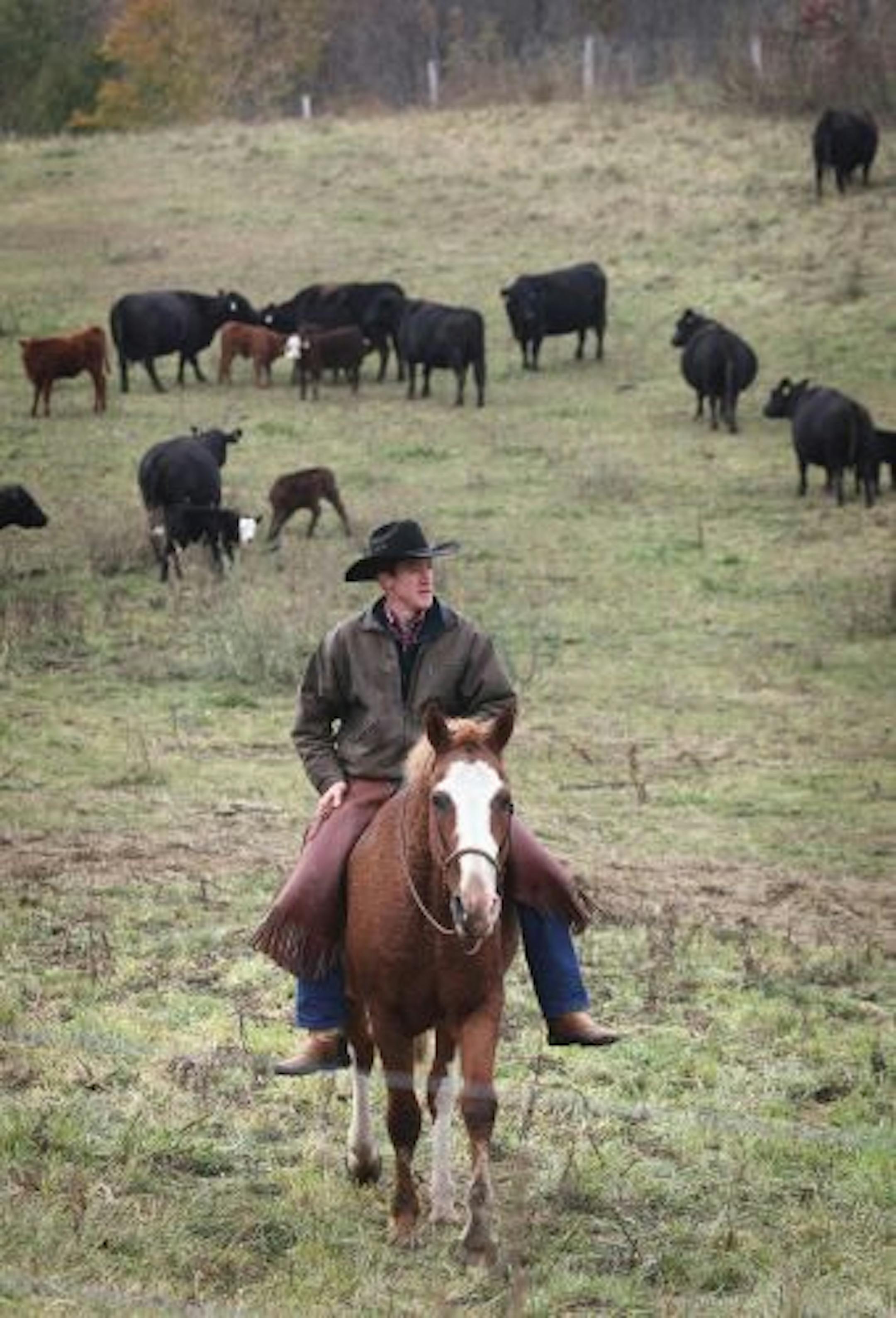
CANNON FALLS, Minn. - Slowly but surely, grass-fed beef from the Thousand Hills Cattle Co. is becoming a familiar sight in groceries, co-ops, some of the Twin Cities' top restaurants and even on school lunch trays. Its next destination may be your dog's food dish.
Todd Churchill's ranching enterprise, inspired by author Michael Pollan's account of a steer's path to market, is rolling out Restoration Raw, a blend of raw grass-fed beef, sprouted grains, trace minerals and vitamins. The product came about after Churchill hired Will Winter, a holistic veterinarian formerly of the Uptown Veterinarian, to be herd health consultant.
Years earlier, Winter was persuaded that diet was key to improving a pet's health. He championed raw food -- what animals ate in the wild before becoming domesticated. Churchill had a ready supply of raw meat, and they figured out how to sprout grain on a large scale, "which turns it into a more easily digestible vegetable," he said.
Now the company is ready to dive into a growing market for raw pet food. Restoration Raw doesn't come cheap, selling for about $5 a pound in certain Lunds stores.
But Churchill believes that people will realize the savings in their pet's improved health, "and what does it cost to take your pet to the vet and deal with a medical issue?"
It's unlikely that Churchill's move has Purina convening strategy sessions, but that's sort of his way. Thousand Hills beef accounts for no more than one-seventh of 1 percent of the beef eaten in the 12-county metro area, he said, yet that market share has grown steadily. His most delicate balancing act is meeting demand.
"We kill 25 animals a week, so it's a limited supply of beef," Churchill said. For comparison, he noted the kill rate at Tyson Foods in Lincoln, Neb., the nation's largest meat processing plant, where "more cattle are killed by noon on Jan. 2 than we'll kill all year."
A thousand hills