

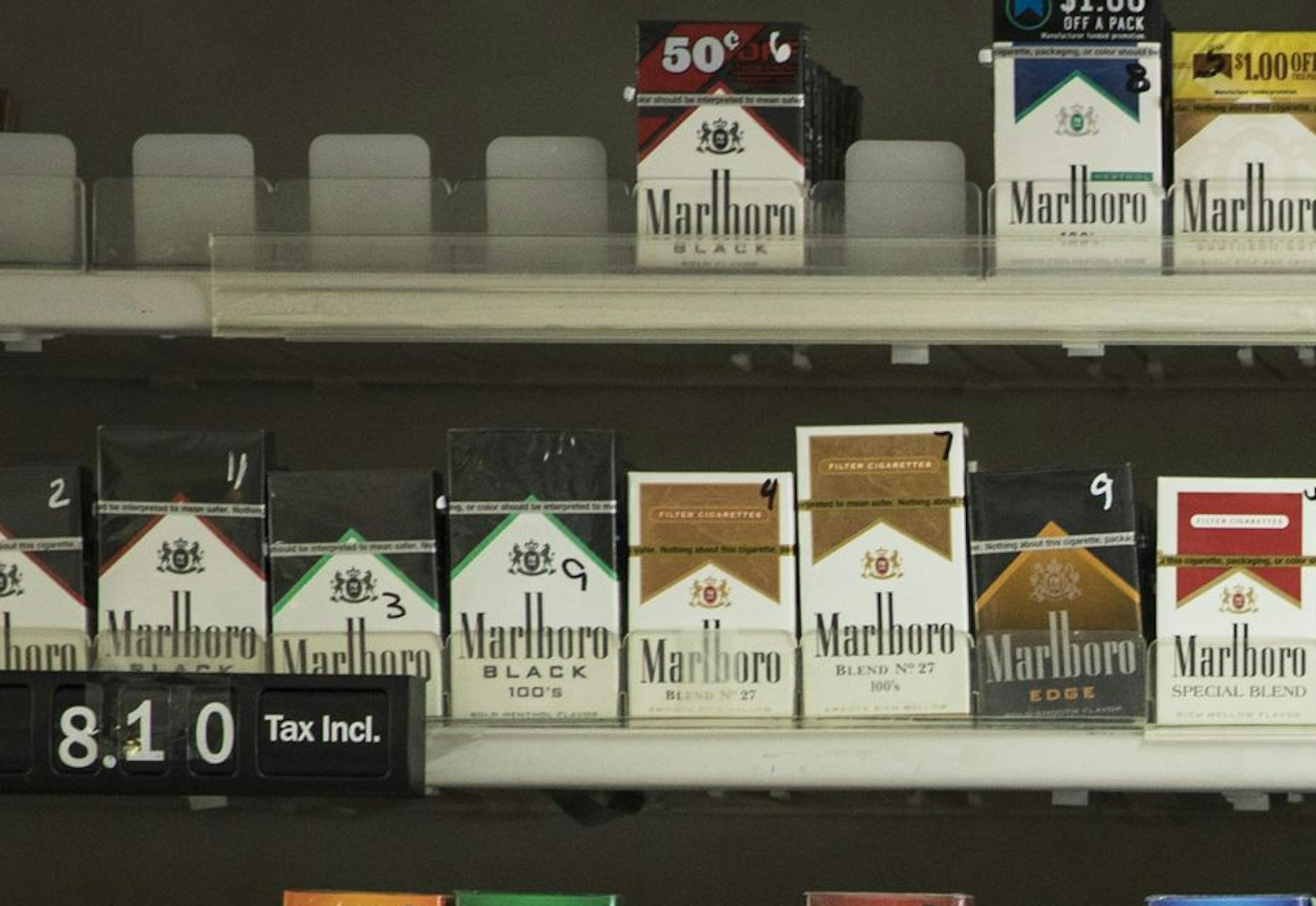
Smoking kills, but tobacco revenue breathes a lot of life into Minnesota.
From funding U.S. Bank Stadium to creating the nonprofit ClearWay Minnesota, tobacco sales have generated billions in tax revenue over the years. And most of it flows into the state budget rather than helping smokers kick the habit.
Minnesota was a significant player in holding tobacco companies accountable two decades ago, filing a lawsuit arguing that these companies had misled consumers about the dangers of their products. It was the only state to pursue trial in 1998 before reaching a historic $7 billion settlement payable over the first 25 years. Tobacco companies will still be coughing up about $200 million every year forever.
Doug Blanke said it was the "biggest and most complicated legal case in Minnesota's history." Aside from financial gain, the work by Blanke, director of the Public Health Law Center at Mitchell Hamline School of Law, and colleagues in the attorney general's office uncovered 35 million pages of then-secret documents on how tobacco manufacturers operate — in particular marketing to youth.
Those documents are still used to fuel health policy and research. And money from the settlement keeps flowing into the state's coffer along with tobacco tax revenue.
A reader asked Curious Minnesota about one type of tobacco tax called a "sin" tax. This is also known as an excise tax, and it's one of several kinds of taxes on tobacco and now vaping products.
It's complex (because, well, it's taxes) and there are two separate categories of taxes, one for cigarettes and another for other tobacco products. These are products like cigars, chewing and pipe tobacco, and vaping products that contain tobacco.
All rolled up, taxes on every tobacco product in the state since 1957 total $11.75 billion. Taxing tobacco amounted to $605 million in 2018 alone, with an estimated $11.5 million coming from vape products, taxed since 2010. Settlement funds added another $167 million for a combined $772 million last year.


