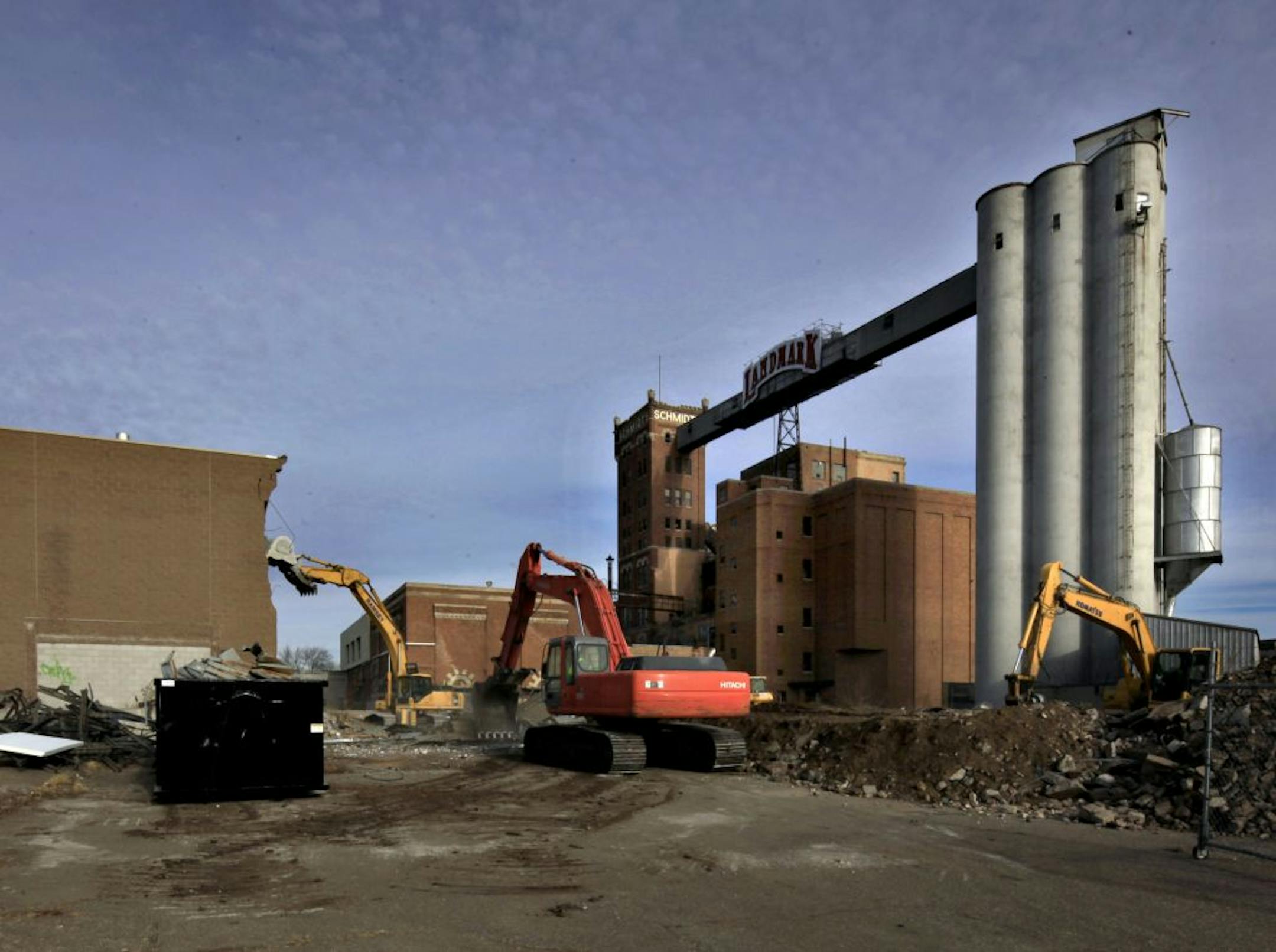
The first -- and perhaps most important -- phase of the long-awaited transformation of the former Schmidt Brewery in St. Paul kicked off this month: a multimillion-dollar cleanup to remove asbestos and lead paint.
Before the developer can turn the brewery's historic, medieval revival-style structure into scores of affordable housing units for artists, it must mount a massive remediation effort, which is getting underway this month.
It will be no small task for Dominium, the Minneapolis-based owner and developer. Given floor upon floor of asbestos-covered pipes and boilers and thick layers of peeling paint throughout the sprawling former Jacob Schmidt Brewing Co., remediation will cost more than $3 million.
A key piece in moving the $100 million project forward was Dominium's ability to cobble together clean-up grants from the Metropolitan Council, Ramsey County and the Minnesota Department of Employment and Economic Development to perform the necessary work -- which is prodigious, says Steve Jansen, president of Peer Engineering, whose firm is spearheading the work for Dominium.
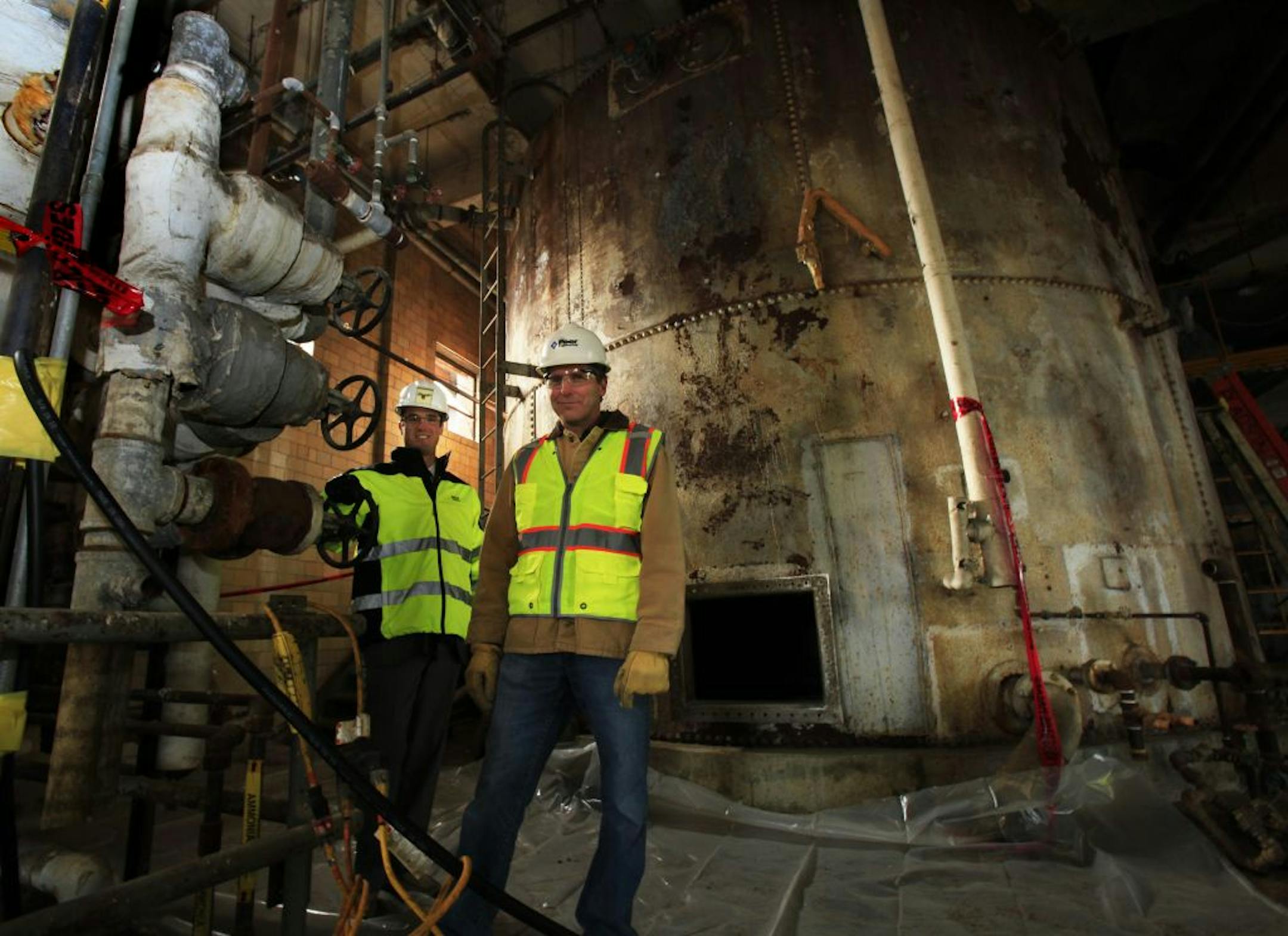
"Not only is this a decontamination of a former industrial site, but it's also one that's going from industrial to residential," he said while conducting a tour of the frigid, long-idled brew house building this week. "That means it's going to have to meet the highest of all standards of abatement."
In the work now getting underway at the former brewery, teams of workers are using the "full containment" method of asbestos removal, in which small sections of the old buildings are totally sealed off with heavy plastic sheeting, creating a "negative air pressure zone," inside the containment area with a special machine.
Workers move around inside the zone wearing full decontamination suits with masks while operating the "negative air machine," which is equipped with a HEPA filter that is nearly 100 percent effective at removing even the smallest floating asbestos particles from the air.
In the laborious and time-consuming process, the asbestos waste is sealed into bags and moved outside, where it is placed inside a covered dumpster, eventually to be disposed of at a designated landfill.