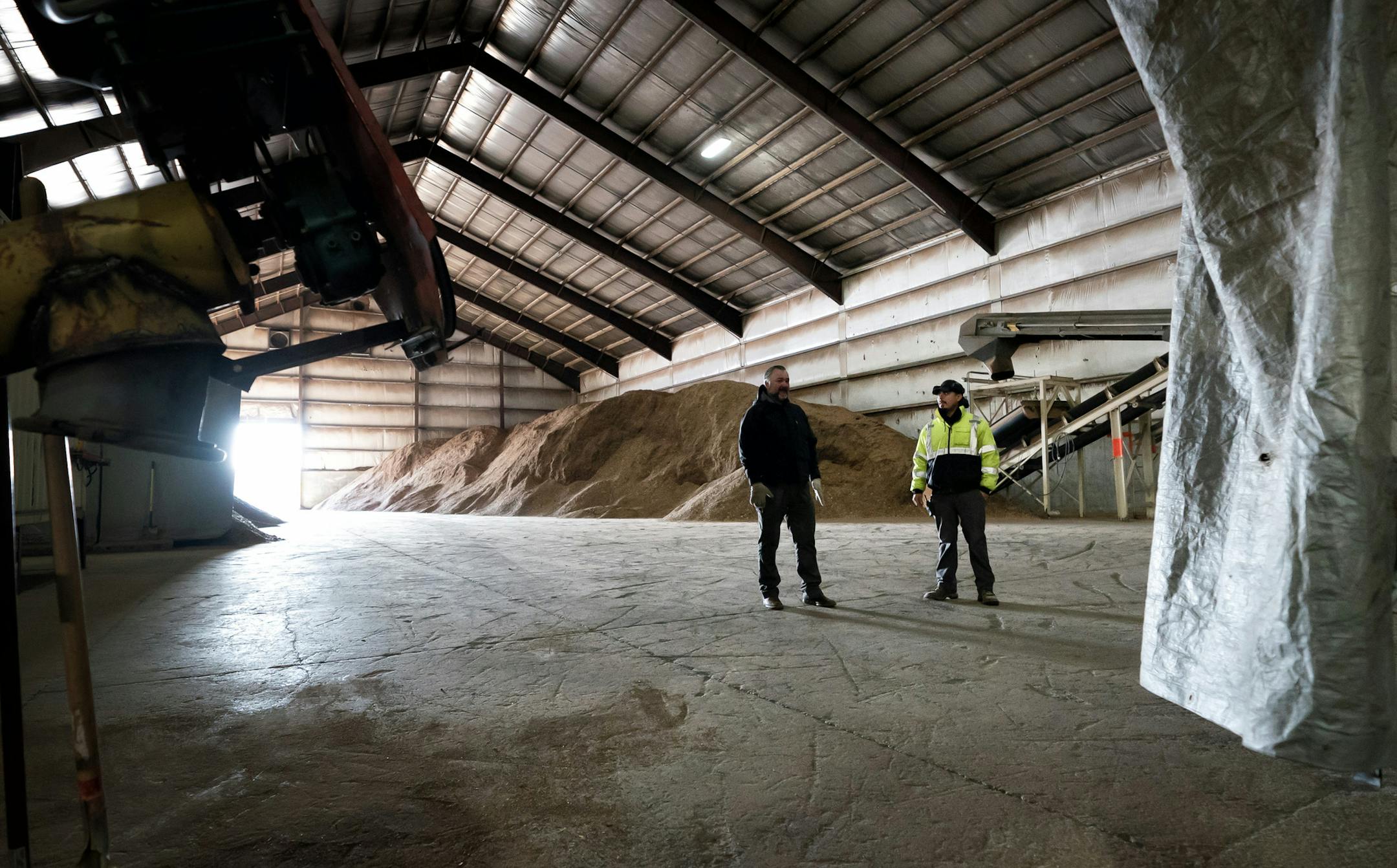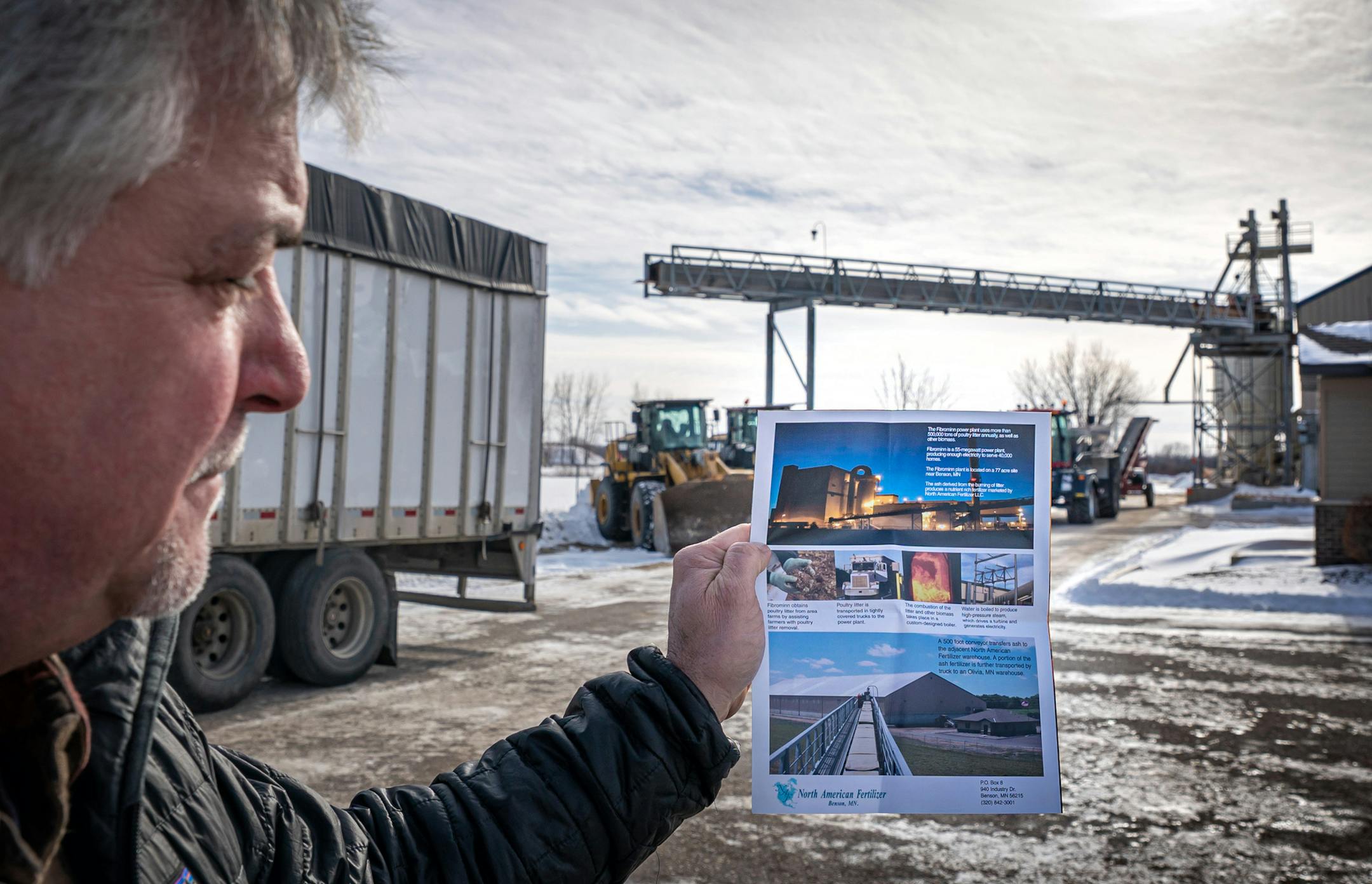
BENSON, MINN. – In the fields outside this western Minnesota city is a conveyor belt to nowhere.
Twenty feet off the ground, it ends abruptly, dangling in midair where it used to connect to a giant power plant.
Dozens of Minnesota businesspeople say they've met the same fate as that conveyor belt — cut off and left dangling by the Legislature, which urged them to invest in a cutting-edge biomass energy operation here, then pulled the plug on the Fibrominn plant halfway through what was supposed to be a 22-year commitment.
Small businesses that had contracts to supply Fibrominn with wood, transportation and other services invested in trucks, industrial wood chippers and other heavy equipment, knowing that they had a guarantee of 22 years' worth of work from the plant, which burned turkey manure and wood chips to produce electricity for Xcel Energy.
But the Legislature allowed Xcel to buy its way out of the contract in 2017 after only 10 years. The city of Benson got $22 million to end the deal, and the plant was demolished and removed in 2019.
Meanwhile, the businesses that served the energy plant are facing losses that they say are in the tens of millions of dollars. Now they're hoping the Legislature will find some money to cover at least a portion of their losses. They're asking for $40 million, which is less than a third of the total $140 million investment their businesses made to serve the power plant and a mill that made fertilizer from the ashes left after burning.
"We were blindsided," said Randy Tersteeg, who processed more than 100,000 tons of fertilizer a year from the ashes. Tersteeg, who lives in Olivia, also invested in a fleet of trucks to haul manure 30 miles from the Jennie-O turkey plant in Willmar to Fibrominn, which consumed more than 100 truckloads a day, every day of the year.
Joe and Leslie Dukek run a logging business in Bemidji. They expanded their trucking fleet to handle the demands of supplying wood chips to the energy plant, as well as buying wood chippers that cost hundreds of thousands of dollars. After the plant closed, they sold a new $400,000 chipper for $180,000 and auctioned off five semi-tractors for far less than they paid.