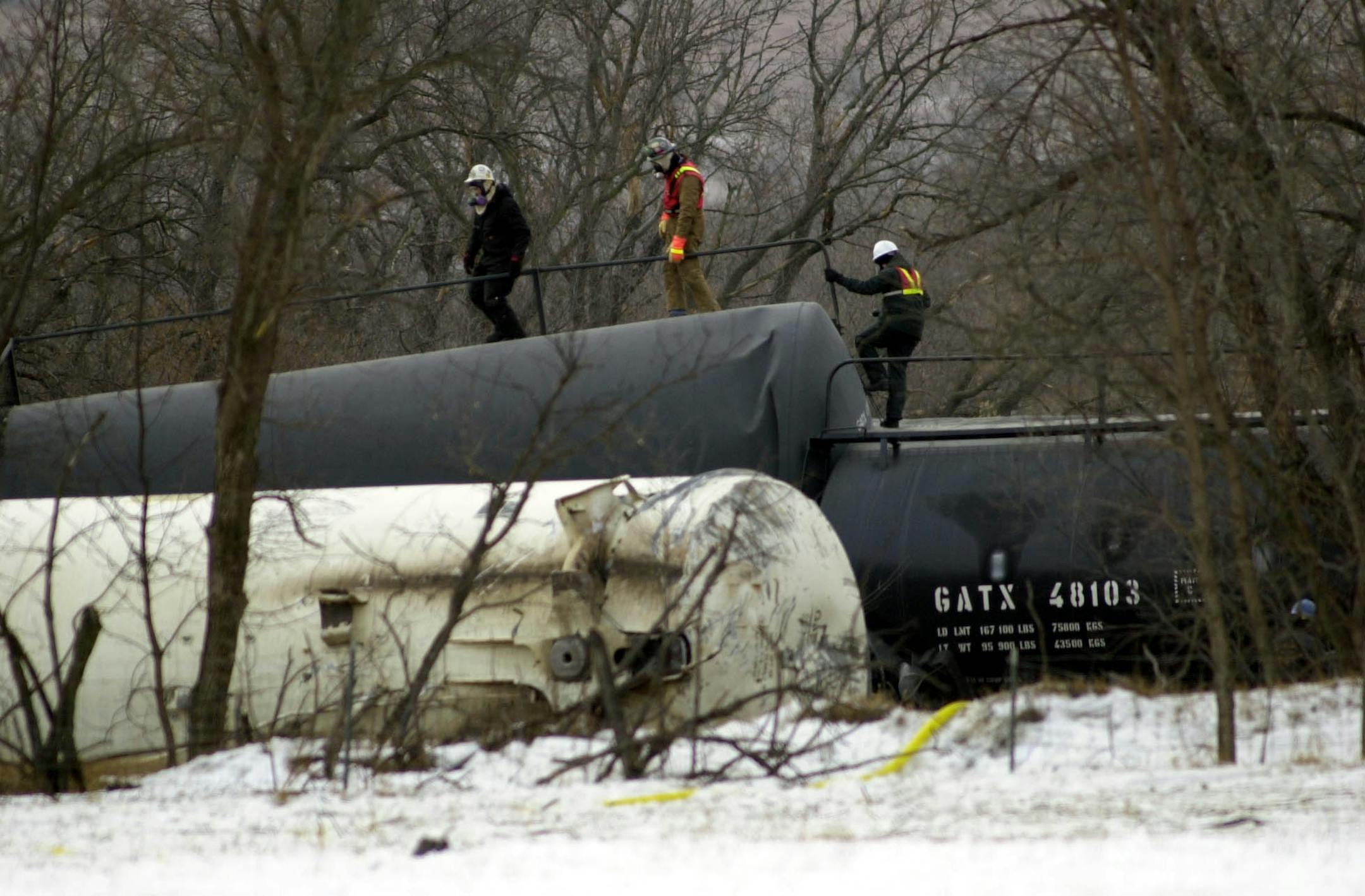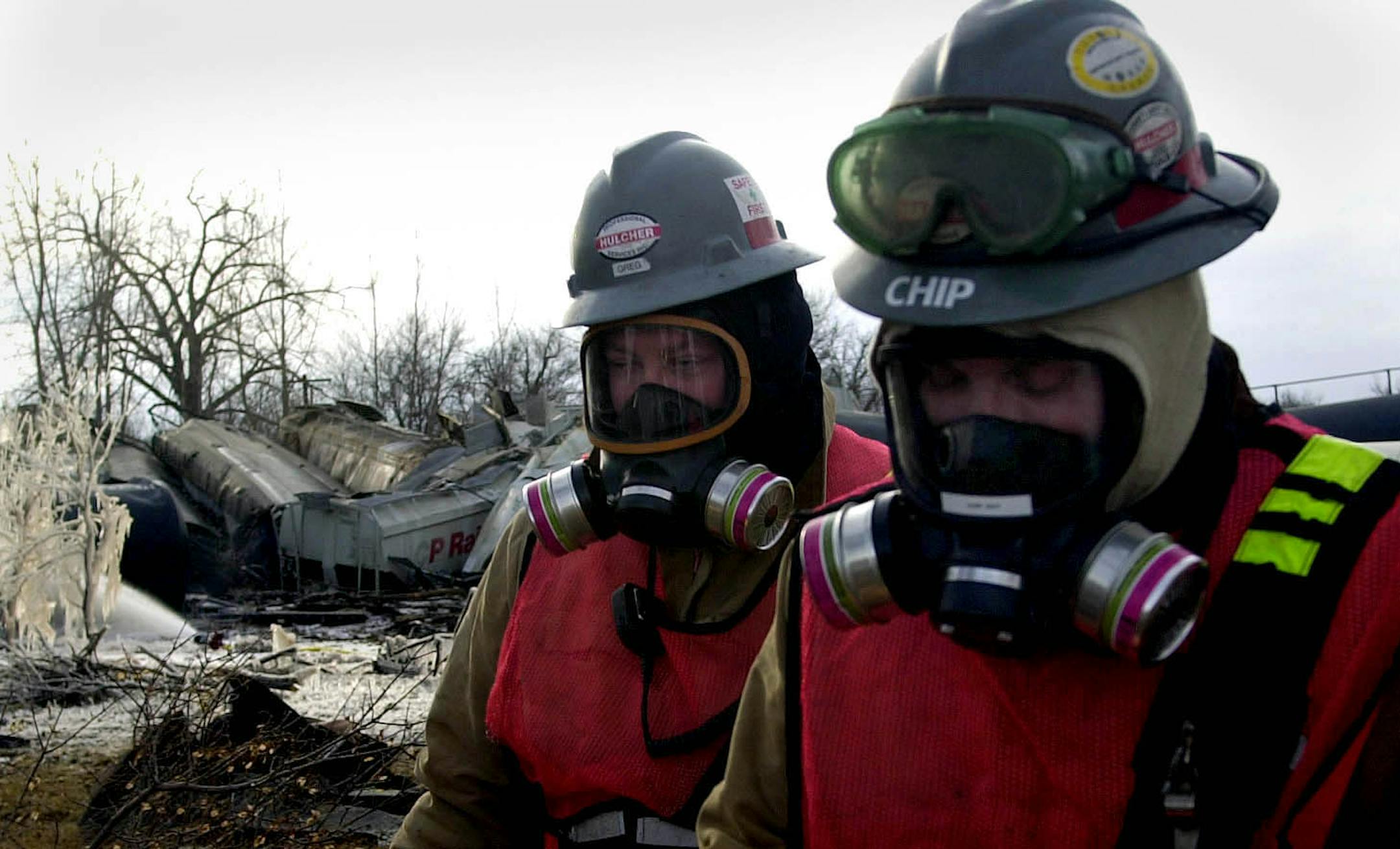
The sound of grinding and clanging metal woke Jeanette Klier six years ago when 31 cars from a Canadian Pacific freight train derailed a few hundred yards from her home in Minot, N.D.
Five tank cars ruptured, releasing a cloud of 220,000 gallons of anhydrous ammonia, a caustic chemical that seeks out the moisture in people's eyes, lungs and skin.
"Every breath you took burned," Klier recalled in a recent interview. "Everything burned. Your nose, your mouth, your eyes."
The chemical burned Klier's tear ducts, permanently scarring her eyes. But she said the insult to her injury came as she and other victims sought compensation.
Canadian Pacific Ltd. and its Minneapolis subsidiary, Soo Line Railroad, which maintained the tracks, have waged a protracted legal battle with victims. The argument moves to St. Louis on Thursday -- just one day before the derailment's six-year anniversary -- when lawyers will square off before a three-judge panel of the Eighth U.S. Circuit Court of Appeals.
The derailment on Jan. 18, 2002, resulted in one death, 11 "serious" injuries and 322 "major" injuries, according to one judge's reckoning.
The railroad has settled tens of thousands of claims and lawsuits totaling undisclosed millions of dollars. But some 200 to 300 cases remain unresolved. Congress passed a law last year to help victims in court, but Canadian Pacific is challenging that action as unconstitutional.
At issue is a complex legal principle that boils down to this: According to the Supremacy Clause of the U.S. Constitution, federal law trumps state law when there's a conflict between the two.