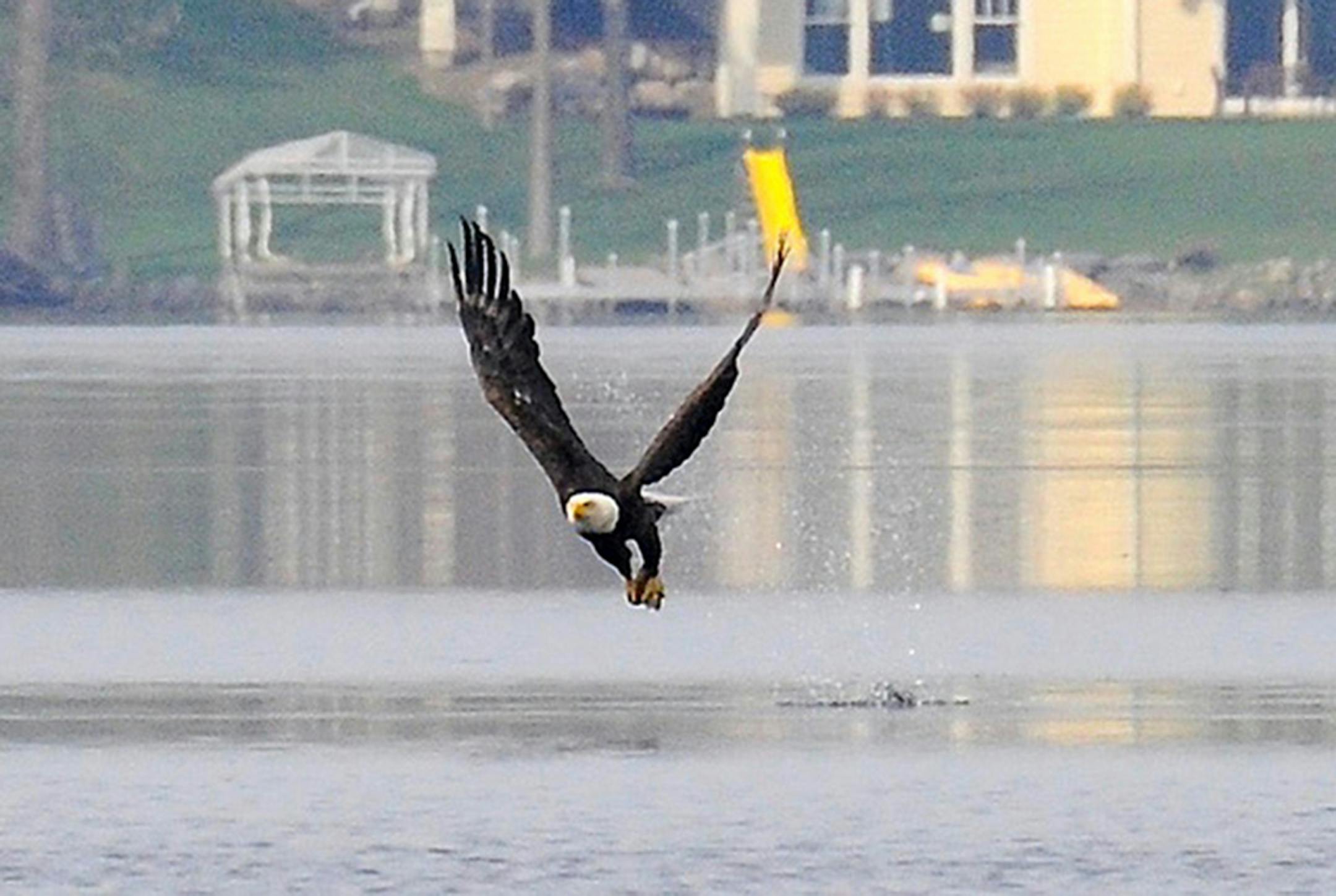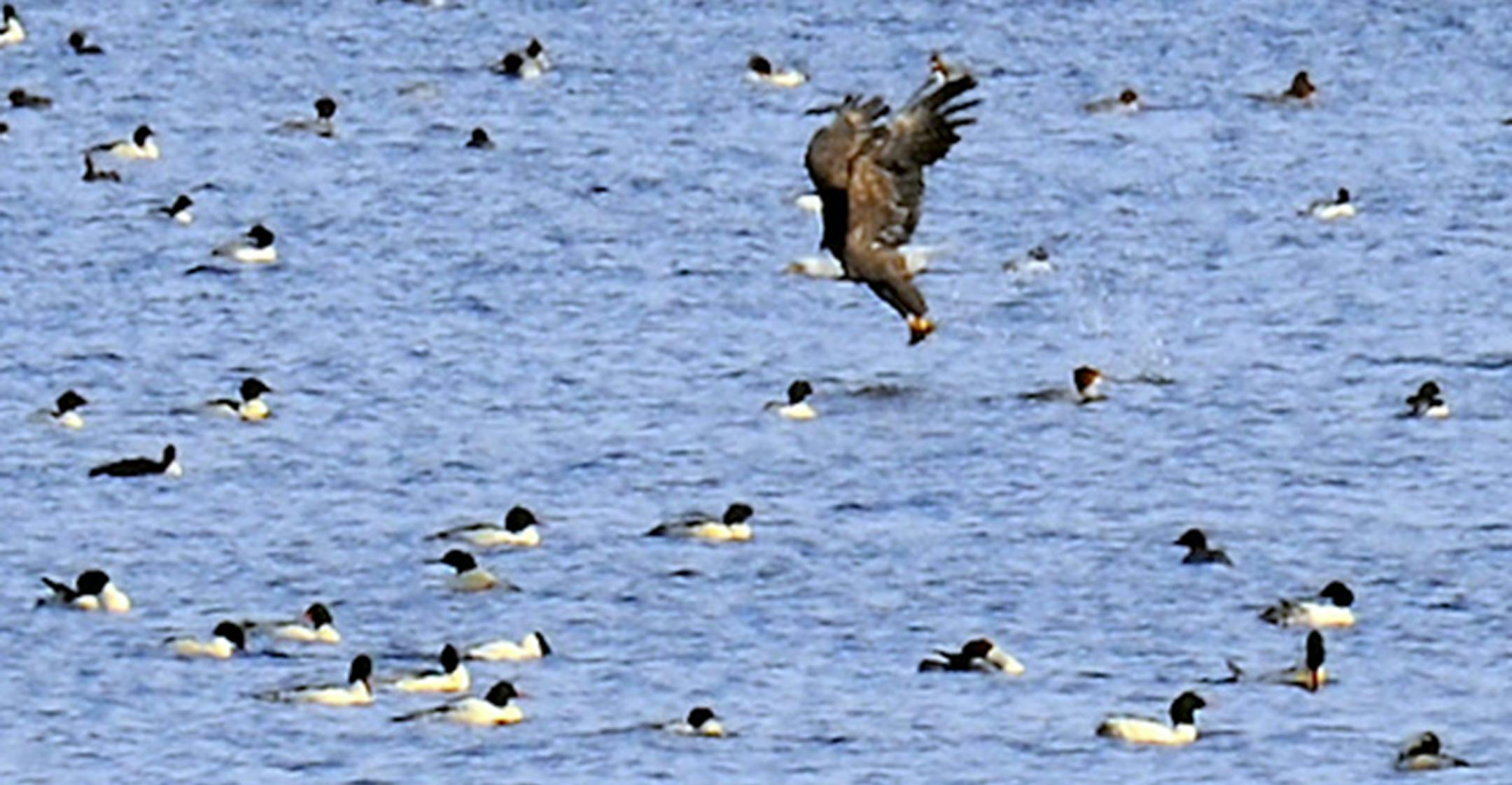
Q: I'm sending you a video of two eagles walking toward two ducks in a small circle of open water on a lake in my suburb. I'm guessing that these were young ducks that didn't know enough to leave when the lake started freezing?
A: The ducks in your video, swimming in a small circle of open water, are probably ill or injured and unable to fly, thus easy prey for the approaching eagles. In fall and winter, eagles keep a sharp eye on groups of ducks to determine if any lack flight ability. The raptors will sometimes strafe ducks on the water, then focus on any that didn't fly off, and that duck usually becomes the eagle's next meal.
Frozen food?
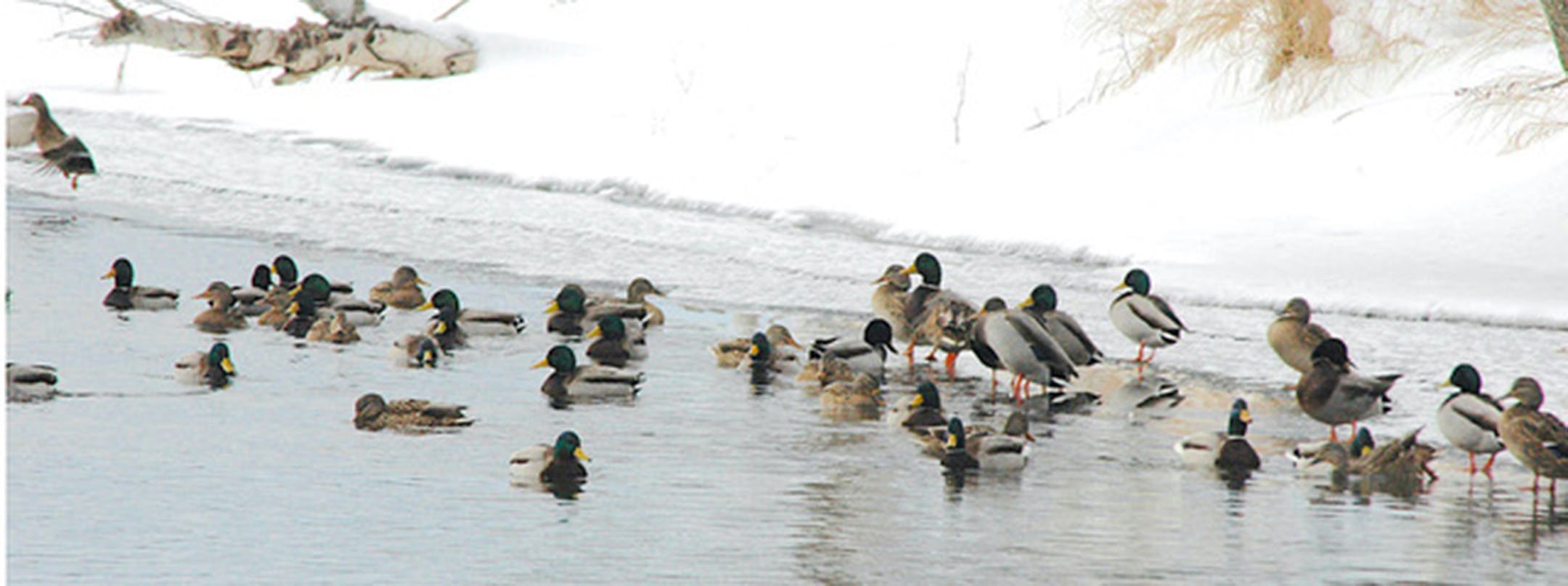
Q: Mallard ducks gather at a small creek near my house but there's so little water and so many ducks, I'm wondering what they find to eat in winter.
A: Most of the mallards in our area migrate to Southern states and along the Gulf to spend the winter. The ones that remain spend part of each day dabbling in open water for aquatic plants and insects. They'll fly to open fields to forage on grain and grass seeds, or gather around grain elevators for spilled grain and corn. And some even turn up under urban bird feeders to gobble up spilled seed. If winter turns very harsh the mallards may fly southward in search of open water and open fields.
'Crow angels'
Q: I was looking out my window when six crows flew into the yard. They plowed head first into the new snow over and over again, then started rolling onto their backs and looked like they were making snow angels. It was fun to watch and made me wonder whether crows play or were simply bathing in the snow.
A: That must have been so much fun to watch, and the crows may have been doing both, playing and bathing. A possible scenario: The crows, probably a family, dropped down and started tossing snow around to clean off their feathers, then, being crows, they decided to have some fun, too. Crows certainly do engage in play, a fact well documented by researchers like John Marzluff and Tony Angell in their book, "In the Company of Crows and Ravens." It's a good idea to keep your eyes on crows, they're always up to something, and it's usually entertaining.
Home brew
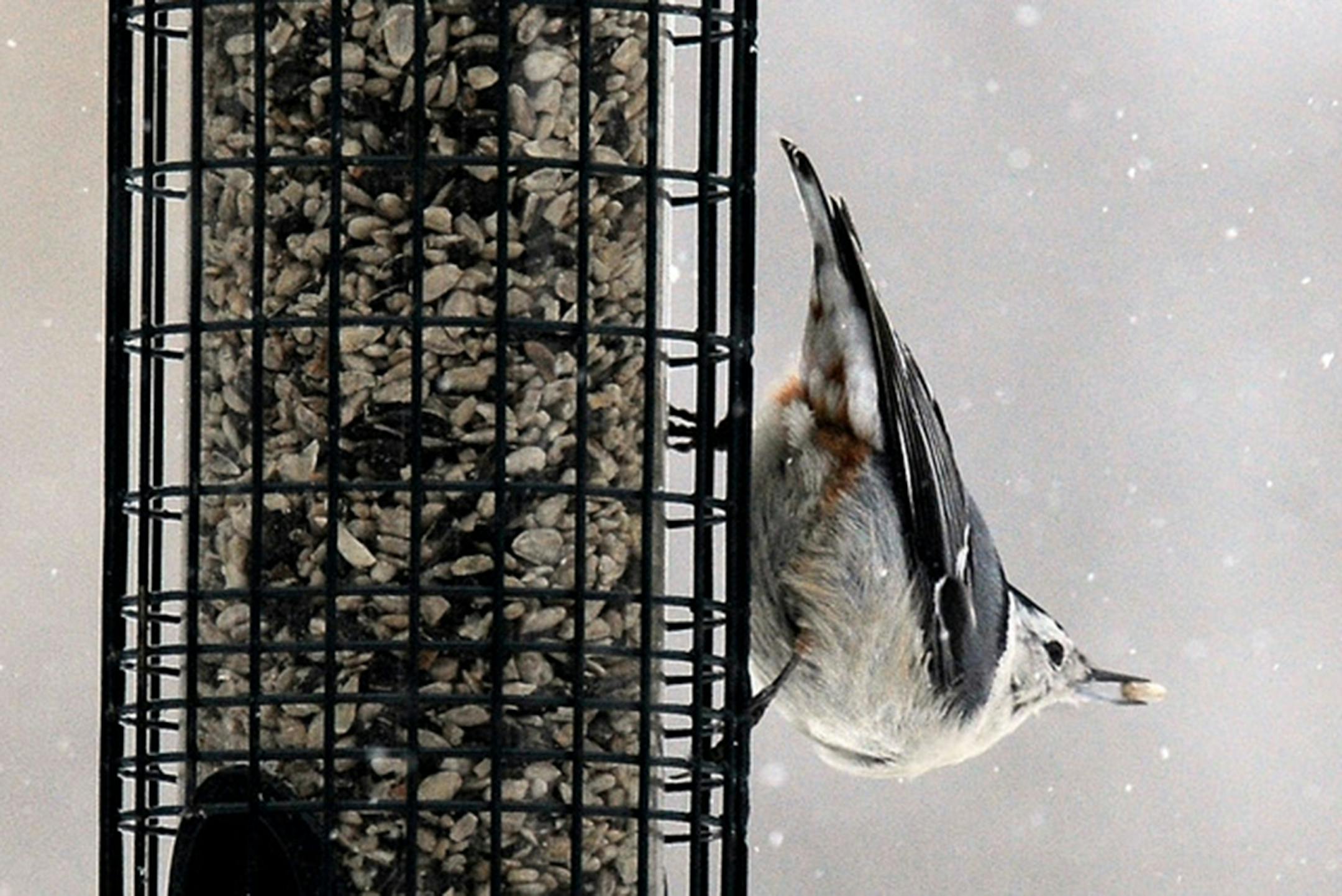
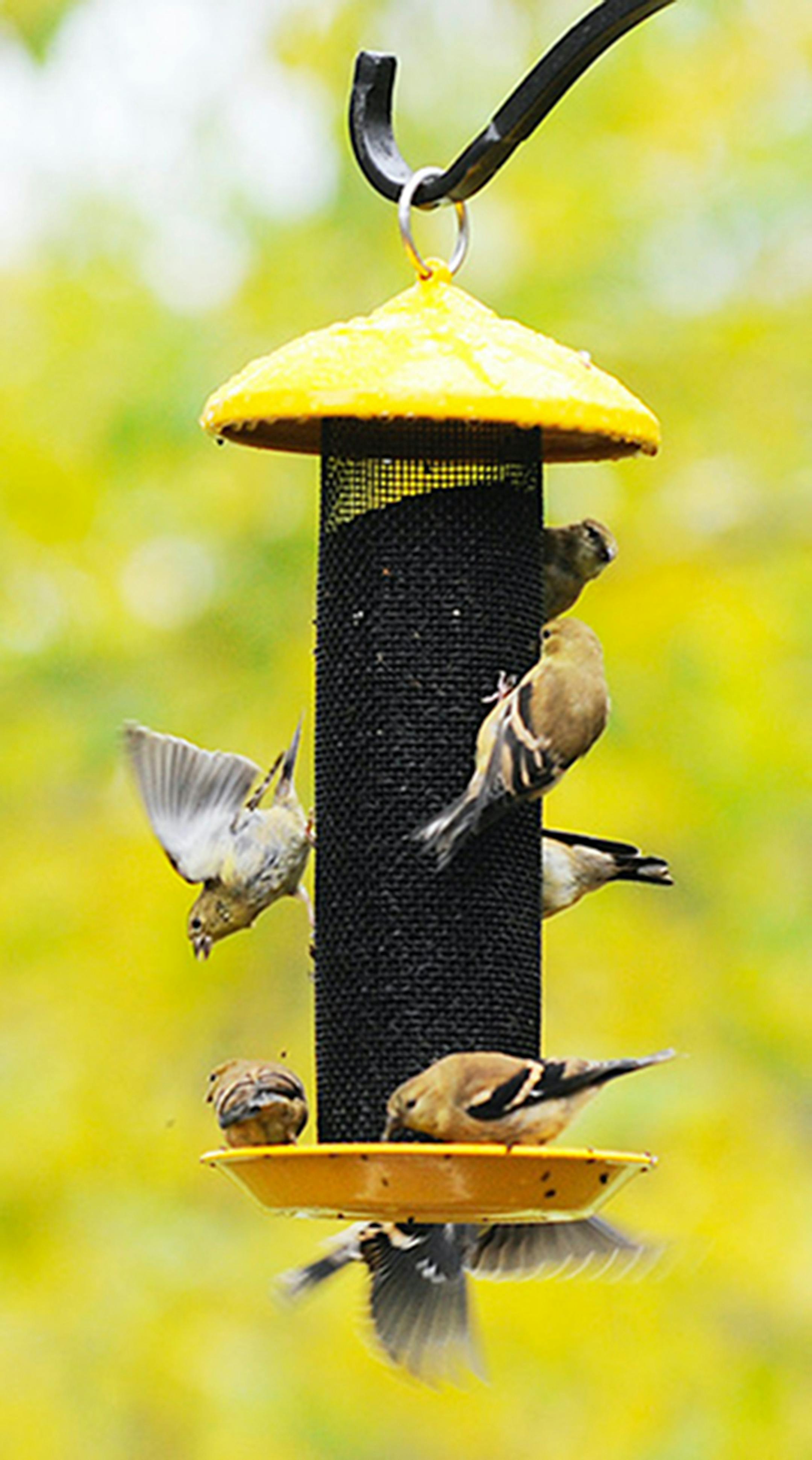
Q: The local seed store no longer offers the seed mix with berries that my birds loved. The mix they have now is full of safflower and I'm thinking of just mixing my own, using black oil sunflower seeds, medium sunflower chips and peanuts. Can you suggest anything I could add?
A: It's a great idea to make your own seed blend since you can't find the one that's been so popular with your birds, and your ingredients will make an excellent mix. If you want to add some fruit, you could try chopped raisins, craisins or other dried fruit. I wouldn't be so hard on safflower, though, since this seed is appreciated by many species. Some 10 years ago, I switched from black oiler sunflower seeds to safflower to discourage house sparrows, and the cardinals, chickadees, finches, nuthatches and other birds enjoy it (and the sparrows don't).