

Decisionmaking processes matter in a representative democracy. That's the theme that links two lawsuits filed by Minnesota Republicans in recent days faulting decisions made by DFLers. Both ask the courts to determine whether DFLers so abused customary procedures in achieving their desired ends that they ran afoul of the state Constitution.
The two suits:
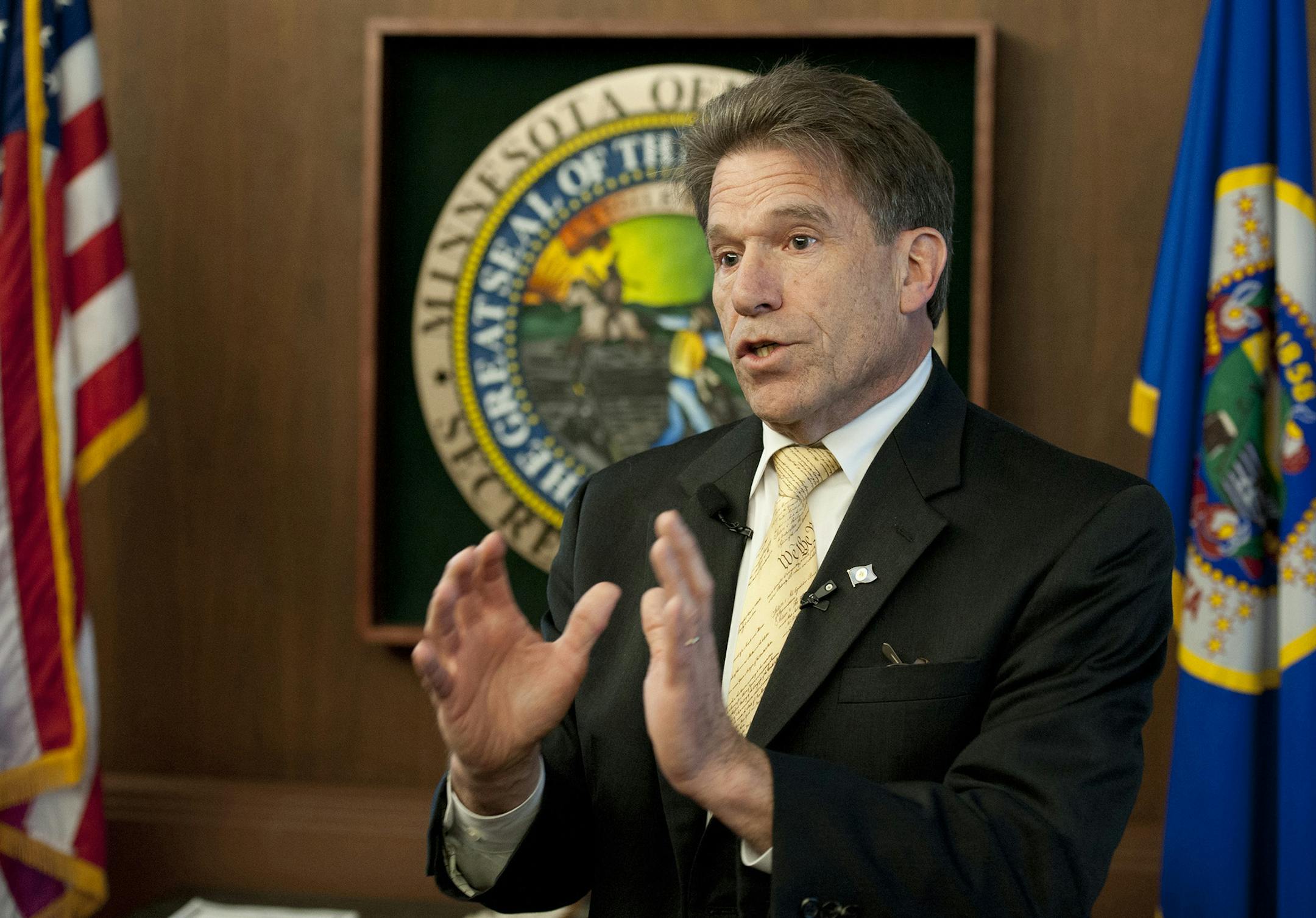
• Four Republican state representatives joined two conservative watchdog organizations Monday in suing DFL Secretary of State Mark Ritchie for introducing online voter registration on Sept. 26. Ritchie lacked the express permission of the Legislature for the move, but he argued that it came under the legal umbrella of a 13-year-old legislative authorization for all state agencies to conduct commercial transactions online.
• Former Republican Rep. Jim Knoblach, who represented St. Cloud from 1995 through 2006, filed a complaint Thursday in Ramsey County District Court challenging the constitutionality of the way a new state Senate office building in the Capitol complex was financed and approved. The $90 million for the new building and two parking ramps was included in the 2013 Legislature's omnibus tax bill in violation of the Constitution's single-subject rule for legislation, Knoblach said.
This newspaper leaves to the judicial branch's scholars the questions of constitutional violations. We would only urge the courts to rule swiftly. Online voter registrants' status should be clarified ASAP. The legality of their registrations could already be an issue in this week's municipal elections. And Capitol reconstruction, which is tied to the new Senate building, should not be delayed by Knoblach's suit.
But in the court of public opinion, the claim that the processes that produced these decisions were less than optimal should find a receptive audience. The decisions themselves are defensible on their faces, producing more convenience for voters in one instance and for legislators and Capitol visitors in the other. But those decisions were reached in ways that could serve as precedents for less welcome moves in the future.
Ritchie's unexpected introduction of online voter registration breaks with the wise insistence of the last several governors that one party should not be allowed to unilaterally alter election laws. The state's voters indicated their support for that principle just one year ago today in defeating a GOP-backed voter ID constitutional amendment that every DFLer at the statehouse opposed. One-party manipulation of election laws, no matter how benign, is bound to be viewed with suspicion by the opposite party. Erosion of trust in Minnesota elections could result.
The Legislature's elections committee chairs say they intend to take up online voter registration early in the 2014 session. Regardless of what Minnesota judges say about the suit filed Monday, Ritchie would do well to seek bipartisan blessing and to voluntarily suspend online registration until the Legislature can act.


