

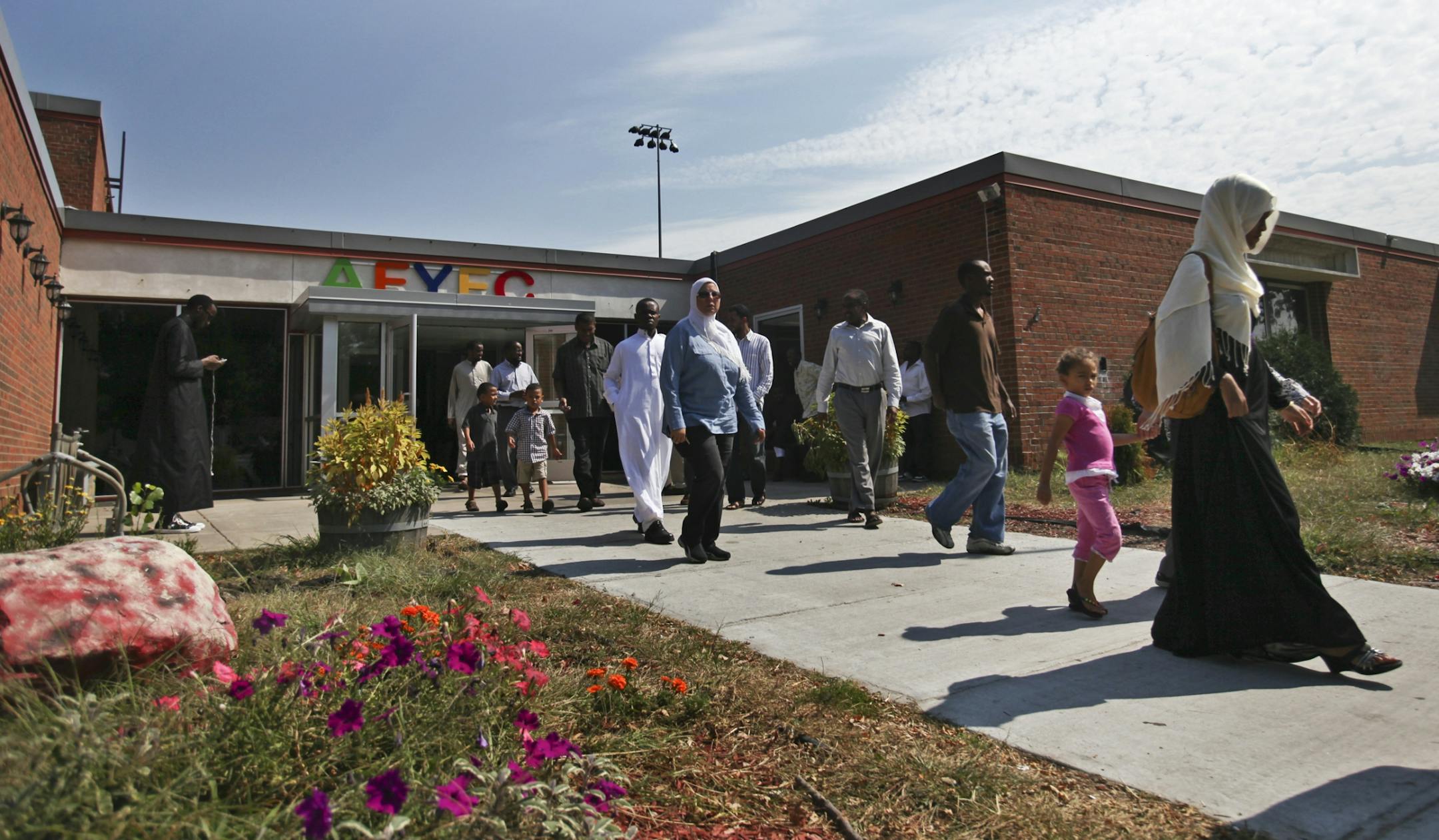
It may have been the jet lag, but a couple of articles in the Sept. 1 Star Tribune rubbed me the wrong way.
After 30 hours of planes, layovers and passport control lines, I'd returned home from Sri Lanka to see headlines and photos of Christians happily worshipping outdoors ("Summer in the Cities: Heavens above") and Muslim worshippers being suspiciously watched and photographed by their neighbors ("Cities tread warily on holy ground").
I am a Christian -- a Christian theologian, not to put too fine a point on it -- so I'm generally sympathetic to my coreligionists. But here's what was striking: the Lutherans of Burnsville have been worshipping outdoors, unmolested, for four decades. Meanwhile, the Muslims of Bloomington, only seven months in, are under duress because they're causing traffic problems in the neighborhood.
I visited Sri Lanka, the tropical island that hangs like an earring off the southern tip of India, at the invitation of World Vision. A Christian development and relief organization, World Vision is best known for its child-sponsorship program, and that's what I was there to see.
To be a Christian in Sri Lanka is very different than in the United States. Representing only 0.6 percent of the population, Christianity runs a distant fourth place there, following Buddhism, Hinduism and Islam. And, after centuries of forced conversation by missionaries, it is Christians who are looked at suspiciously by their neighbors.
I met with a 26-year-old Muslim imam named Joffrey who had grown up going to child societies run by World Vision, and he spoke fondly of the Christians who came to help his poor country, rather than to proselytize. When I asked how he keeps working with Christians and leaders in other faiths, he responded, "We always look for connections."
He repeated it, for emphasis, "We always look for connections."
I also met with an elderly Buddhist priest who has the impressive title Venerable Horagolie Dhammika Thero. "In the U.S.," I said, "Christians are the dominant religion. In Sri Lanka, Buddhists are. What advice do you have for us about being good stewards of our dominant position?"


