

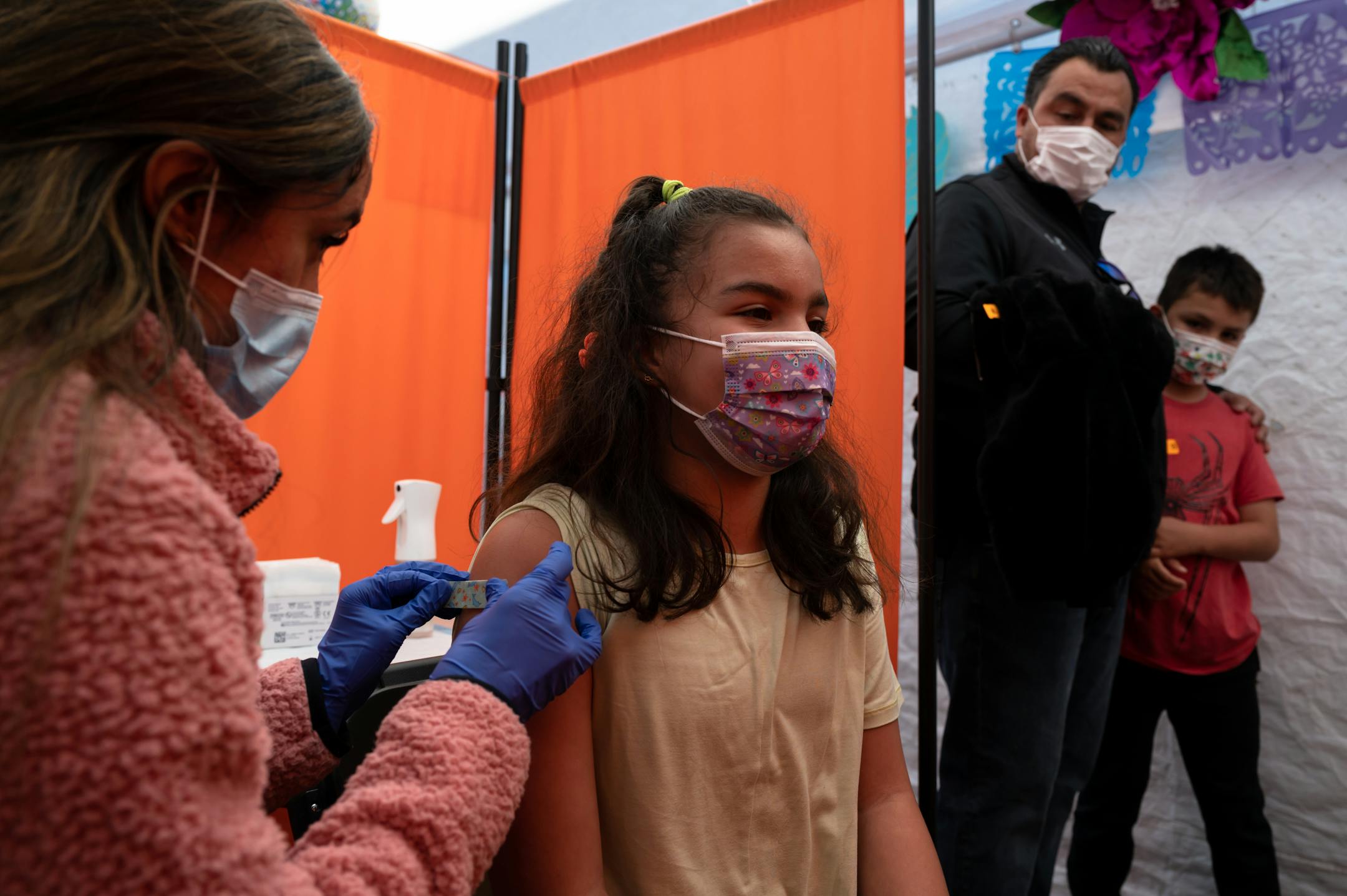
Amid the turmoil of the past two years — a period that included a deadly pandemic, mass layoffs, an ugly presidential election and an attack on the U.S. Capitol — some of the fiercest political debates in America have been waged over a nearly weightless piece of fabric: the face mask.
U.S. officials were slow to embrace face masks as a strategy for slowing the spread of the coronavirus. When they finally did, masks became a potent symbol of the pandemic — a common-sense public health measure turned political flashpoint and a visible reminder that life was anything but normal.
Now, with the summer's delta surge in the rearview mirror and the vaccination of school-age children underway, many Americans are wondering when the masks might finally come off.
"The best science does support mask-wearing as a valid strategy to reduce COVID-19," said Dr. Stephen Luby, an infectious disease expert and epidemiologist at Stanford University. "The issue is: Well, how long do we do this, and in how many contexts?" He added, "Do we all wear masks the rest of our lives?"
Some public officials are already mapping out an endgame. On Tuesday, Mayor Muriel Bowser of Washington, D.C., announced that indoor mask requirements would be loosened. The next day, Florida lawmakers passed a bill banning school mask mandates, which some districts had already abandoned.
Eric Adams, New York City's mayor-elect, "wants to drop the mask mandate in schools when health officials determine it's safe," his spokesperson said in an email.
That time has not yet come, experts said.
"Cases are starting to rise again, and we have not yet conquered this virus," said Anne Rimoin, an epidemiologist at the University of California, Los Angeles. "We may be tired of COVID and COVID restrictions and public health measures, but this virus is certainly not done with us yet."


