

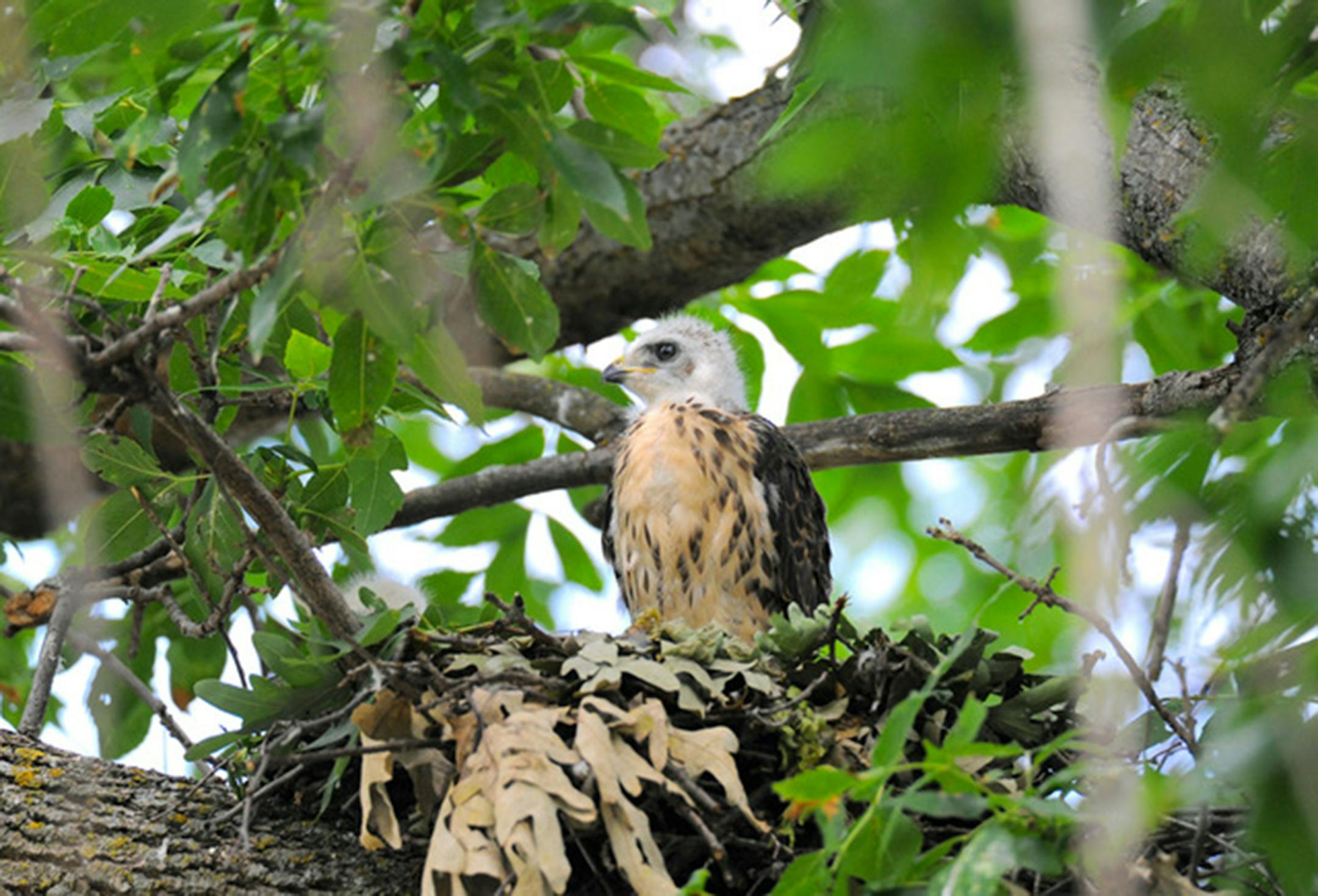
Q: I saw what I think was a Cooper's hawk carrying twigs by its feet in early April. We live in a residential area, so they couldn't be building a nest around here, could they?
A: Yes, a pair of Cooper's hawks may very well be building a nest in your neighborhood. These crow-sized raptors, more commonly found in forests, increasingly are looking to cities and suburbs to raise their families. What's the draw? Our bird feeders attract high numbers of birds, and Cooper's hawks survive by eating birds. They favor the larger species, like doves, pigeons, flickers and jays, but I've seen Cooper's hawks snatch starlings and cardinals, as well as juncos and house sparrows, out of my backyard.
If you don't want a raptor hunting through your property, the standard advice is to take down your feeders for a week or more. With your songbirds feeding elsewhere, this should drive the hawk to hunt elsewhere for its meals. But I suspect that if these hawks are nesting nearby, they'll return once you put your feeders back up, since they'll have hungry mouths to feed back at their nest.
Crocus culprit
Q: I thought chipmunks and squirrels were the culprits eating my beautiful crocuses this spring, but then I spied a house finch eating the flowers one morning. What gives?
A: House finches and goldfinches eat almost nothing but seeds, but they do have a taste for nectar and sometimes visit hummingbird feeders to drink. I'm not sure if the crocus-eating finch was after nectar or roughage, but other readers have reported observing house finches and goldfinches munching on Swiss chard and dandelion greens, as well.
Finch houses?
Q: What's the best kind of birdhouse to put up to attract goldfinches?
A: Sorry to say, there's no nest box that will encourage goldfinches to nest in your backyard. This is because goldfinches are not cavity nesters; they build their cup nests in shrubs or tall grasses. In fact, a surprisingly low number of backyard birds in our area will use a nest box, and these include Eastern bluebirds, black-capped chickadees, house wrens, purple martins and tree swallows. Unfortunately, two undesirable, nonnative species, the house sparrow and the starling, often take over nest boxes.
Wood-boring chickadees
Q: Why are the chickadees making a hole in my wooden wheelchair ramp?


