

If I went out outside and shouted at the chickadees perched at the feeders on our deck, the birds would fly away.
Five minutes later, they'd be back. No harm, no foul.
A couple of years ago the neighborhood crow family discovered our suet feeders. They'd eat all the suet they could reach. I shouted them off the feeder two or three times. They return rarely and cautiously. See me and flee. Crows learn quickly.
Relative to body size, a crow brain is five times the size of a pigeon brain. On the same basis, crow brains are larger than those of chimpanzees.
How smart are they?
A Canadian scientist devised an intelligence measure for birds. It was based on published descriptions of various feeding strategies employed by birds. High on the list were crows, eating as though they were at the State Fair.
At the bottom were quail, birds of routine lives. Chickadees and most songbirds live by routine. Crows, ravens, jays and magpies have evolved to live lives of variety. Variety makes/takes brains.
Crows make and use tools. New Caledonian crows are famous for that. In an experiment they were given a problem: food at the bottom of a bottle. With the bottle they were given straight pieces of wire. The crows bent the wire to form hooks, then fished the food from the bottle. The Internet is full of smart-crow videos.
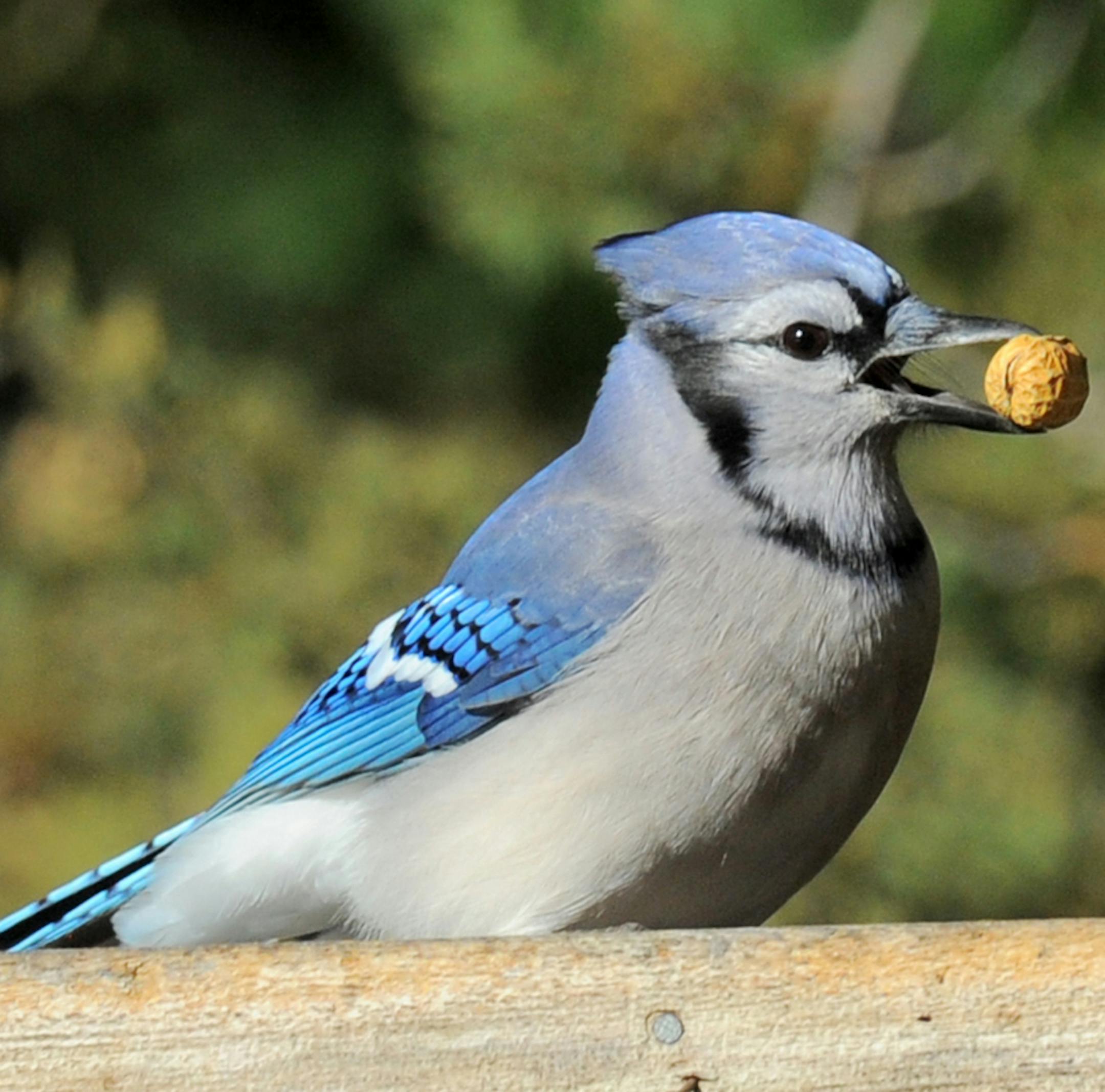
Also high on the bird smarts scale are ravens, jays and magpies, all members of the corvid family of birds and all found in Minnesota.


