
Wheeling out a new idea: A lending library of bicycles

St. Paul's Sibley Bike Depot will allow low-income people who need transportation to borrow bikes for up to six months.

April 5, 2010 at 2:06AM
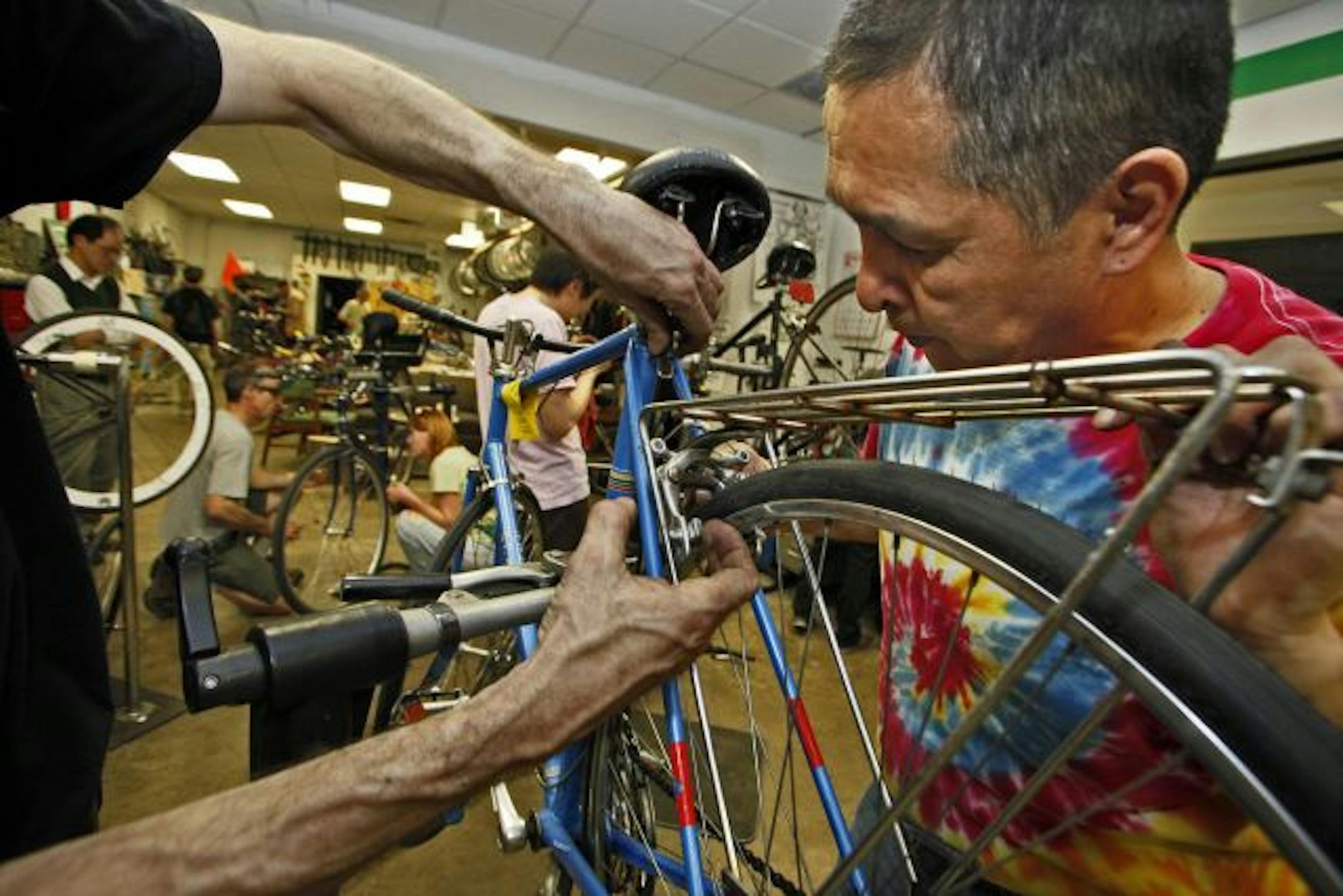
Volunteer Will Wilkins of St. Paul received some help from a staff member to repair a bike Wilkins had selected. The bike library program got a $200,000 federal grant to help it get rolling.
Volunteer Will Wilkins of St. Paul received some help from a staff member to repair a bike Wilkins had selected. The bike library program got a $200,000 federal grant to help it get rolling. (Star Tribune/The Minnesota Star Tribune)

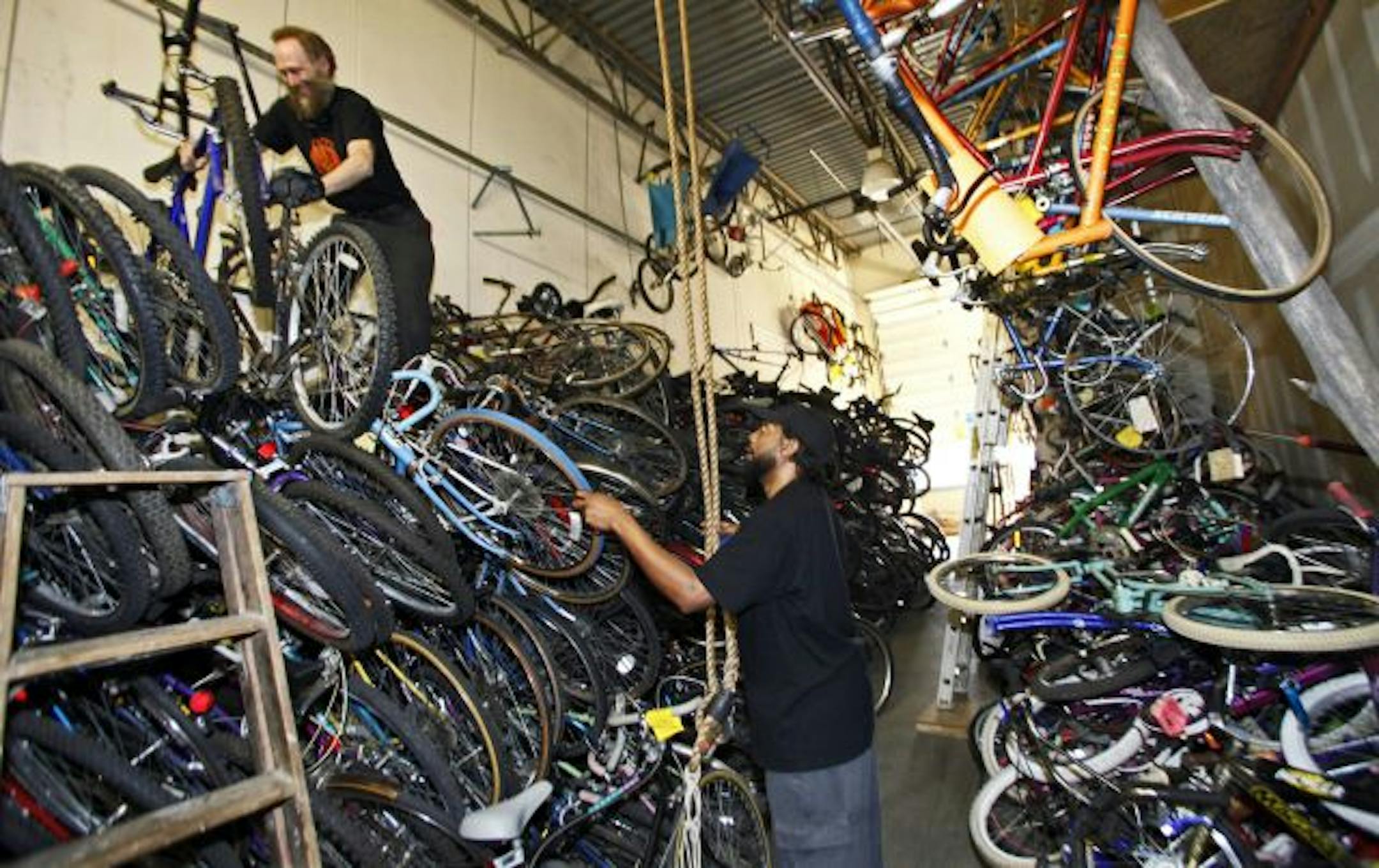
At the back of the shop at the Sibley Bike Depot in St. Paul, rows of bicycles are stacked on top of one another.

Someday, they'll be fixed and sold or taken apart and recycled. In a month or so, some might even be loaned out when a new bike library -- funded with a $200,000 federal grant -- gets into gear.

The mission is simple: "We're getting bikes in the hands of people who need them," said Jason Tanzman, volunteer coordinator for the nonprofit bike shop.

The Community Partners Bike Library will help low-income folks across the Twin Cities who don't have access to good bikes to use for transportation. Sibley is joining with 20 groups -- from government to social services to community institutions -- to loan 200 bikes to people in need.

"Part of the beauty of the program is networking with communities that aren't using bikes already," said Amy Snyder, the library program's director. The program will help people who can't afford a good, safe bike, she said.

"Who can't dig that?" Snyder said.

There are bicycle libraries in Arcata, Calif., and Iowa City, Iowa, where people can choose a bike, put down a deposit and pedal away for six months.

Sibley's idea was first envisioned as a bike donation program, but then organizers figured it might be more useful to ensure that people who get the bikes actually use them.
The partner organizations -- including Project for Pride in Living, Network for Better Futures and Center for Victims of Torture -- will distribute the bikes. If a library bike isn't ridden at least once a week, the organizations will want it returned.

When a person checks out a bike, it will come with a rack, fenders, lights, lock, helmet and a Twin Cities bike map. Before riding away, the person will have to take a "safe cycling" class. The bikes can be checked out for six months.

People must be at least 16 years old to participate.

A community shop

Sibley is a consensus-based collective on University Avenue near Dale Street. It's largely run by volunteers with a focus on empowering and educating people who ride -- or want to ride -- bicycles.

The shop offers classes for kids and adults, sells used and some new parts, and has a program where people can earn a bike by volunteering.

Sibley also opens its shop, tools and parts to the public for free a few times a week. Need a bullet ferrule or bearing retainer? The shop's got them. Need a new chain or crank? Look in the metal filing cabinets. Inhale the aroma of bike grease, rubber and donuts (the bike shop shares a building with Sugar Rush bakery).

Sibley is a lean organization, Tanzman said, with about 90 percent of its $100,000 budget coming from the sale of refurbished bikes. Most bikes come from private donations.

For more information on the programs or making donations, go to www.sibleybikedepot.org or call 651-222-2080.

Chris Havens • 612-673-4148

The is the raw material of which bike dreams are made. John Finkle, left, who is on the bike library's board of directors, pulled down a bike from a stack of 250 for volunteer Nathaniel Dowls, who will put the bike back into road-worthy shape.
The is the raw material of which bike dreams are made. John Finkle, left, who is on the bike library’s board of directors, pulled down a bike from a stack of 250 for volunteer Nathaniel Dowls, who will put the bike back into road-worthy shape. (Star Tribune/The Minnesota Star Tribune)
about the writer

about the writer

CHRIS HAVENS, Star Tribune

More from No Section

See More
FILE -- A rent deposit slot at an apartment complex in Tucker, Ga., on July 21, 2020. As an eviction crisis has seemed increasingly likely this summer, everyone in the housing market has made the same plea to Washington: Send money — lots of it — that would keep renters in their homes and landlords afloat. (Melissa Golden/The New York Times) ORG XMIT: XNYT58
Melissa Golden/The New York Times

It’s too soon to tell how much the immigration crackdown is to blame.