

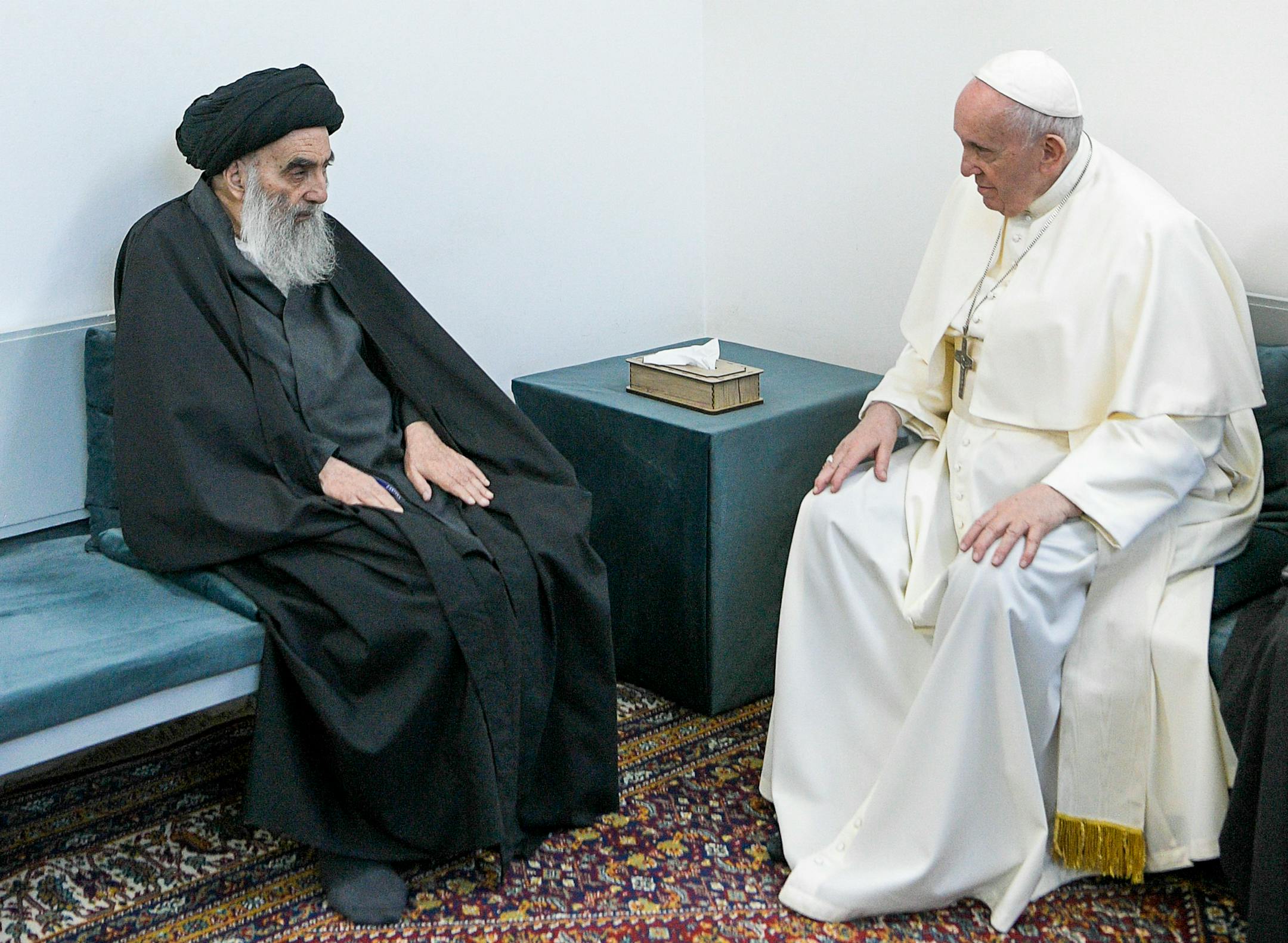
The most stunning global event last week was the historic meeting of Pope Francis with Shiite Ayatollah Ali al-Sistani in a small, bare room in the holy city of Najaf, Iraq.
I say that not just because of the pope's astonishing bravery in attempting to protect the remnants of Iraq's ancient Christian sects, whose numbers have dwindled from around 1.5 million to 250,000, under attacks from ISIS and other violent Islamist extremists since the 2003 U.S. invasion. At age 84, in the time of COVID-19, the pope's journey to Iraq was not for the faint-hearted.
Nor do I say it only because the reclusive, ailing 94-year-old Sistani, perhaps the most revered Shiite cleric in the world, stood to greet the pope and joined him in condemning extremism.
No, this trip symbolized something much more significant, at a time when the world is convulsed by xenophobic nationalism, ugly strains of populism and deep cracks within democratic political systems. It was a desperate last plea by global religious moderates for justice and peace.
Both these religious leaders have promoted the rights of oppressed religious and ethnic groups and social justice for poor people, along with democratic political rule. But they have been challenged by hard-liners within their own religion and sects and by populist, authoritarian politicians. Their joint appearance was a poignant plea — perhaps a last stand — for values that are under increasing global threat.
I have walked the narrow alley in Najaf off which Sistani lives. (He almost never receives visitors, but takes questions via his son.) There is no question that he, like the pope, chooses to live humbly, avoiding any trappings of religious power. And don't be fooled by the widely distributed photo of the two men in which the black-clad cleric looked wraith-like — he still wields immense religious power.
While Shiites comprise only around 15% of all Muslims, the vast majority of whom are Sunnis (they differ over the proper succession to the prophet Muhammed), Iran and Iraq are predominantly Shiite.
And Sistani is the preeminent Shiite ayatollah, leader of a school of religious thought that opposes direct involvement of clerics in political leadership. Thus he opposes the rule by clerics practiced in Shiite Iran since the 1979 Islamic revolution — and has endorsed constitutional elections in Iraq.


