

Senate Majority Leader Mitch McConnell's perverse, partisan power-play is an affront to the rule of law in its broadest sense and detrimental to Congress, the Supreme Court and the country.
Following Supreme Court Justice Ruth Bader Ginsburg's death Friday, six weeks before the 2020 election, McConnell declared that "President Trump's nominee [to replace Ginsburg] will receive a vote on the floor of the Senate." However, following Supreme Court Justice Antonin Scalia's death in 2016, nine months before that year's election, McConnell had announced: "The American people should have a voice in the selection of their next Supreme Court Justice. Therefore, this vacancy should not be filled until we have a new President."
Arguments can be made, and supported by prior precedents, about which of McConnell's opposing confirmation processes is best for dealing with a Supreme Court vacancy in an election year. But they are in conflict with each other. McConnell made his choice four years ago. Accordingly, his current unbridled political expediency cannot be excused.
This self-serving incongruence not only erodes faith in the political process, it may also carry over to the court itself. The more the judicial appointment and confirmation process is viewed as merely illicit partisan politics the court may be perceived as just another political branch of government, undermining the public's faith in the legitimacy of the court.
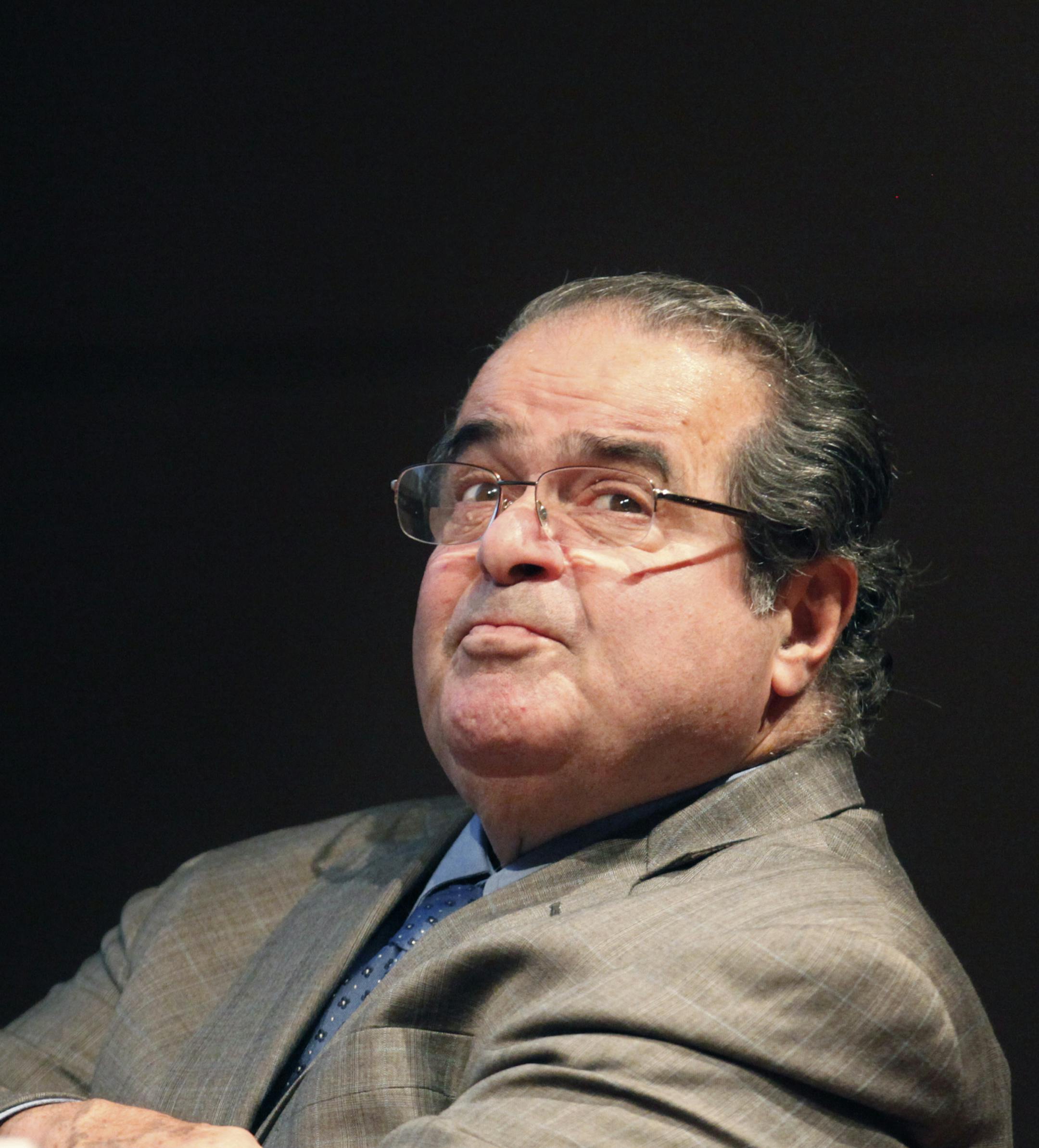
McConnell lamented the Scalia's passing because "our country lost an unwavering champion of a timeless document that unites each of us as Americans. Justice Scalia's fidelity to the Constitution … this giant of American jurisprudence … prioritized the text and original meaning of the Constitution."
Of course, McConnell is functioning as a politician, not as a lawyer or judge. Still, if Scalia is his gold-standard of a justice, shouldn't McConnell follow Scalia's lead and abide by a principled confirmation process?
According to Scalia, "The paramount truth of democracy is process." He stressed the importance of fair and consistent process back in 1984 in a commencement address at the University of Dayton School of Law. The "characteristic of lawyers that needs mention is our obsession with process," he said. "As a matter of fact, process is what we are all about! … What lawyers are good at, what lawyers are for, is implementing these decisions in a manner, through a process, that is fair and reasonable."
It is neither fair nor reasonable to decide on one standard when it benefits one's political ambitions only to shun that very standard and reverse one's own established rule four years later when it becomes inconvenient to one's current desires. Rather, it is arbitrary and capricious and an anathema to the rule of law.


