
What would consumers gain from Comcast deal?

The $45.2 billion bid for Time Warner Cable must benefit public.

February 18, 2014 at 12:17AM
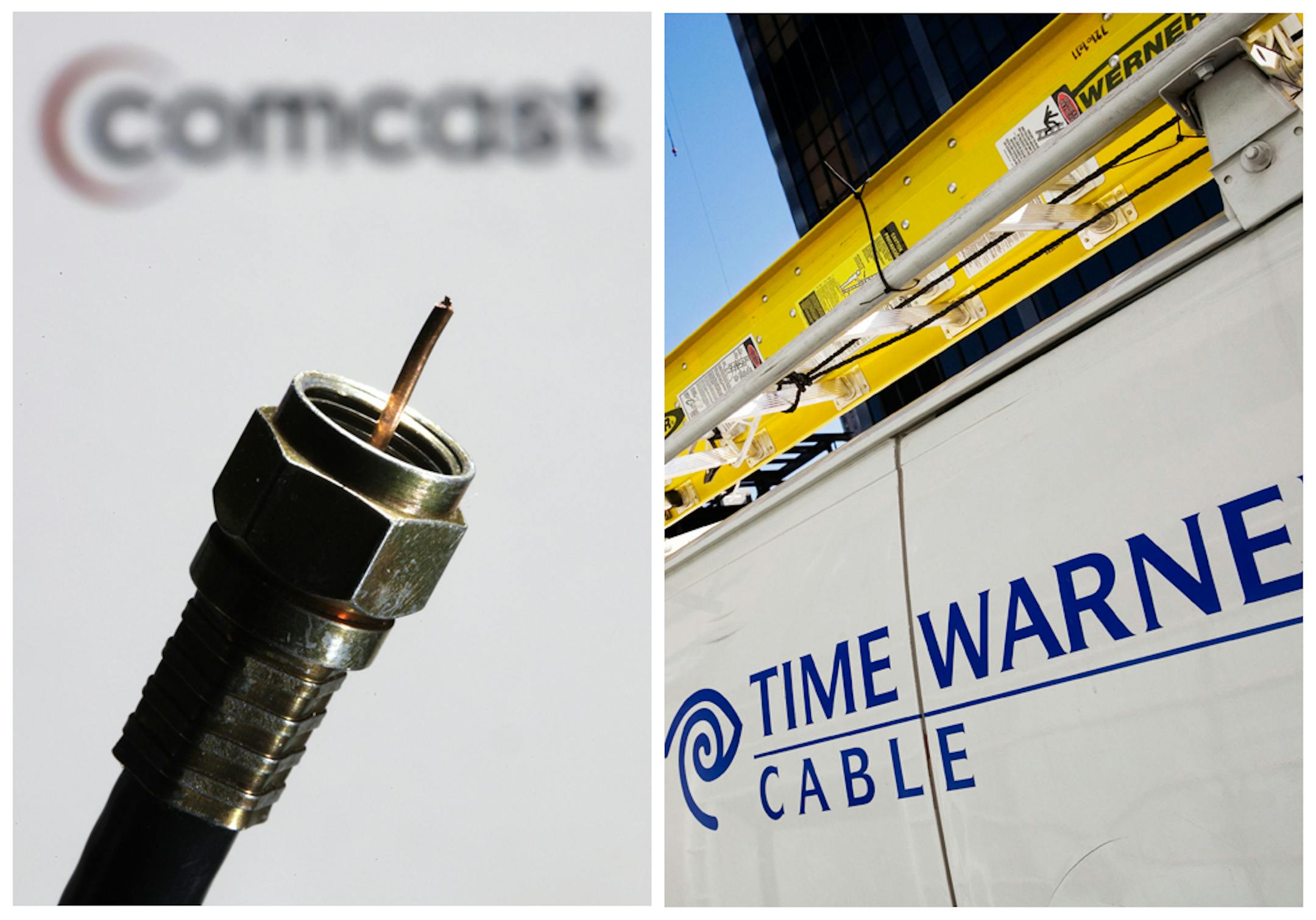
In this combination of Associated Press photos, the a coaxial cable is displayed in front of the Comcast Corp. logo in Philadelphia, on Wednesday, July 30, 2008, and a Time Warner Cable truck is parked in New York on Feb. 2, 2009. Comcast Corp. announced Thursday, Feb. 13, 2014, that it is buying Time Warner Cable Inc. for $45.2 billion in stock. The deal combines two of the nation's top pay TV and Internet service companies and makes Comcast, which also owns NBCUniversal, a dominant force in bo
In this combination of Associated Press photos, the a coaxial cable is displayed in front of the Comcast Corp. logo in Philadelphia, on Wednesday, July 30, 2008, and a Time Warner Cable truck is parked in New York on Feb. 2, 2009. Comcast Corp. announced Thursday, Feb. 13, 2014, that it is buying Time Warner Cable Inc. for $45.2 billion in stock. The deal combines two of the nation's top pay TV and Internet service companies and makes Comcast, which also owns NBCUniversal, a dominant force in both creating and delivering entertainment to U.S. homes. (AP Photo/Matt Rourke) (The Minnesota Star Tribune)

It's easy to get lost in telecommunications jargon. Net neutrality, broadband and vertical integration are arcane terms that join an alphabet soup of regulatory agencies like the FCC (Federal Communications Commission) and DOJ (Department of Justice) in overseeing an increasingly important sector of the U.S. economy, let alone Americans' lives.

So as Washington considers Comcast's bid to buy Time Warner Cable in a $45.2 billion deal, regulators and elected officials would be wise to simplify the debate by prioritizing who should really matter in the discussion: consumers.

Would they pay less or more for TV and Internet service? Would service improve? And would the proposed deal increase innovation or reduce it? The answers to these questions will have a significant impact not just on the U.S. economy, but on America's cultural expression, too.

Reflexive opposition is understandable and may eventually be warranted. But it's important to acknowledge that the deal would not create a media monopoly. Comcast and Time Warner currently don't compete in the same markets. And to alleviate concerns that its U.S. footprint is becoming too large, Comcast would divest about 3 million subscribers, leaving it with about 30 million. It has also agreed to extend net neutrality — the concept of treating all online content equally — to its growing presence.

Comcast has been losing subscribers over the last few years. Competition from DirecTV, Dish Network, AT&T and Verizon, as well as Netflix, Apple and other options, suggests a rapidly evolving media landscape.

Some consumers cut the cord altogether and watch only online content. But Comcast doesn't necessarily lose, because its Internet business has been growing in recent years.

And often those watching, by whatever means on whatever device, are watching Comcast content, especially after some of the same regulators approved the company's massive 2011 acquisition of NBC Universal.

The key consideration needs to be whether creating powerful media behemoths is as good for consumers as it is for shareholders. It's likely that a successful Comcast-Time Warner deal would spur others, cementing an industry oligopoly that has vast control over distribution and content.

That could benefit consumers if the larger company uses its market muscle to push back on cable networks in setting rates — a cost passed on to subscribers. Yet Comcast is conflicted, if not compromised, in this debate because it owns numerous cable networks that could benefit from price hikes.

Comcast reportedly has extensive ties with Obama administration officials, including the president himself. But everyday Americans — those who pay for cable and broadband delivery services that were once considered luxuries but are increasingly treated as utilities — don't have such access.

They do have congressional representation, however, and it's encouraging to see that Sens. Amy Klobuchar and Al Franken, Democrats representing Minnesota, have issued statements suggesting skepticism about the impact of the merger.

"This is more concentration of the big telecommunications and media companies," Franken told an editorial writer. "This kind of concentration of power can lead to higher costs for consumers, can lead to less choice for consumers and can lead to even worse service."

Franken's analysis stands in stark contrast to comments made by Comcast CEO Brian Roberts in an investor call last week. He called the proposed deal "pro-consumer, pro-competitive, and strongly in the public interest."

Franken, Roberts and many others will get a chance to persuade, and the government agencies will perform the vital role of deciding whether to approve the proposed deal. In doing so, key leaders from Congress, Comcast, the FCC and the DOJ all should keep their focus on what's best for American consumers.

about the writer

about the writer

Editorial Board

See Moreicon

More from No Section

See More
FILE -- A rent deposit slot at an apartment complex in Tucker, Ga., on July 21, 2020. As an eviction crisis has seemed increasingly likely this summer, everyone in the housing market has made the same plea to Washington: Send money — lots of it — that would keep renters in their homes and landlords afloat. (Melissa Golden/The New York Times) ORG XMIT: XNYT58
Melissa Golden/The New York Times

It’s too soon to tell how much the immigration crackdown is to blame.