

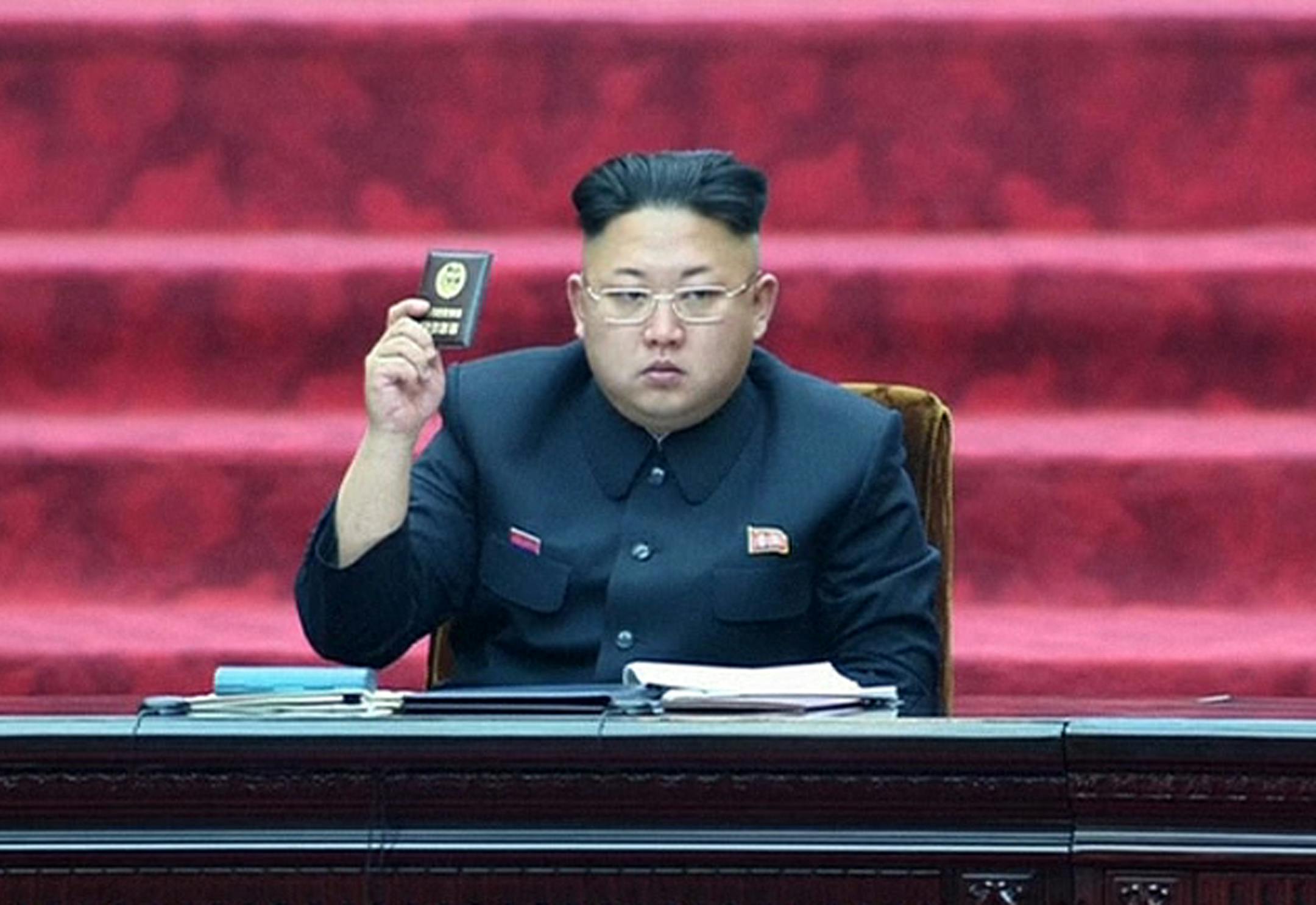
North Korean leader Kim Jong Un has not been seen in public for more than a month, generating speculation that his absence is due to failing health or political intrigue. Given the paucity of information, keeping track of Kim is tougher than winning at three-card monte, and the stakes are much higher: the potential instability of a nuclear-armed nation.
After Kim's notable absence from the important Supreme People's Assembly meeting Sept. 25, North Korea's official media announced the leader was suffering from "discomfort." Kim has gained significant weight since his ascension to power two years ago, and the rotund leader had been observed limping during several public appearances during the summer.
Experts postulated that Kim was suffering from gout, diabetes, a blood clot in the brain and even weight gain brought on by an addiction to cheese developed during his youth as a student in Switzerland. A South Korean newspaper quoted a North Korean source stating Kim had undergone surgery after suffering fractures of both ankles brought on by obesity, a grueling touring schedule and wearing "Cuban heels."
Alternatively, some analysts assessed Kim as suffering from a 9-millimeter headache (assassination) or an attempted coup. One report speculated that Kim had been overthrown by Vice Marshal Jo Myong Rok, vice chairman of the National Defense Commission, until someone remembered that Jo died in 2010.
On Oct. 1, North Korean official media announced that Kim had sent a congratulatory message to Chinese President Xi Jinping to celebrate the 65th anniversary of the founding of the People's Republic of China.
On Oct. 3, a senior-level North Korean delegation traveled to Seoul, ostensibly to attend the closing ceremonies of the Asian Games. The delegation included what is perceived as the second- and third-most powerful people in North Korea. The delegation conveyed that Kim's health was fine, and it is unlikely that such elite officials would leave the country had a coup occurred.
So, Kim's absence may well turn out to be another tempest in the North Korea teapot brought on by false assessments and overreaction. But his absenteeism has returned two issues to prominence: Just how strong is Kim's grip on power, and what would happen if he died, either from a health crisis or a coup?
Kim has purged hundreds of officials since assuming power in late 2011. In December 2013 he executed his uncle, Jang Song Taek, previously seen by the West as the second-most powerful man in North Korea. Kim even removed officials he had earlier promoted, replacing the minister of defense and chief of the general staff five times each during his first two years in power.


