

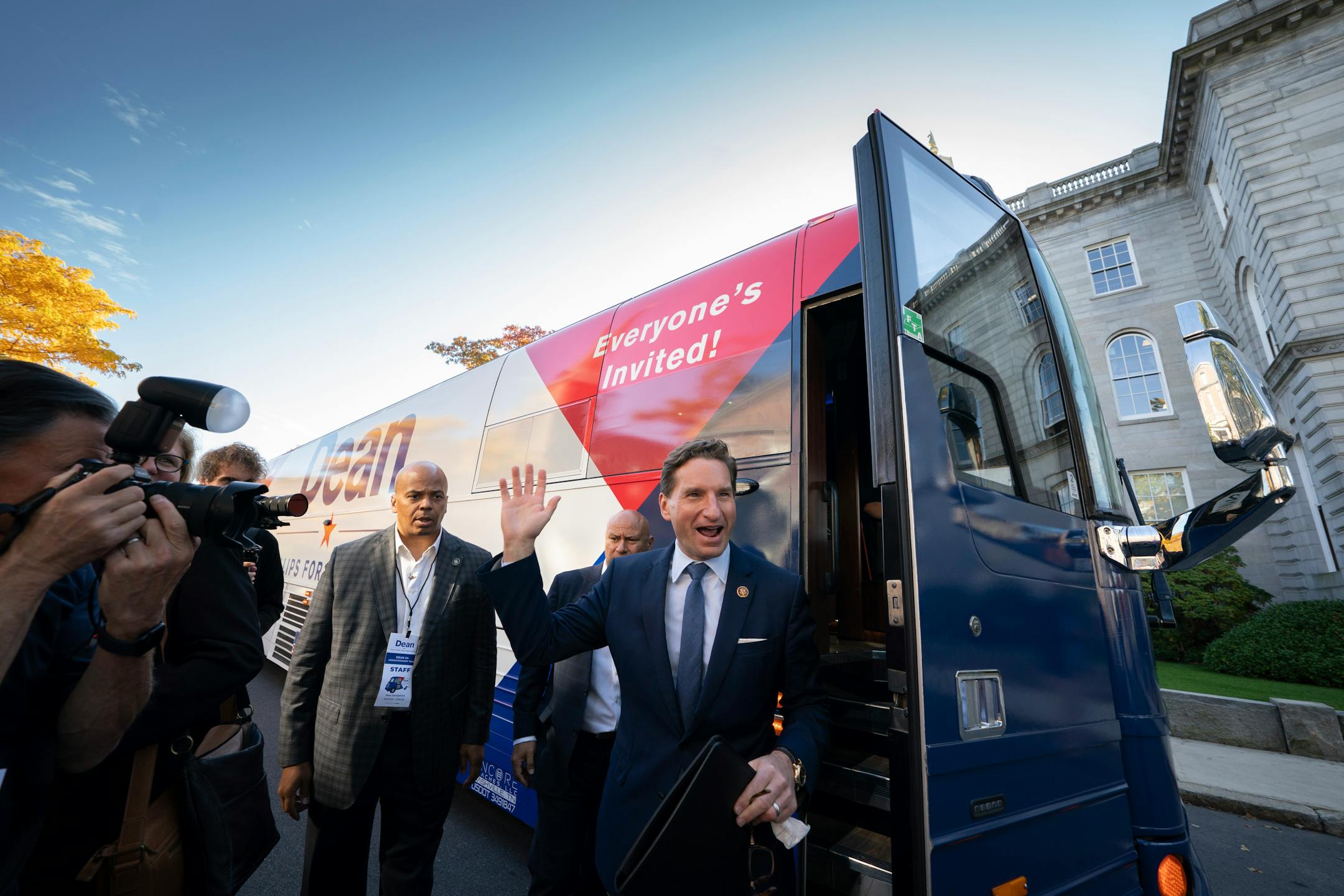
Dean Phillips believes America is in dire need of a less-partisan president.
Unlike Democratic President Joe Biden and Republican Donald Trump before him, Phillips said he would bring political rivals together to solve the country's biggest challenges. The Minnesota congressman who's challenging Biden for the Democratic nomination said he would appoint Democrats and Republicans to his Cabinet, adopt fiscally conservative values and take an "all-hands-on-deck" approach to ending homelessness in the United States.
"When people ask me, 'What do you differ about Biden other than your age and some modest policies?' The difference is in style of leadership. And this is a massive underappreciated truth," Phillips said in a recent interview. "It starts with the notion of every American knowing that they have a voice in the White House, not just one party. … I think that's how we start repairing the country."
The third-term Minnesota congressman will find out if his message is resonating on Tuesday, when New Hampshire voters head to the polls to pick their parties' presidential candidates.
In a wide-ranging interview, Phillips detailed what his presidency would look like, from his philosophy and top priorities to the structure of his potential administration. Here are some highlights.
A Phillips administration
A member of the bipartisan House Problem Solvers Caucus, Phillips has sought to find common ground between Democrats and Republicans since he was elected to Congress in 2018. He said he would continue to do so in the White House by building a bipartisan Cabinet.
An experienced businessman and heir to the Phillips liquor fortune, Phillips said "you don't succeed in business by surrounding yourself with people who all see things the same way. You succeed by surrounding yourself with people of very different opinions and backgrounds and life experience."
He said he would also create a "youth cabinet" composed of high school- and college-age Americans that would weigh in on issues such as social media regulation, artificial intelligence, climate change and gun violence.


