

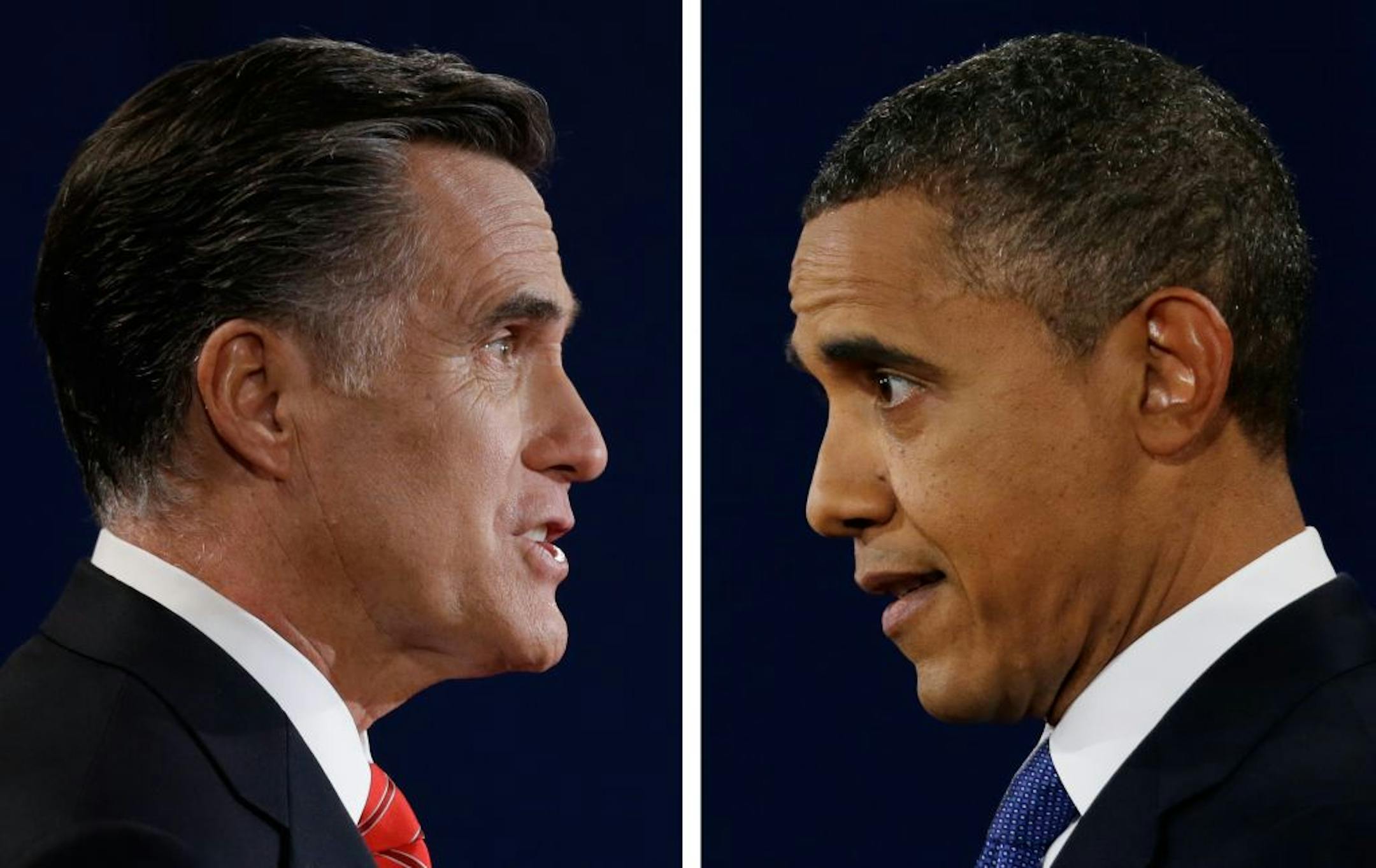
If you're still hoping to see a serious foreign-policy debate between Mitt Romney and President Obama, you'll have your chance tonight, when the candidates will focus on global issues.
Don't get your hopes up, however. For one thing, the two men know the public isn't focused on foreign affairs. For another, the most serious security challenges confronting the country -- in the Mideast and South Asia -- are so complex and fluid, it's hard to provide clear answers. This makes for a lot of posturing by Romney (it's easier for a challenger to insist the answers are obvious) and for oversimplification by Obama.
In the hope that tonight's moderator, Bob Schieffer, can prod the two men to candor, here's what I'd like to see them address:
First, enough already about the attack on our mission in Benghazi, Libya. Amazingly, this was one of only two foreign-policy questions at last week's debate. (The other, on China, elicited routine Beijing-bashing by both men.) The Benghazi attack is not the most pressing national security question that confronts us. Issues of diplomatic security fall under the purview of midlevel State Department bureaucrats, not the White House. Secretary of State Hillary Rodham Clinton has taken responsibility for any security failures -- but so should Republicans who voted to cut the budget for future embassy security needs.
Instead, could we please hear a serious discussion of how to deal with new Islamic realities after the Arab Spring? Romney argues that the Islamists emerged because Obama didn't sufficiently support democratic forces in the region. But, a bit belatedly, Obama did back Tunisian, Egyptian and Yemeni rebels in their struggle. Once their dictators fell, their publics voted Islamists into office, with hard-line Salafis on the margins. Nothing Washington did could have made those elections turn out the way we hoped.
So let's have a discussion: Should the United States support Arab rebellions wherever they lead? Should it support Arab democracy if voters choose governments we don't like? Would Romney repudiate Islamic governments that won legitimate elections? Will Obama (or Romney) cut off aid to an Islamic government in Egypt if it represses women and minorities? What if that Egyptian government then threatens to abrogate its peace treaty with Israel?
And let's have an honest discussion about Syria, whose sectarian civil war is poisoning the region. Obama is holding back, letting the Arab Gulf states provide Syrian rebels with light (and inadequate) weapons.
Romney chastises the president for timidity on Syria, yet differs little: He would only urge the Saudis and Qataris to provide heavier arms to "good" rebels. However, outsourcing this effort is risky: The Gulf states are more likely to aid the Islamists. What happened to Romney's "leading from the front"?


