

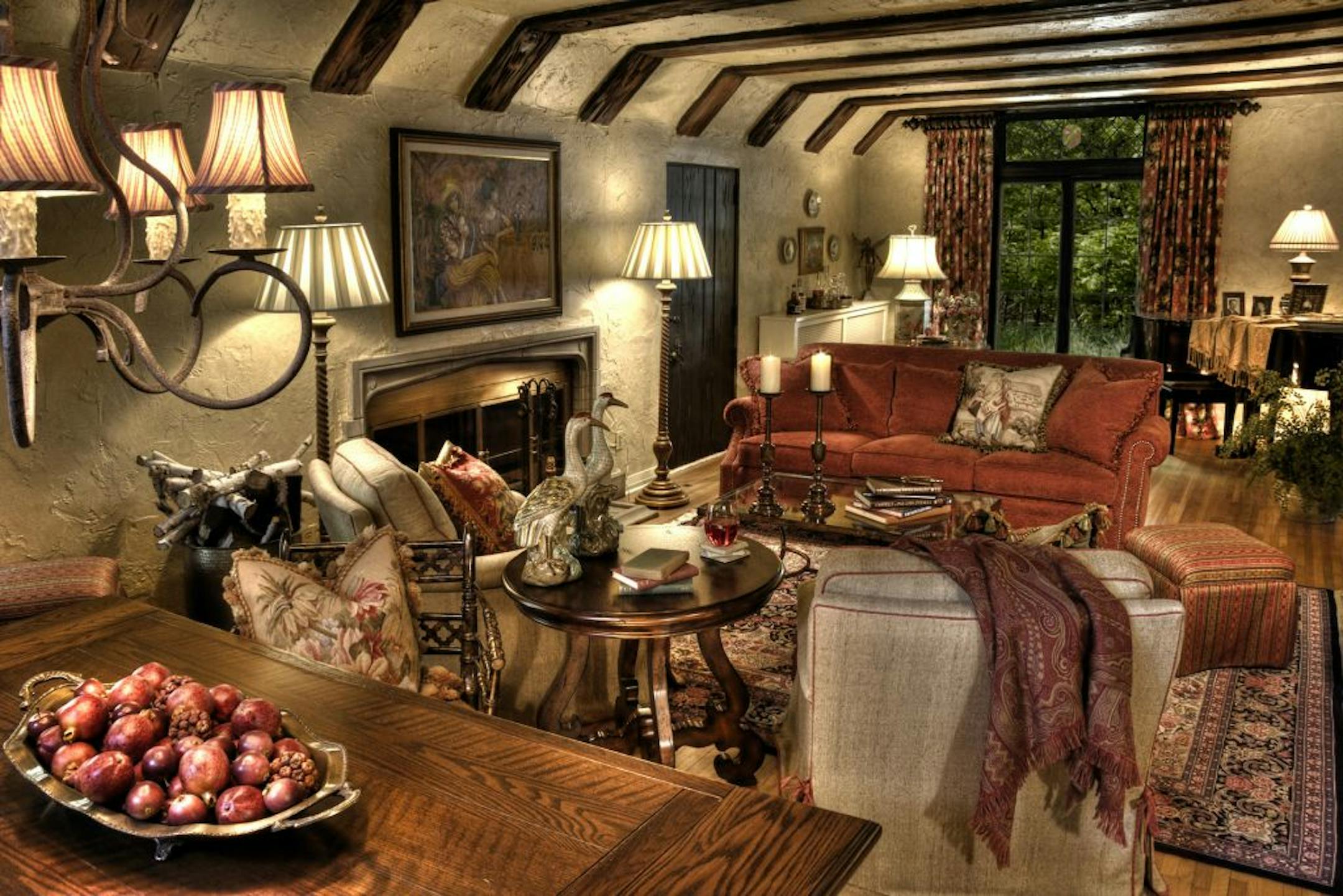
JOHN LASSILA
• In an open floor plan, a lot of unpainted woodwork can look too busy. "Painted woodwork offers a soothing visual," he said. "If you have a beautiful view at the window, you're focused on the view and not the woodwork."
• Select a focal point for the room: artwork, a rug, an accessory or collection.
• If you have an open floor plan, you can define different spaces using varying floor surfaces, wall surfaces, kitchen island or peninsula, area rugs, semi-sheer drapery, ceiling treatments.
• Personalize the room by displaying accessories that reflect your interests and personality. "I love books" for decorating, he said. For more visual impact, group collections of similar items together -- pottery, decorative boxes, framed prints -- rather than scattering them here and there.
Michael Anschel
• The popular trend toward open floor plans is "a terrible idea," he said. "I don't want to be able to look into my kitchen. It puts too much pressure on the homeowners. It's great for entertaining, but then the guests leave and it's just you, in a space that's so much larger than you. It can't possibly be comfortable." On the contrary, "people like cozy little nooks for safety and security."
• Color has a powerful effect on the mood and feeling of a space. Each room should feature at least three colors (Anschel has designed rooms containing upwards of three dozen colors) because "nothing in nature is all one color," he said. "More colors mean the brain works harder, giving the illusion of more space." Colors can also define areas of a room for different uses.
• The ceiling should be white, though, to keep the other colors in true perspective.
• Ignore romanticized paint-chip names ("Tuscan sunset" and the like) and focus on the colors themselves. "People get paid big money to come up with names that evoke an emotion," he said.


