

MICHAEL ANSCHEL
• Warmer colors are best. "It's a great place for yellow -- terrible for green."
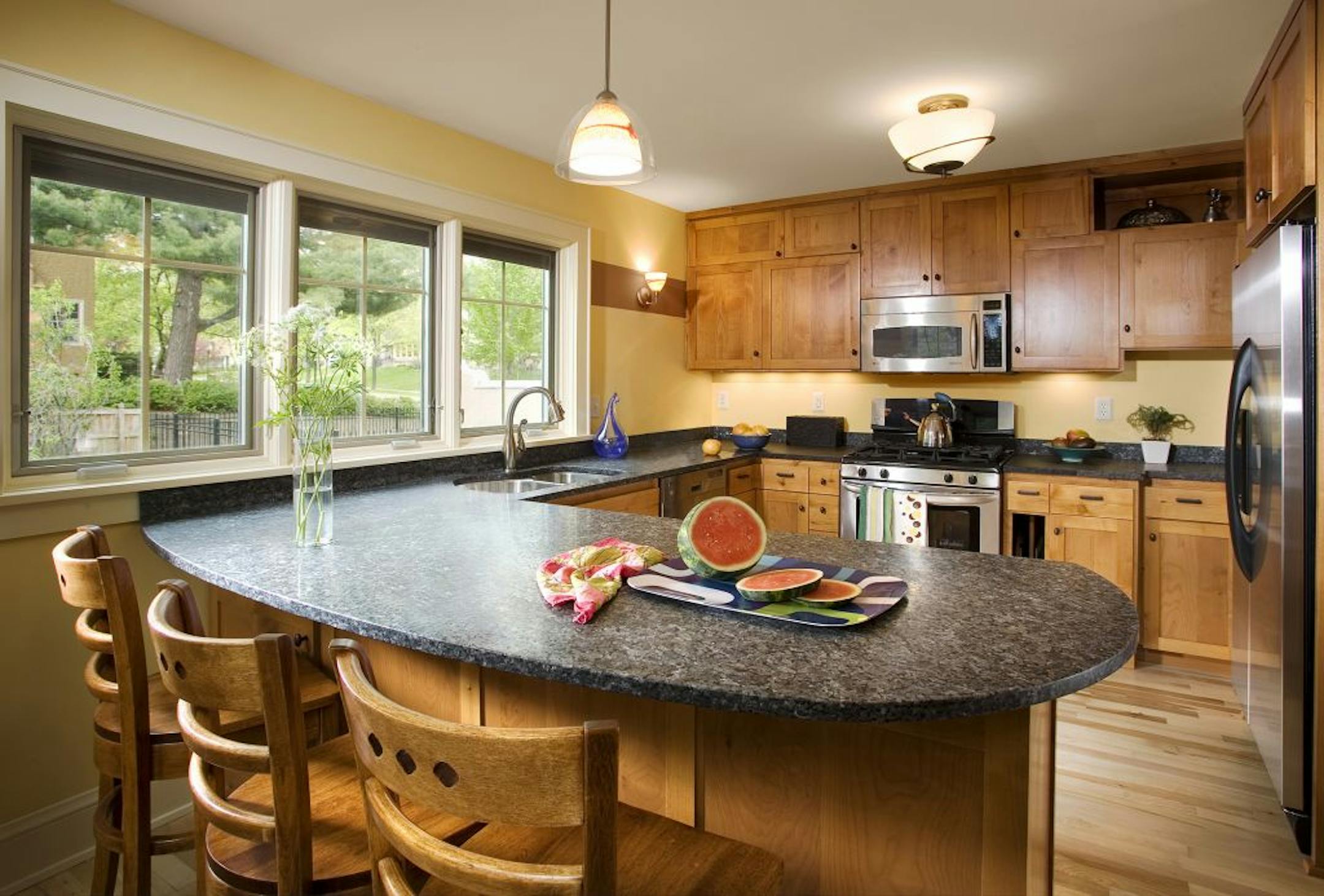
• Cabinets are the most expensive element in the kitchen. You can reduce costs -- and open more space -- by reducing the cabinets. Anschel likes to minimize use of upper cabinets, believing they block the counter space. He also prefers shelves and cubbies to cabinets.
• "Less is more. Fight the urge to put the extra light fixture, the extra cabinet. Pull back. You can always add later."
• Storage drawers are better than cabinets doors, because you often have to pull out a drawer anyway to find items in the back. Plan your space in advance and design drawers for what they'll be used to hold: shallower drawers for silverware, deeper ones for taller objects.
• For countertops, "we use salvaged material," he said. It's more environmentally friendly and cheaper; the cost is mainly in having the material shaped to your counter. And by the way, he echoed a much repeated admonishion that the counter tops in different parts of the kitchen "don't all have to match," he said. A mix of materials "looks more interesting."
• Avoid highly polished surfaces; honed surfaces getter hide spots and glare. In addition to stone, consider linoleum, paper stone, stainless steel, wood.
LISA PECK
• "Backsplash tile is a great way to add personality," she said. Because it's a small area, "you can splurge a little bit, buy a more expensive material than you usually would."
• Plan storage spaces by asking yourself where you are going to use an item, and designate a storage space nearby.


