

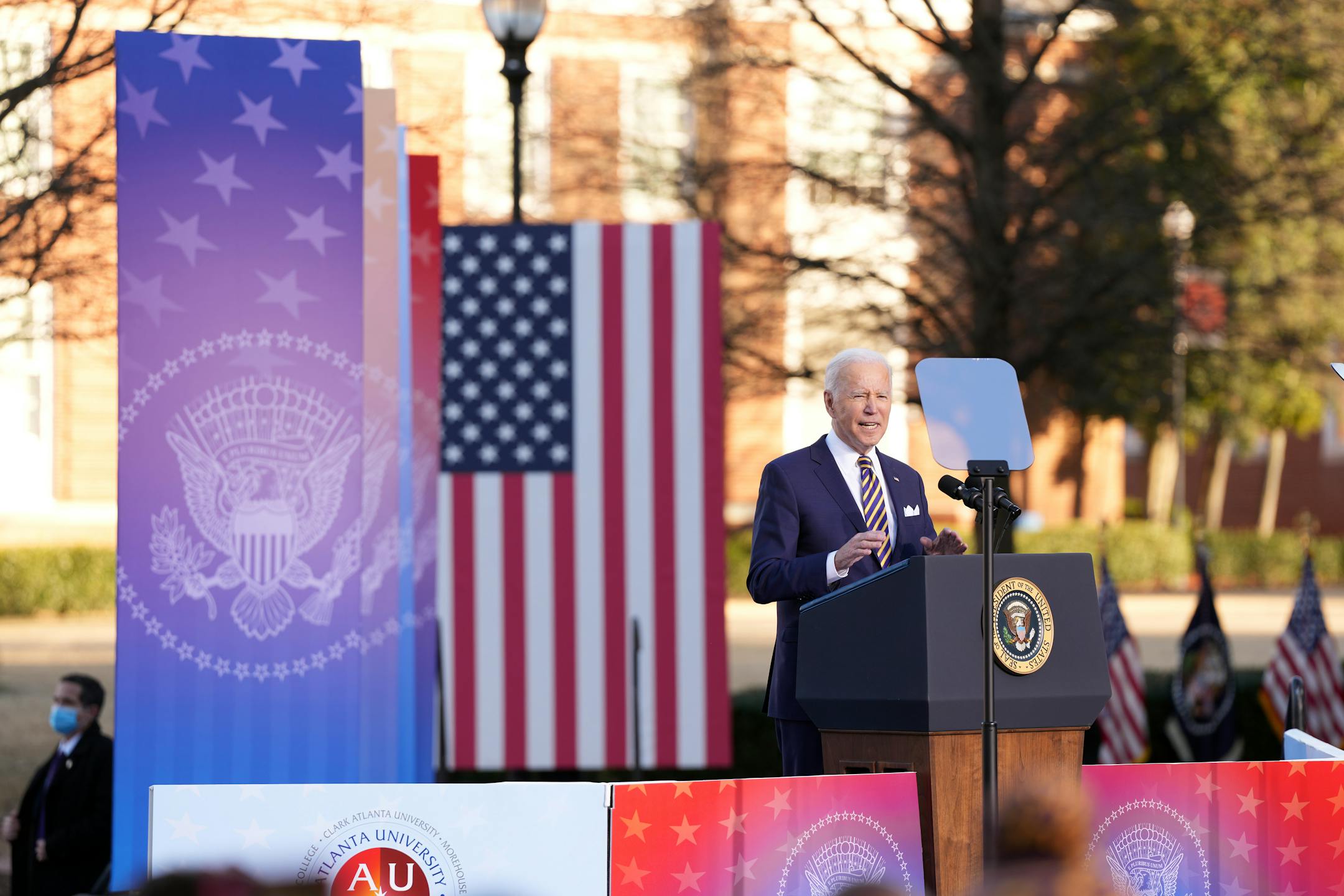
President Joe Biden traveled to Georgia on Tuesday to speak on behalf of the Democrats' voting and democracy agenda, which includes two bills currently on the Senate floor. That follows his Jan. 6 speech, which was also focused on democracy and the importance of voting rights to democracy. Let's back away from the specific topic here, and talk a bit about the point of these speeches.
Presidential speeches rarely change minds about anything. That was even true before the current era of intense partisan polarization, and it's surely more true now. After all, Republicans are even less likely to bother listening to a Democratic president's speeches (and vice versa) than was the case 40 years ago, and those who pay little attention to politics are less likely to accidentally stumble on a speech or even news programs that run sound bites from it than they were in the days when three major television networks dominated the national political conversation. If President Ronald Reagan couldn't change people's minds in the 1980s, it's unlikely Biden can do so today.
Nor is it likely that a presidential speech can put pressure on wavering members of Congress by activating their constituents on a policy question.
So what's the point?
For one thing, presidents as party leaders have to do a fair amount of coalition management. The entire party agenda never gets enacted; it's part of the president's job to show those party groups who care deeply about various policy areas, perhaps especially those where progress is stalled, that the party has not abandoned them.
That's related to the president's representational relationship with voters — in this case, some of Biden's strongest supporters. Representation involves explaining actions in office in terms of promises that were made during the campaign. Thus Biden brought back his campaign refrain of fighting for the nation's "soul" now that he (and Democrats in Congress, and party groups) have defined that fight in part as passage of a set of specific bills and policies.
That's not all. Presidential speeches provide potentially worthwhile signals to those who do want to listen. Devoting resources — and the president's time is an important and limited resource — to a speech on one topic signals that the White House considers it important. When there is competition within the party in Congress over which legislation to move, a common situation, the president's voice may carry some weight, even without changing anyone's vote.
Presidential attention, signaled through public speeches, can also have agenda-setting effects, leading the mass media to focus more on the policy areas the president talks about. This can sometimes help the president's popularity if attention can be shifted from an area that isn't going well to one where people are happy with the president's performance, or it can simply increase the perceived importance of some issue. That doesn't guarantee that the president's wishes will be granted. Presidents don't have that kind of power. But Biden's democracy agenda would definitely have a better chance of at least partial enactment if Republicans sensed they had to have some sort of policy response, rather than just rejecting the entire topic as unsuitable for federal intervention.


