

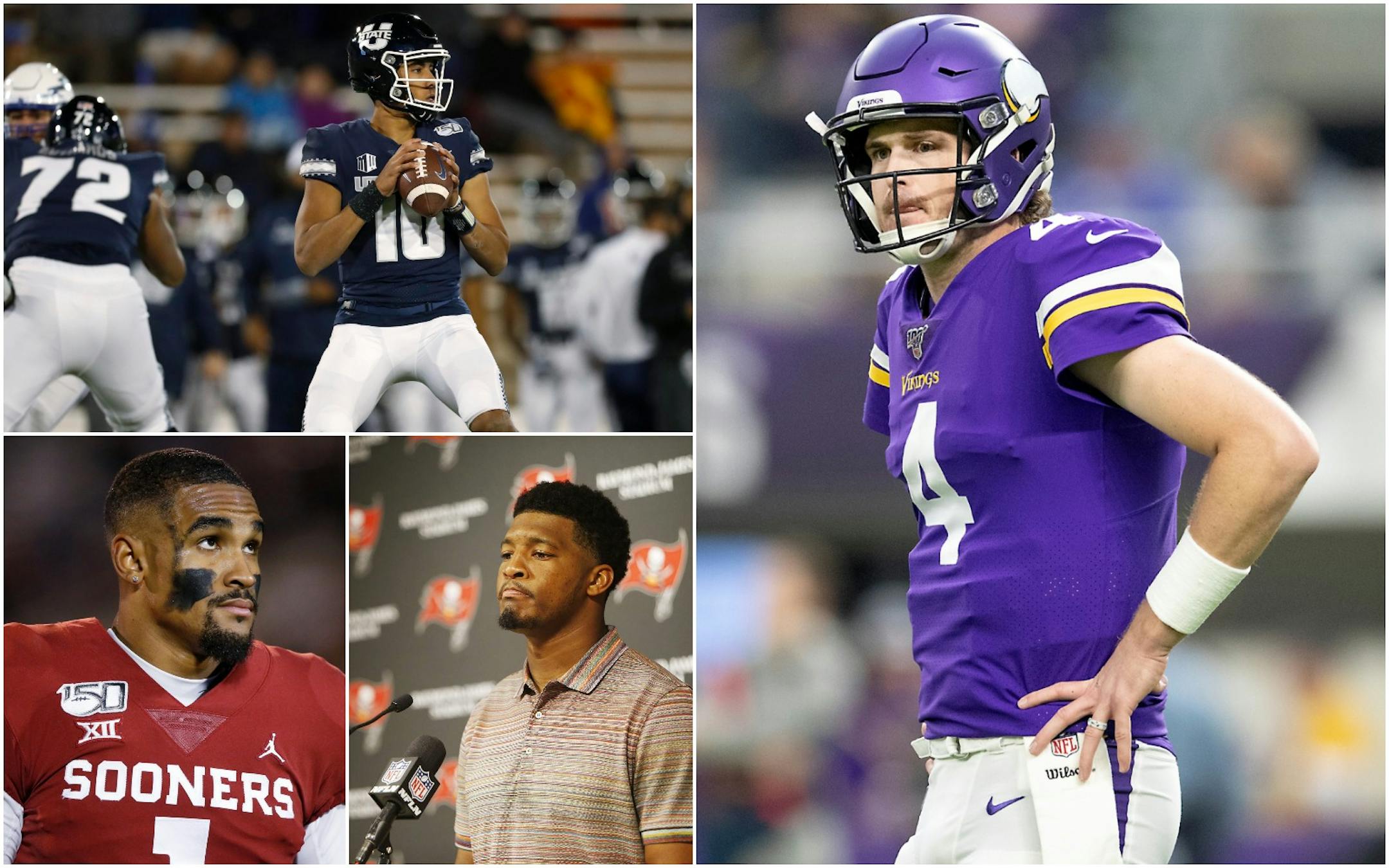
The 2020 NFL draft highlighted one of the most dramatic divergences of opinion in sport, and it has nothing to do with analytics or Michael Jordan.
The subject currently separating NFL thinkers into disparate camps is the backup quarterback.
Traditionally, backup quarterbacks were either young and promising passers waiting their turn, or veterans who might be able to guide a team in case of injury to the starter.
Those categories still exist, but this draft indicated there are myriad ways to use, or not use, your backup quarterback, which is either the second-most important position on the team or the most irrelevant.
Let's look at the approaches of a few teams willing to deal with potential headaches and potentially greater production out of their backup quarterbacks:
Minnesota Vikings
The Vikings have used the position traditionally. They like having a true starter and a backup who won't make waves. To quote former Viking Jeff George, they don't want the backup to be a "Slappy," what he called a backup who would slap you on the back while trying to take your job.
Kirk Cousins is the unquestioned starter. Sean Mannion is the veteran backup the Vikings hope never sees the field. With Mannion, they save money and potential headaches, but also are completely dependent on Cousins to stay healthy.


