

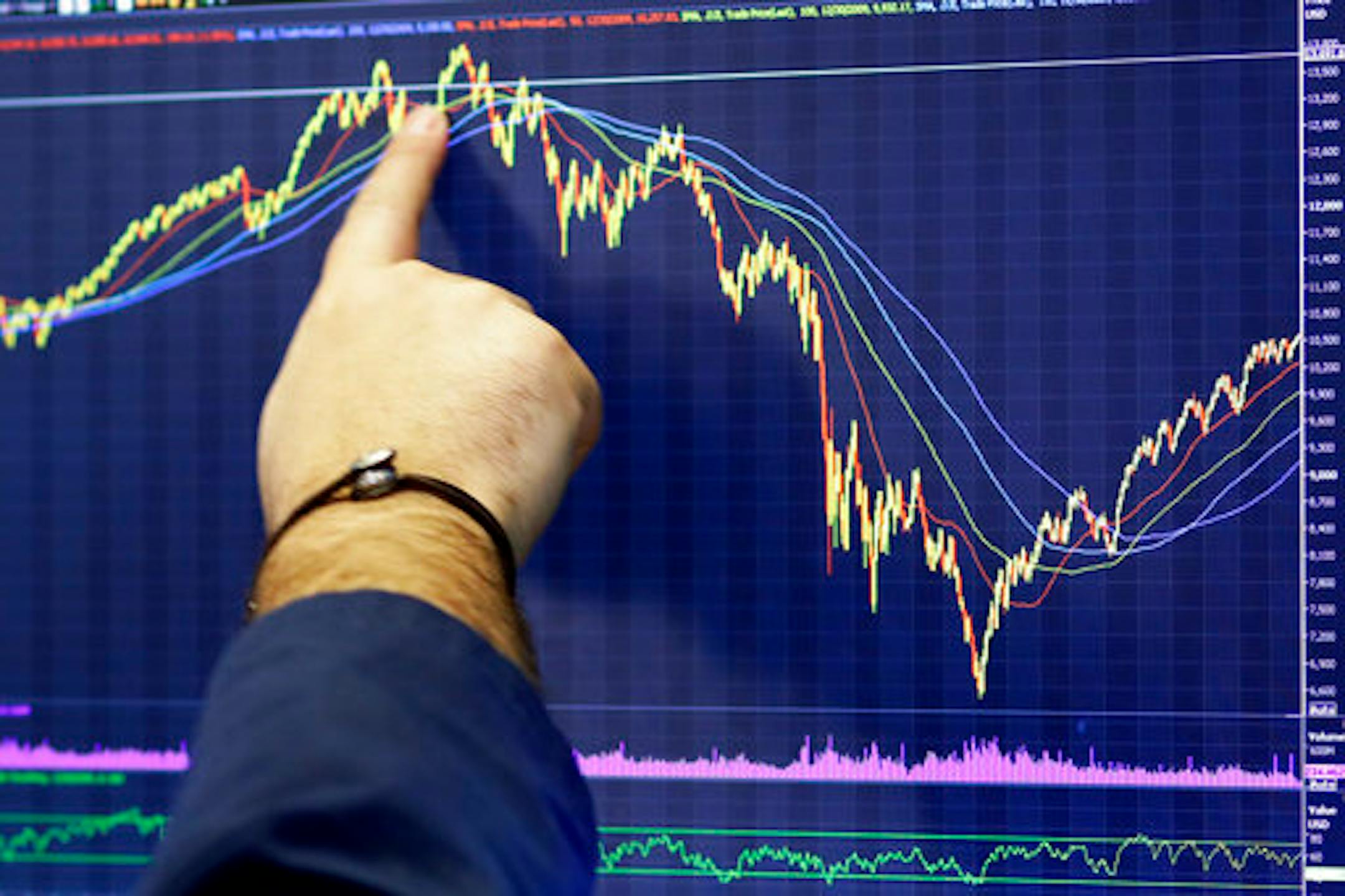
Given the manic spikes and dives in the stock market, the near-inversion of the yield curve (I'll explain), the tanking of the price of oil, the Federal Reserve's rate hikes, chaotic leadership on trade policy (and everything else), and lots of buzz about recession, it's a good time to evaluate the extent of risk factors in the current economy.
I'll briefly summarize what I view as the key points, but the bottom line is that for all the noise, the strong labor market and rising real wages will still power the expansion over the near term. Post-2019, however, once the current stimulus fades, growth is likely to slow, but precisely how much, no one knows.
The stock market is clearly on shpilkes (Yiddish for "pins and needles"), and it is seriously tarnishing whatever reputation it has left for a rational aggregator of forward-looking information. In theory, current stock prices should reflect expectations of future earnings of the companies in the indexes, but how could these values jump 1 percent on Monday and tank 3 percent - a huge sell-off - on Tuesday? They couldn't. Instead, they jumped when Trump tweeted out a truce in the trade war, and they tanked the next day when the Chinese essentially responded, "Yeah . . . that's not quite how it went down."
Look, I get it. As long as some traders, along with their algorithms, react to every tweet that springs from our dear leader's thumbs, other traders/algos have to play along. But the fact is that there is very, very little information in anything Trump says, and we'd all be better off, in the sense of less whiplash, if we agreed on this point.
Until then, from the perspective of the larger economy, I don't see the recent spike in volatility as a big deal. Somewhere in the noise is a signal reflecting the likelihood that growth and corporate profitability and likely to slow later next year, and that matters. Go ahead and watch the roller coaster if you must, but if it makes you sick, don't say I didn't warn you.
The market was also spooked by the flattening of the yield curve, meaning the shrinking difference between long-term and short-term bond yields. Such movements are driven by the Fed raising short-term rates and investors, worried about the near-term economy, demanding more long-term bonds (thus driving down long yields). Since yield curve inversions - long yields below short yields - are reliable predictors of future recessions (on average, a bit more than a year later), its flattening is not something you can shrug off.
But I think we're focusing on the wrong message from the curve. We tend to think of it in terms of "are we headed for recession or not?" If the curve inverts, that's bad; if not, we're cool. But what if growth slows yet doesn't cross zero? After all, falling from 3 to 1 percent GDP growth typically raises unemployment more than going from a little above to a little below zero.
The flat curve is thus sending the same message buried in the market noise: slower growth ahead.


