

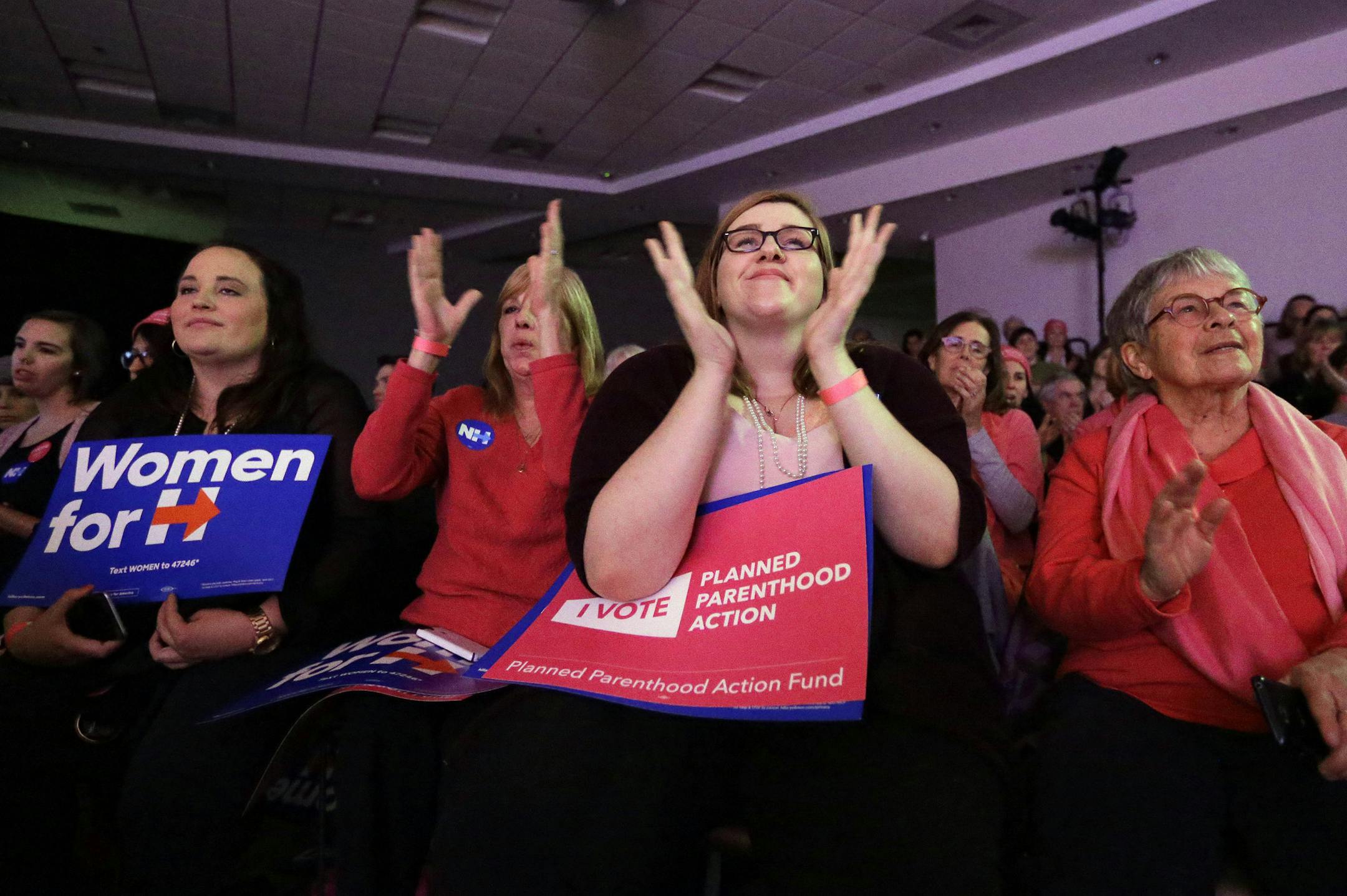
Is Planned Parenthood part of the Establishment with a capital E? It's a signal of the upside-down nature of the current political campaign that Democratic candidates Hillary Clinton and Bernie Sanders had a dust-up over exactly that question. Their dispute carries a lesson about how desperately we long to believe that we're all outsiders.
The whole thing began last month when Planned Parenthood and the Human Rights Campaign endorsed Clinton for president. In response, Sanders huffed, "Some of these groups are, in fact, part of the establishment." The Clinton campaign hastened to assure Democrats that the groups were nothing of the kind: "If an organization like Planned Parenthood really were part of the establishment, Democrats wouldn't have to work so hard to defend it against Republican attacks." Sanders responded by insisting that his reference to the Establishment was only to the groups' leaders responsible for the endorsement.
My first response to the contretemps was to shake my head in wonder, remembering my undergraduate days in the 1970s, when we armchair radicals used to sit around our secret headquarters (i.e., a coffeehouse), moaning about the many reforms the Establishment would never allow us to carry out. We operated according to a hazy and simplistic model. We were the people of goodwill, and those who opposed our efforts were people of ill will. "Power to the people" was a useful chant precisely because the Establishment clasped in a fearsome grip all of the levers of power. We wanted that power out of their hands.
The trouble was, we had no clear idea who "they" were. In those halcyon days, we were all disciples of C. Wright Mills and Ralph Miliband, from whose sometimes conflicting work we cobbled together a loose definition of the enemy. The Establishment held both public and private power. They were able to influence policy to protect the interests of what we called their class. And members of the Establishment all knew one another.
That last part was key. The Establishment was no accident. They attended the same elite schools and sat together at the same exclusive dinner parties in the same Georgetown salons. They vacationed together in places we plebeians could never afford. They married one another. They read the same books and magazines and in other ways reinforced their shared opinions of the world they controlled. Their interlocking relationships fortified their power.
And we would have turned the hot rhetorical flames of our radical fury on anyone who suggested that we ourselves were the Establishment in training.
Sanders was right. Of course Planned Parenthood is part of the Establishment. I mean that as a compliment. The Establishment, we are told by the Oxford English Dictionary, uses "tacit understandings" to pursue its interest in "the maintenance of the status quo." Part of today's status quo is the wide availability of abortion and contraceptive services. That's a battle Planned Parenthood is winning. The fact that the group has to defend itself is beside the point. What counts is its ability to survive the attacks. Planned Parenthood isn't a small helpless band of do-gooders. It's a large, well-funded institution, with strong supporters in the news media and among celebrities and the corporate elite.
If this argument has your hackles up, it may be that your instincts tell you that being part of the Establishment is bad. But this isn't so. Unless we take the vulgar view that "Establishment" is simply an insult to hurl at those who we happen to disagree with, the term should be seen as simply a description.


