

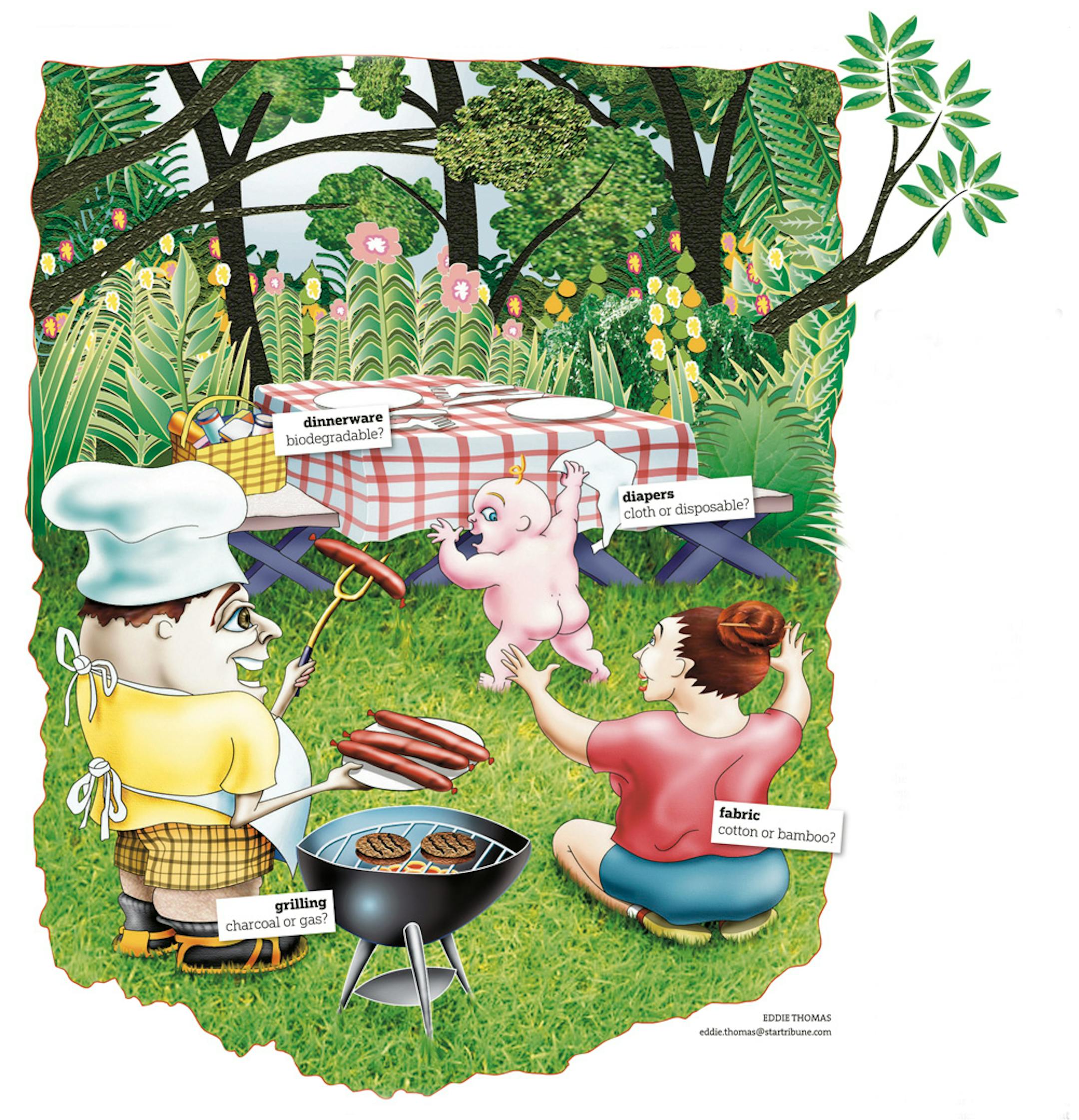
It's confusing being green. Nobody wants to putrefy the planet more than we already do, but neither do we want to fall prey to the growing number of "greenwashers" out there who misrepresent the eco-friendly qualities of their products and are a primary cause of the green backlash. Here are some streamlined answers to the "Which is greener?" debate about a few common summertime items.
Gas vs. charcoal grilling
Pollution experts say gas is cleaner; charcoal briquettes release a lot of fine particles into the air that aren't healthy. If you're just too attached to that charcoal-grilled taste, buy the hardwood lump variety made from invasive or sustainable tree species, or briquettes made with wood char held together by cornstarch, like Kingsford's Competition brand, which is slightly more expensive than its standard briquettes but burns hotter. To get them going, chimney starters are more eco-friendly than lighter fluid; use organic grill cleaner to further reduce toxic waste.
Bamboo vs. cotton fabricTaking into account growing, manufacturing and transporting, it takes 700 gallons of water to make a cotton T-shirt, even an organic one. Bamboo, the plant, trumps cotton because it grows quickly and sustainably with little to no fertilizer, pesticide or artificial watering required. But it is chemically processed (often in places with suspect fair-labor laws, such as China) just like its synthetic counterpart, rayon. And mislabeling is rampant: Earlier this year, the Federal Trade Commission warned 78 retailers, including Target, Wal-Mart and Kmart, to stop labeling rayon as bamboo. Since it can't be certified organic by the USDA because it's not grown here, you can't always be sure. But the rate at which bamboo renews itself can't be beat.
Plastic vs. biodegradable outdoor dinnerwareThe downside of summer cookouts and picnics is the extra waste created by traditional throwaway utensils, cups and plates, many of them made of plastic. But there are more alternatives on the market, not all as pricey as you might think. Compostable partyware made from corn or potatoes is a huge seller at Moss Envy, the recently renamed and relocated store formerly known as Twin Cities Green, where 50 biodegradable appetizer plates cost $7. At branchhome.com, Wasara's beautifully designed biodegradable tumblers made from renewable materials look like works of art, but $48 for 50 is beyond many budgets. But the same site offers 50 compostable plates made of sugar-cane fiber for only $6.50, and packs of compostable forks, knives and spoons (50 each) for $14.
Cloth vs. disposable diapersDisposable diapers continue to represent 1 percent of landfill matter every year, and the average baby will go through 5,000 of them before toilet training is complete. The old argument that cloth diapers have an equal impact on the environment because of the water and energy used to launder them has been weakened by the number of users who say they add only about two loads of laundry per week. Cloth diapers, which now come with varying combinations of multiple layers, Velcro fasteners and flushable liners, are one of few green alternatives that actually cost considerably less. Even if you'd rather send your dirty cloth diapers out, Do Good Diapers, the only service operating in the Twin Cities metro area, offers a 13-week, supplies-included package for $299, which breaks down to $23 a week (a one-week trial is $20).
Sources: Minnesota Pollution Control Agency, Ryan North of Moss Envy, Consumer Reports


