

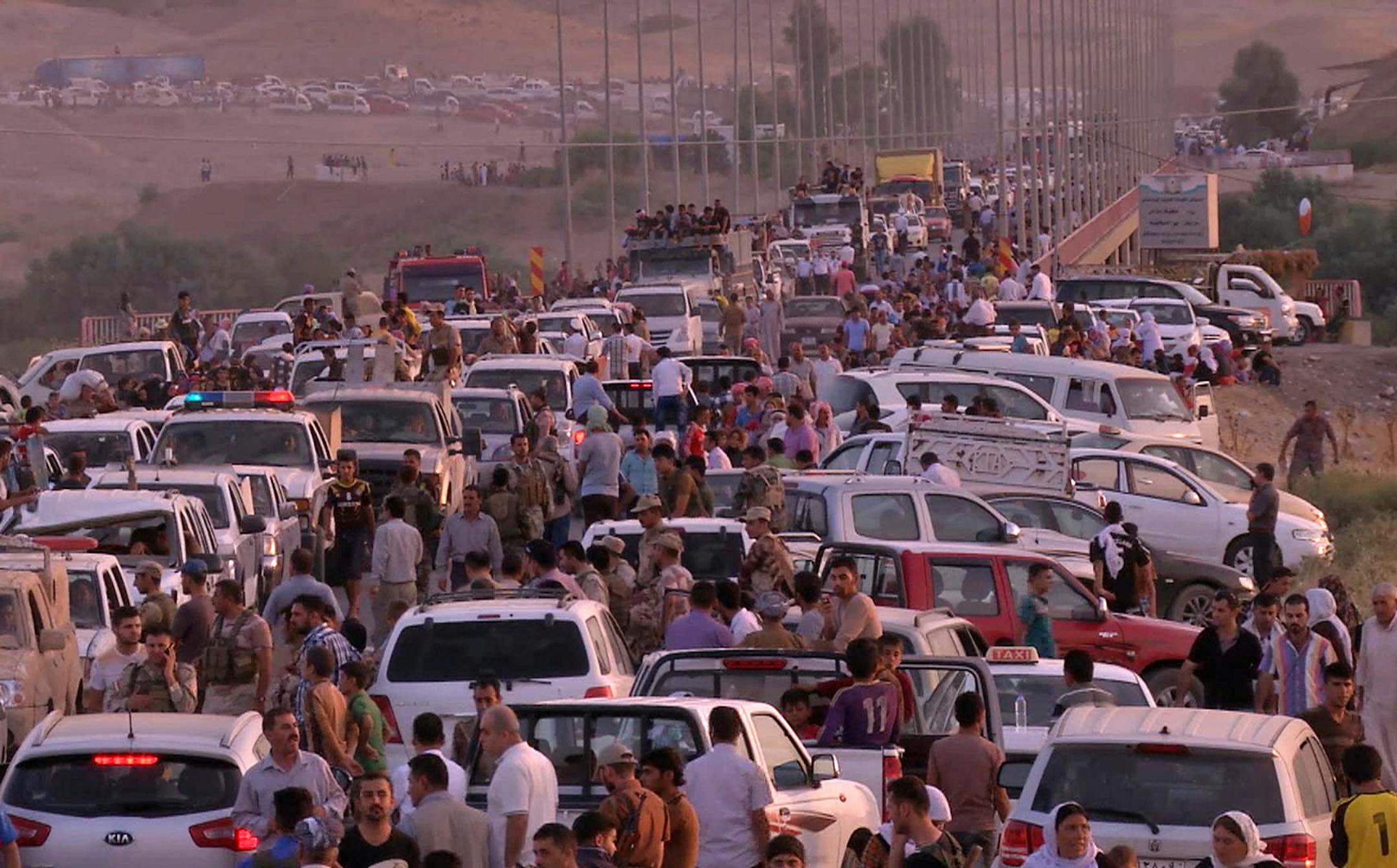
Addressing the nation on Thursday, President Obama offered two main justifications for taking action in Iraq. Both are in response to the relentless onslaught by jihadi extremists who call themselves the Islamic State.
Obama approved airstrikes in Iraq to protect U.S. diplomatic and military personnel. He also approved a humanitarian effort to help a small sect now trapped on a mountain stave off starvation, dehydration and a possible massacre at the hands of Islamic State forces.
Obama made the right call in both cases. What's missing, however, is a longer-term U.S. strategy to fight the Islamic State, as well as to stabilize a region reeling from violent upheaval. To date, it's been difficult to discern just what the Obama administration's thinking is when it comes to Iraq.
The president correctly acknowledges that the United States "cannot and should not intervene every time there is a crisis in the world" but that there will be times when U.S. action is warranted.
"When we face a situation like we do on that mountain with innocent people facing the prospect of violence on a horrific scale, when we have a mandate to help, in this case a request from the Iraqi government, and when we have the unique capabilities to help avert a massacre, then I believe the United States of America cannot turn a blind eye," Obama said.
By any standard, this is the right time. About 40,000 members of an ancient but small non-Muslim sect called the Yazidis are on Mount Sinjar in northern Iraq, facing near certain slaughter from the Islamic State. To let them die would be an affront to humanity. It was critical that the United States airdrop supplies until the Iraqi army or Kurdish Peshmerga forces could rescue them. The administration also made the right call to strike Islamic State forces that were advancing on the Kurdish city of Erbil.
But the effort raises an essential question. Scores of innocents have been killed just this year in the Mideast by Islamic extremists or by government forces, such as in Syria. And the Yazidis aren't the only persecuted faith. Christians are being killed or chased away from areas they have inhabited for millennia. What is U.S. policy on protecting them?
Is the U.S. military response situational, or part of a broader strategic and even moral framework? Obama needs to more thoroughly explain what will trigger U.S. humanitarian intervention, and to what degree it ascribes the so-called "responsibility to protect" ethos.


