

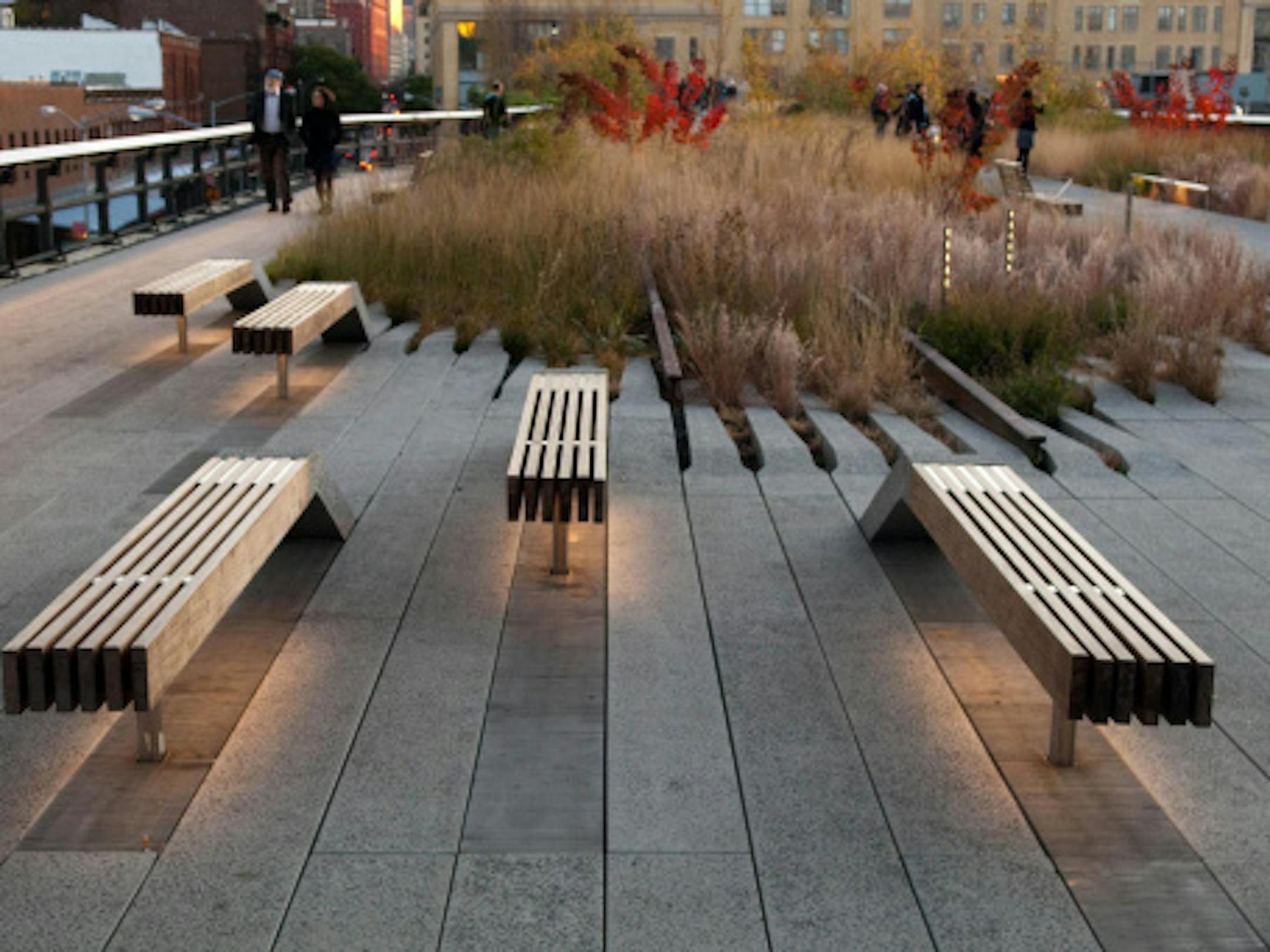
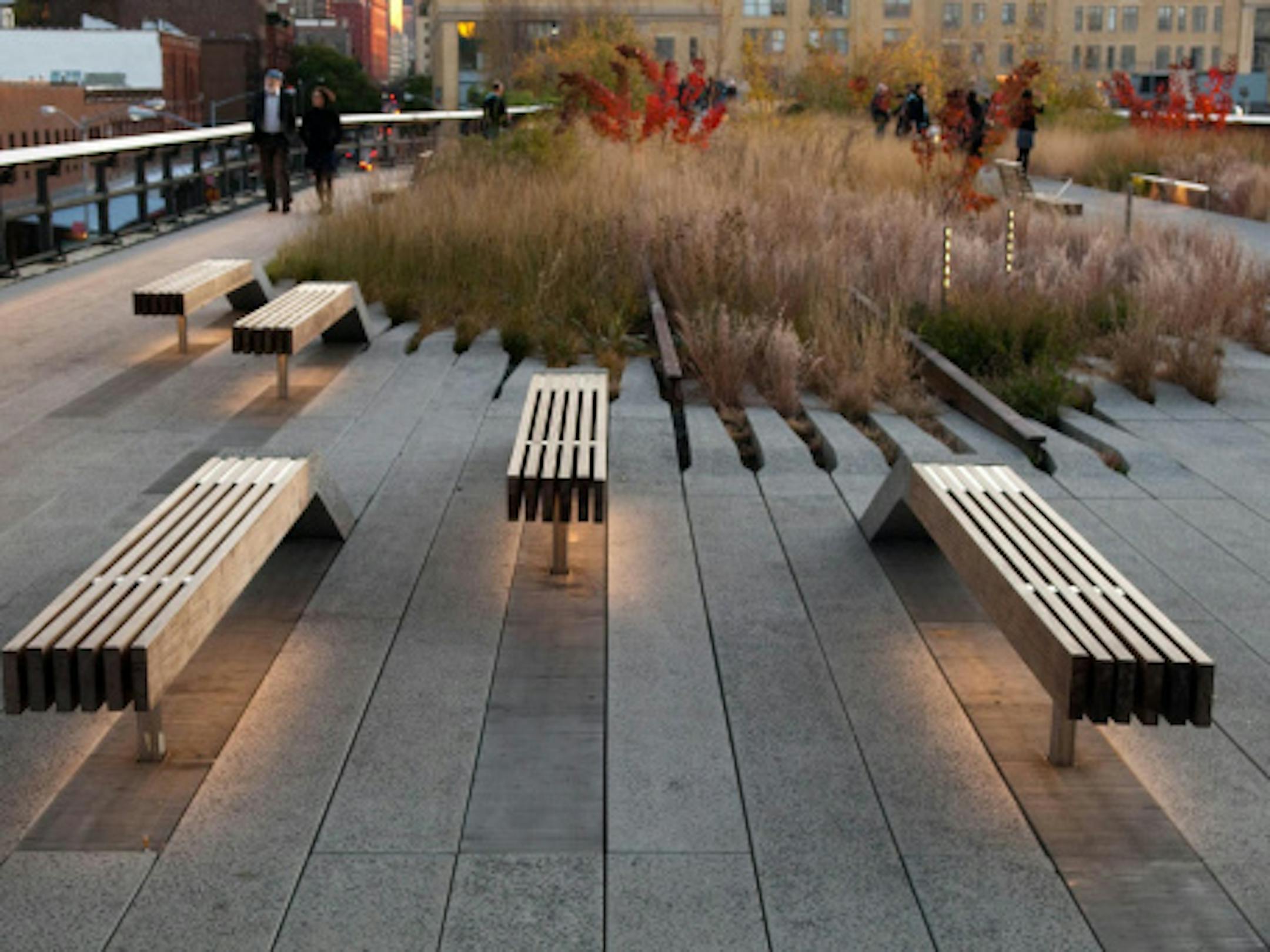
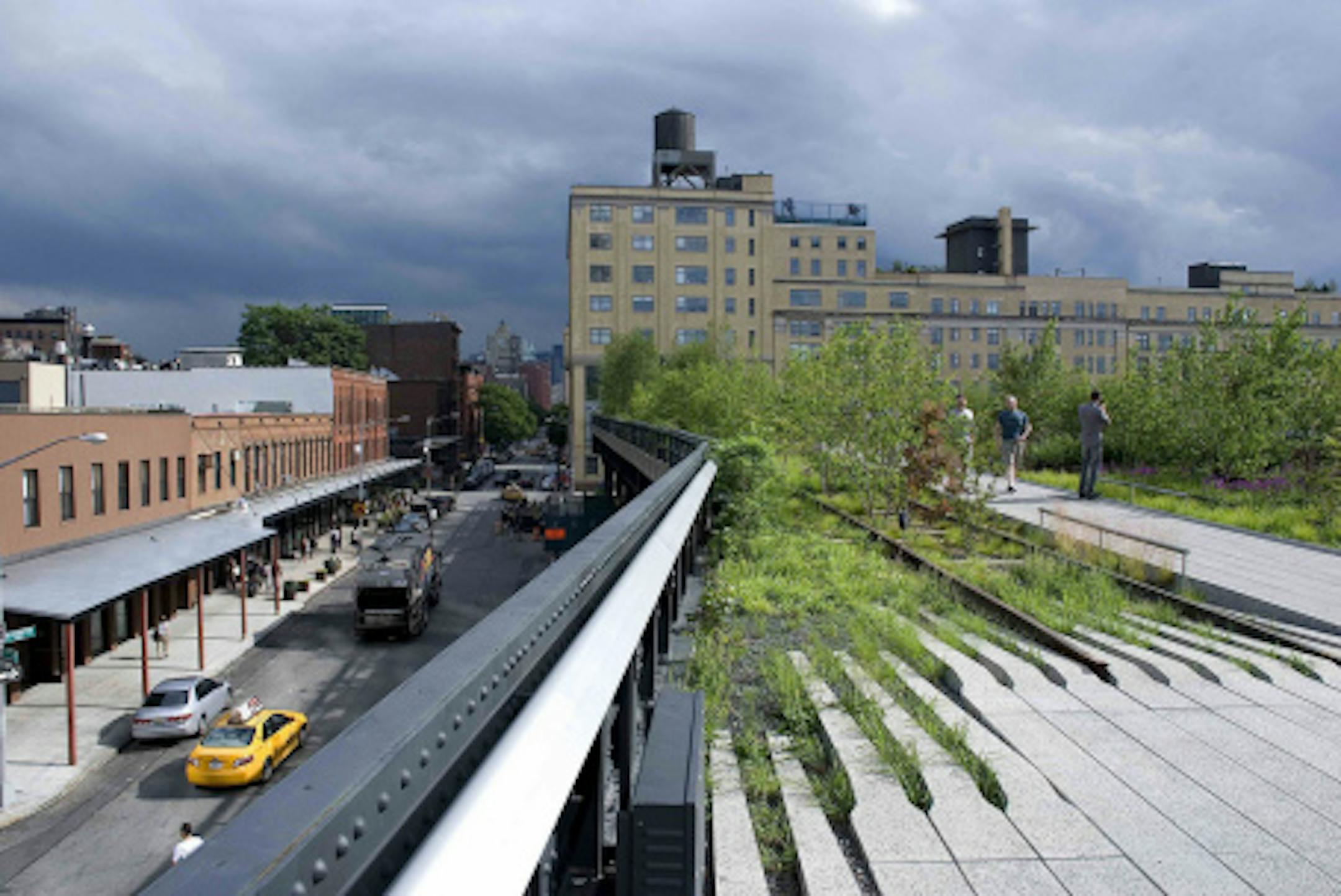
After hearing about the details of envisioning, conceptualizing, planning, funding, designing and building the High Line, the new New York City park built atop an old elevated train platform that runs along the west side, the miracle is that it only took 10 years. In a fascinating standing-room-only talk Wednesday evening at the Walker Art Center, two key players in the project gave insight into the $150 million park project that has drawn two million visitors since phase one opened about a year ago.

Robert Hammond, (above) president and co-founder of the private nonprofit group Friends of the High Line, was a tireless promoter of the concept of reclaiming the vacant train tracks as a public space. Working at first from his apartment, he eventually raised $50 million toward the total project budget. Former New York Mayor Rudy Giulani "hated the High Line," Hammond said, and many developers favored tearing down the old elevated tracks. After a competition, landscape architects James Corner Field Operations and architects Diller Scofidio + Renfro were selected to design the High Line park. Lisa Tziona Switkin, who was lead designer from Field Operations, outlined the design of the walkways, access points, lighting, engineering and native plantings that have now been installed on the south end of the High Line. Wednesday's talk was part of a series with the Minneapolis Park Foundation, the Walker and others aimed at envisioning priorities for Minneapolis parks here in the future. The final talk in the "Next Generation of Parks" lecture series is July 15 at the University of Minnesota. Go here for the complete Walker talk on video


