

Opinion editor's note: Star Tribune Opinion publishes a mix of national and local commentaries online and in print each day. To contribute, click here.
•••
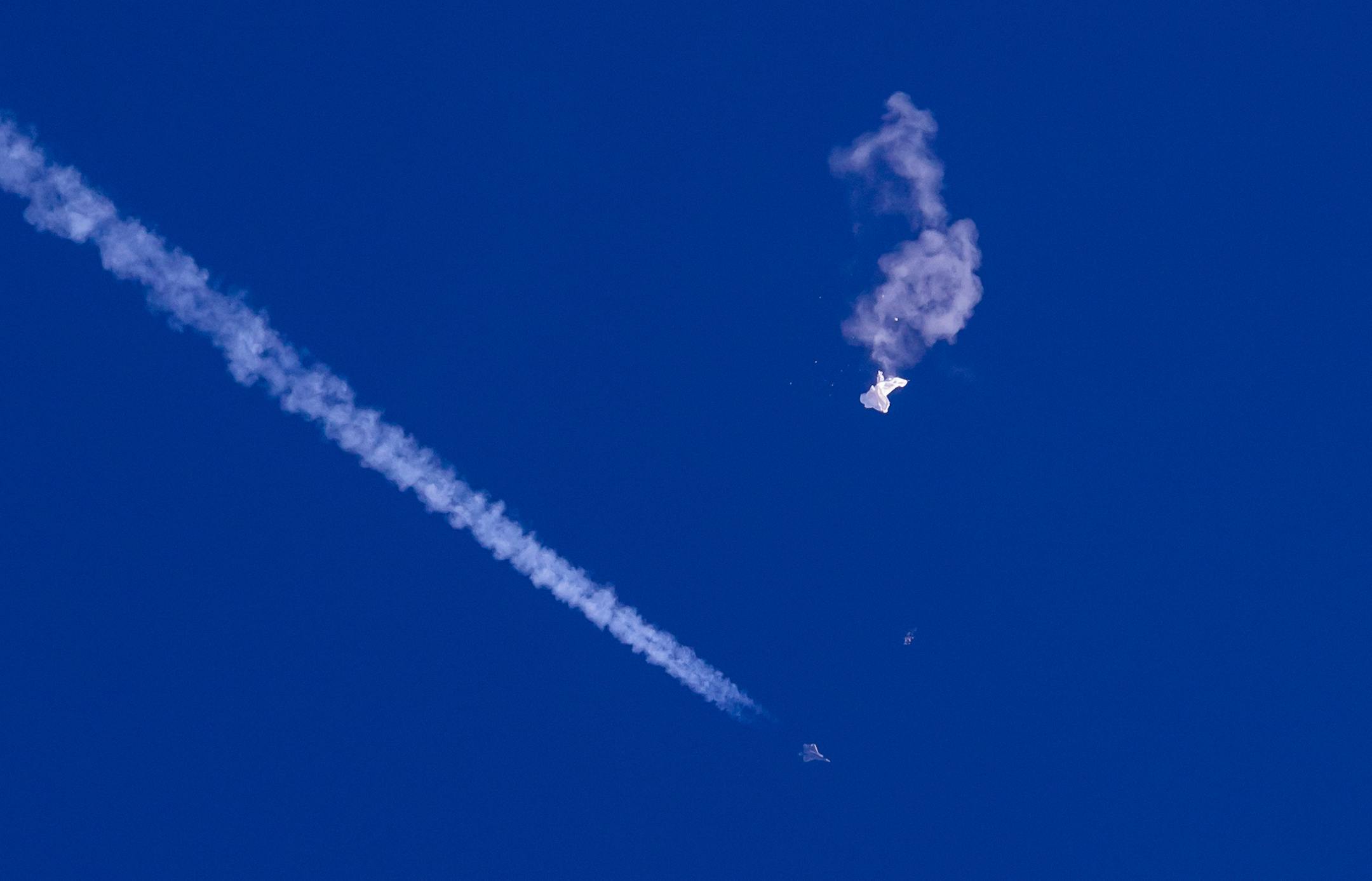
If you thought the Chinese spy balloon saga would deflate as fast as the balloon did over the Atlantic Ocean, you're sadly mistaken. Days after a U.S. F-22 destroyed the device with a single air-to-air missile at 58,000 feet, the story continues to hover over the news cycle like a blimp over Mile High Stadium. The only difference is we can't use a fighter jet to bomb the conversation out of existence.
Take the emotion out of it, and the discovery of the spy balloon is a relatively mundane event. By the Pentagon's own admission, this isn't the first time Beijing has pulled something like this — and it's not even the first time it has occurred over U.S. territory. Indeed, as members of Congress and pundits were running around with their hair on fire about the balloon blocking the sun, another one was spotted somewhere over Latin America. Such incursions aren't ideal, of course, but they aren't surprising either — and if U.S. defense officials can be taken at their word, they also aren't very effective in scooping up information.
Nor is spying some new development in the world of statecraft. People have been spying on one another since the dawn of time; the ancient Greeks, the Romans, the British Empire, the Persian Empire, the Soviet Union, Saddam Hussein, Vladimir Putin, they all have done it. Even friends conduct espionage on one another; in 2013, France's former chief of domestic intelligence said Paris often practiced the dark arts against Washington.
The U.S., too, tries to get as much information as it can on its allies' decisionmaking. The U.S. tapped the phones of three French presidents between 2006 and 2012, and the National Security Agency did the same thing to then-German Chancellor Angela Merkel, which caused a significant diplomatic dust-up at the time.
The uproar over the balloon, it seems, is less about China trying to gather intelligence than on the fact that the balloon was allowed to drift across U.S. territory for nearly a week before President Joe Biden ordered the Air Force to shoot the thing down. Mix in the typical partisanship and the politics of looking tough on China, Washington's most significant competitor in the world today, and the entire conversation becomes laughably juvenile. In the view of some lawmakers, China was attempting to peer into the private lives of the American people and the Biden administration exposed itself as a weak miscreant hesitant to pull the trigger.
Back on planet Earth, the balloon was shot down over water. The amount of intelligence the balloon captured was minuscule, perhaps even redundant to what Beijing already possesses. U.S. divers are in the Atlantic collecting the debris. And China's Xi Jinping, who likes to project himself as a leader in total and full control, looks like a fool internationally for his limp excuses about the device being a meteorological tool. If anything, the affair is as much a controversy for Xi as it is for Biden.


