

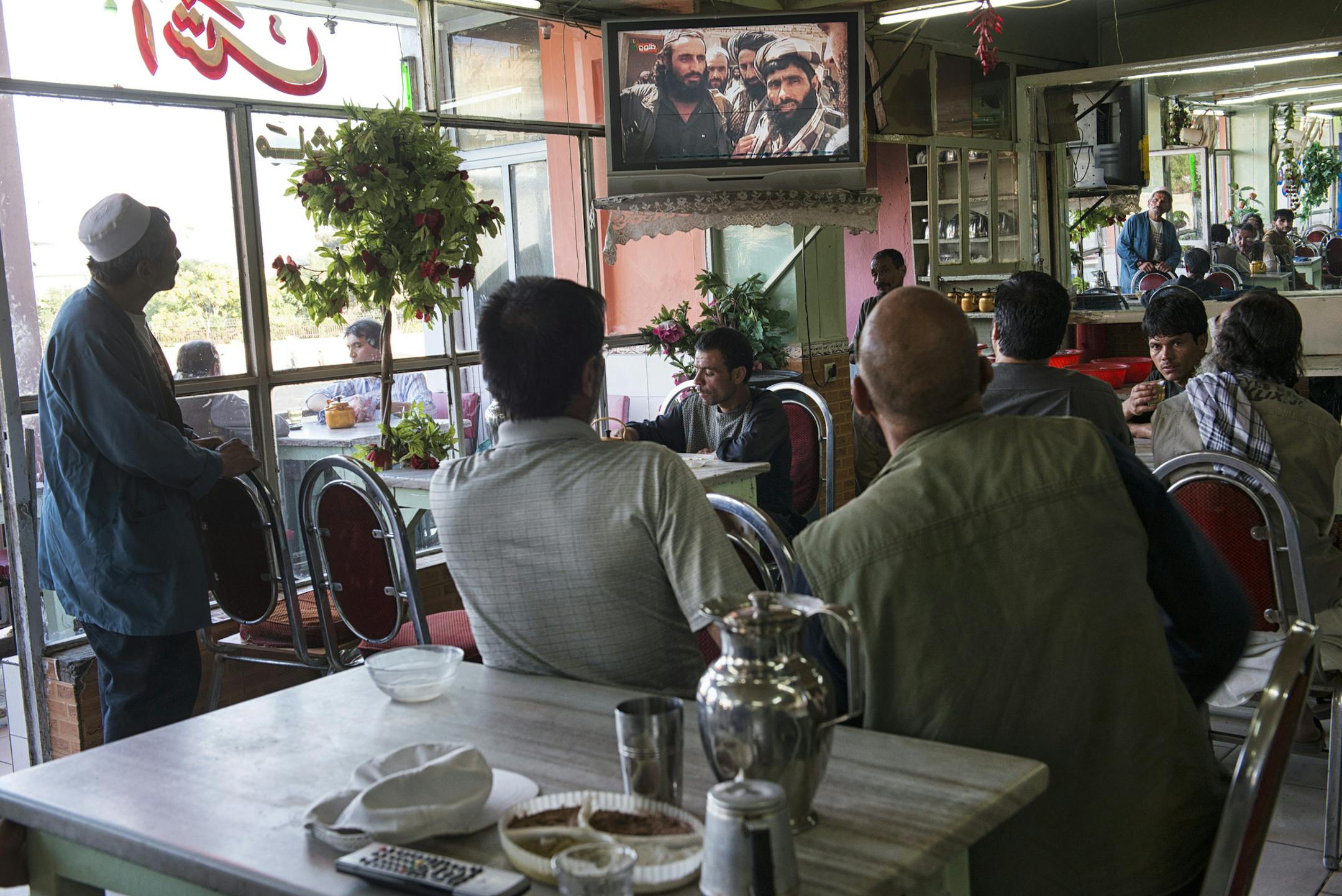
The world learned last week that Taliban leader Mohammad Omar is dead and may have been dead since April 2013. The announcement was bad news for peace talks and good news for the Islamic State.
Omar was a major figure in Afghanistan and Pakistan. In my years in Afghanistan as a civilian adviser to the U.S. military, I learned that this rarely seen and poorly educated man had won the respect of many Afghans. One well-known former member of the Taliban described Omar as a "true mullah, a true Pashtun and a true Afghan." Even Abdul Raziq, Kandahar's infamous police chief and no friend of the Taliban, once told me: "All Taliban obey Mullah Omar. The Taliban will not simply start fighting each other. They are one. This is their advantage over the government."
The announcement of Omar's death was untimely. Until Wednesday, Taliban rank and file did not know he had died and still listened to guidance ascribed to him. Peace talks were at last in the offing, supposedly with Omar's support. Meanwhile, the Islamic State had been trying to break into Afghanistan but, thanks to the influence of the Taliban and Omar's name, had enjoyed little success.
There are now two futures for the Taliban.
One is that, because of its cohesion and dedication, the movement survives. First, however, there would have to be an internal power struggle, and the new leader (for now, reported to be Omar's deputy Akhtar Mohammed Mansour) would need to prove to the rank and file that he can carry the flag and wage war against the United States in Afghanistan. On top of this is the credible threat to Taliban legitimacy posed by the Islamic State, which will further compel any new Taliban leader to take a hard line, lest Taliban fighters think him weak and change allegiances. The upshot is that any new leader would be unlikely to agree to a peace deal in the near term.
The other future is that internal feuding and a rising Islamic State break the Taliban into splinter groups. Then Afghan President Ashraf Ghani would have no negotiating partner with enough weight to end the violence, although deals might be possible with the splinter groups.
What does all this mean for the United States? The growth of the Islamic State would probably be enough of a headache to prompt further discussion about the current plan to draw down to an embassy presence in Afghanistan by the end of 2016.
Peace talks would also be in question. The United States should have patience and encourage Afghanistan and Pakistan to persist in their efforts to get to talks. Progress may stall over the next several months, but after that the outlook is not so bad. A weakened Taliban and competition with the Islamic State could help the Afghan government hold its own on the battlefield, which could give Ghani leverage to work out a deal with either the new Taliban leader or the leaders of new splinter groups. Any such peace deal would not end the violence but would leave Afghanistan in a better position than it is in today.


